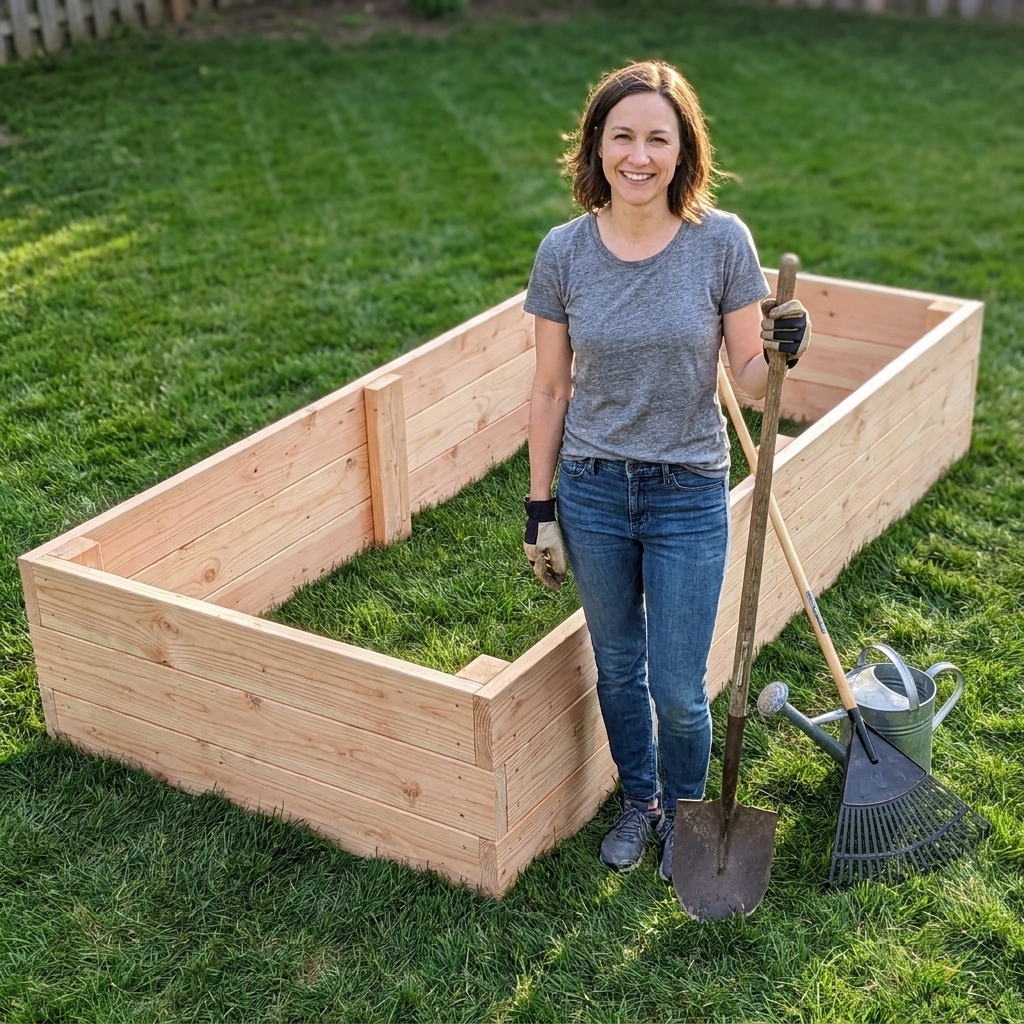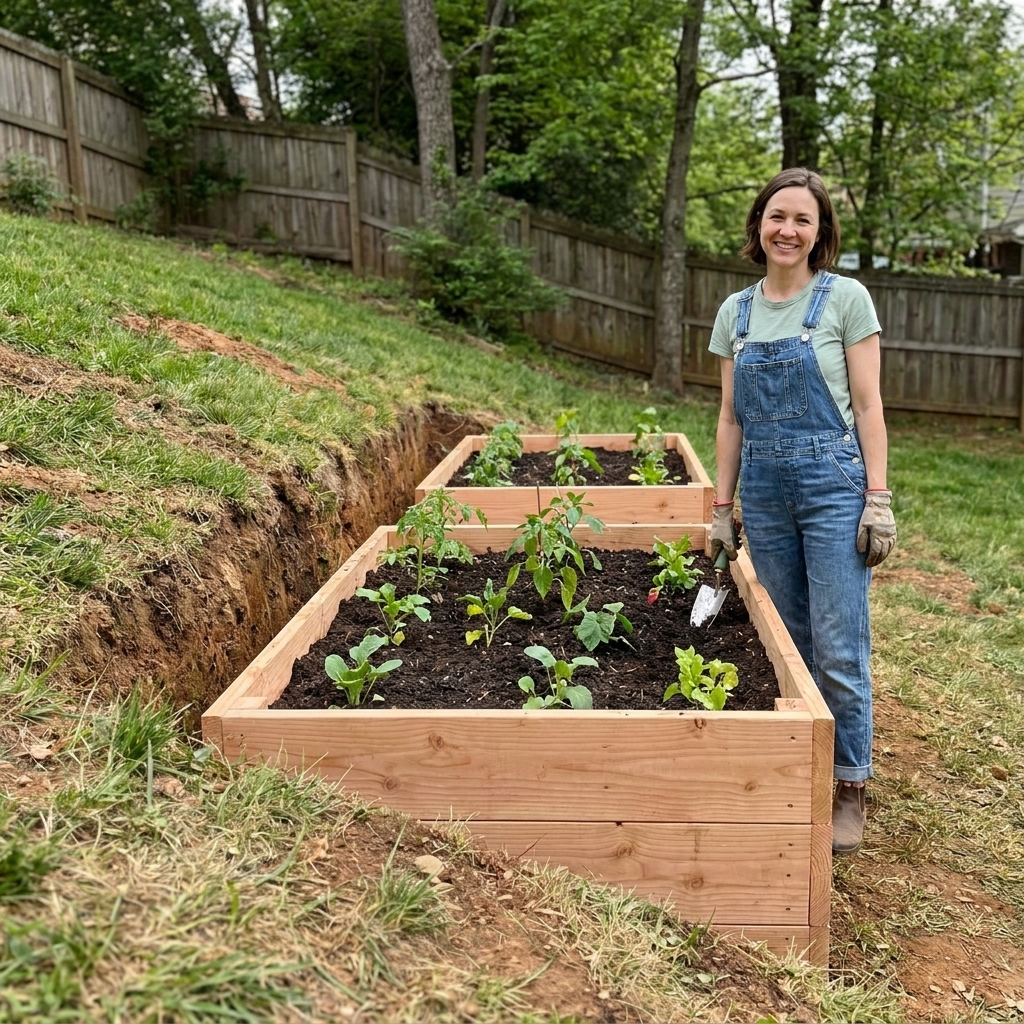

If your raised bed walls are starting to belly out like an overstuffed suitcase, you are not alone. Older beds bow for a few predictable reasons: soil pressure, rot, loosening fasteners, and freeze-thaw cycles that quietly nudge boards outward every season.
The good news is you can usually save the bed you have. Below is exactly how I reinforce bulging raised beds in my own backyard, including the fixes that hold for years: retrofitted cross-braces, corner brackets, and simple stakes that stop the spread.
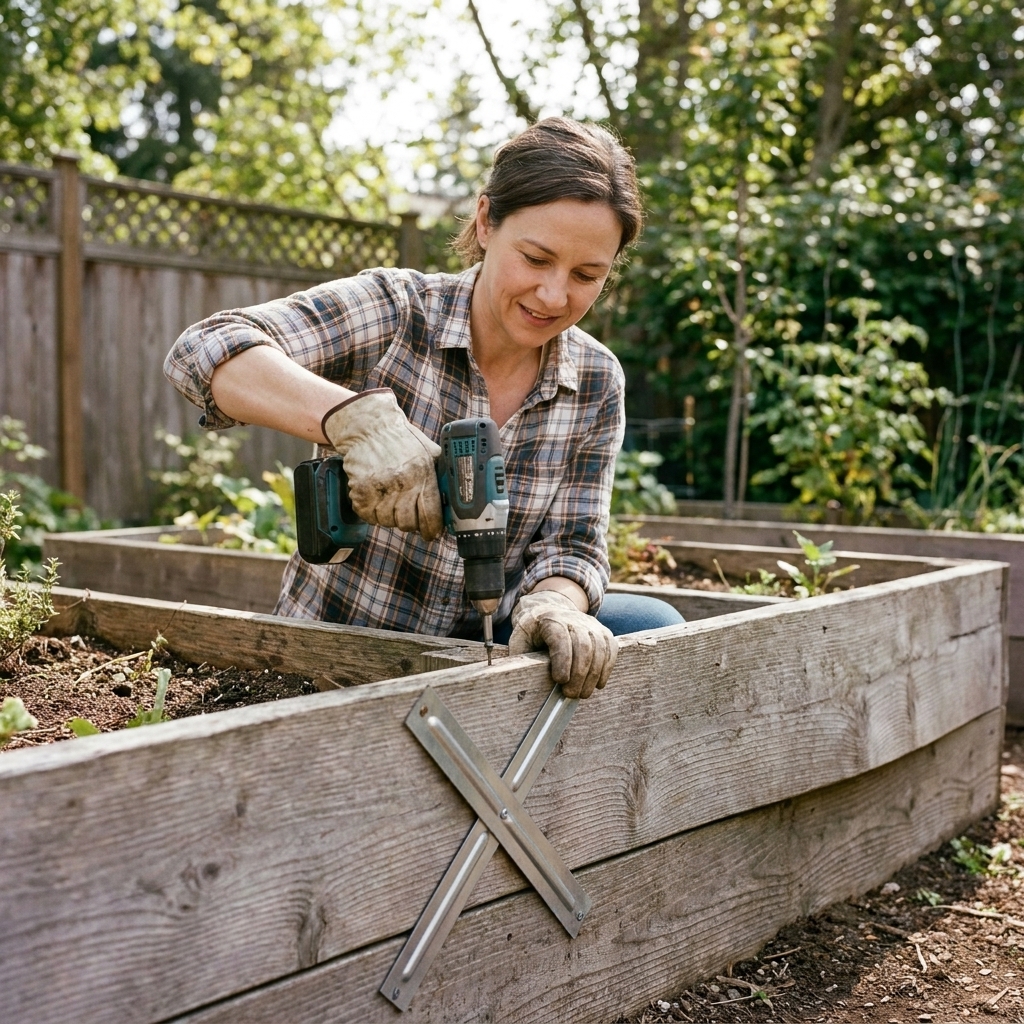
Why beds bow
Bowing is just physics plus time. Soil is heavy, and when it gets saturated after rain, it gets even heavier. Clay-heavy beds are especially brutal after a soak. That outward force pushes hardest on longer spans, and it adds up season after season.
- Long runs with no support: The longer the side, the more likely it is to deflect, especially on beds longer than about 4 feet.
- Taller fill height: The taller the bed (and the higher you fill it), the more lateral pressure it puts on the walls. Many 12-inch beds do fine, but risk climbs fast at 18 to 24 inches and up.
- Rot at the bottom edge: Boards soften where they meet damp soil, then flex.
- Loose or rusted fasteners: Screws back out, nails creep, brackets corrode.
- Frost heave: Freeze-thaw can slowly rack corners out of square.
Quick safety check
Before you add reinforcement, figure out whether you are stabilizing solid lumber or trying to brace something that is already composting itself.
Signs you can reinforce
- Boards are still mostly firm when you press a screwdriver tip into them.
- The bow is mild to moderate, not a dramatic bulge with cracking.
- Corners are intact or can be tightened back together.
Signs to replace boards
- Wood crumbles, splinters easily, or the screwdriver sinks in deeply with little pressure.
- Fasteners have nothing solid to bite into.
- The bed is leaning or separating at corners.
If only one section is rotten, you can often replace just that board and still reinforce the rest.
Tools and materials
You do not need everything listed here. Pick the reinforcement method that matches your bed size, material, and the severity of the bow.
- Driver or drill with bits
- Exterior structural screws (2.5 to 3.5 inch; coated or stainless)
- Galvanized corner brackets or mending plates
- Wood stakes (2x2, 2x3, or 4x4 for heavy-duty) or metal T-posts
- Cross-brace material: 2x4 lumber, galvanized flat strapping, or threaded rod (3/8 inch is common)
- Large washers (fender washers are ideal) and nuts if using threaded rod
- Mallet or post driver for stakes
- Measuring tape and pencil
- Clamps (helpful) or a ratchet strap
- Optional: wood preservative for cut ends, exterior wood glue for corner rebuilds
Step 1: Relieve pressure
Reinforcing works best when you are not fighting a fully packed wall of wet soil.
- Water the bed lightly if the soil is bone dry. Slight moisture helps it shift, but skip this if it is already soggy.
- Pull soil back 3 to 6 inches from the inside of the bowed wall. For a serious bow, pull it back 8 to 12 inches in the middle.
- Remove heavy root masses if a perennial has turned the bed into a solid block.
Think of this as giving yourself room to push the wall back into place.
Step 2: Straighten and square
If the long side is bowed outward, the bed is often a little out of square too.
- For mild bows: Push the wall back by hand and clamp a scrap 2x4 across the top edge to hold it temporarily.
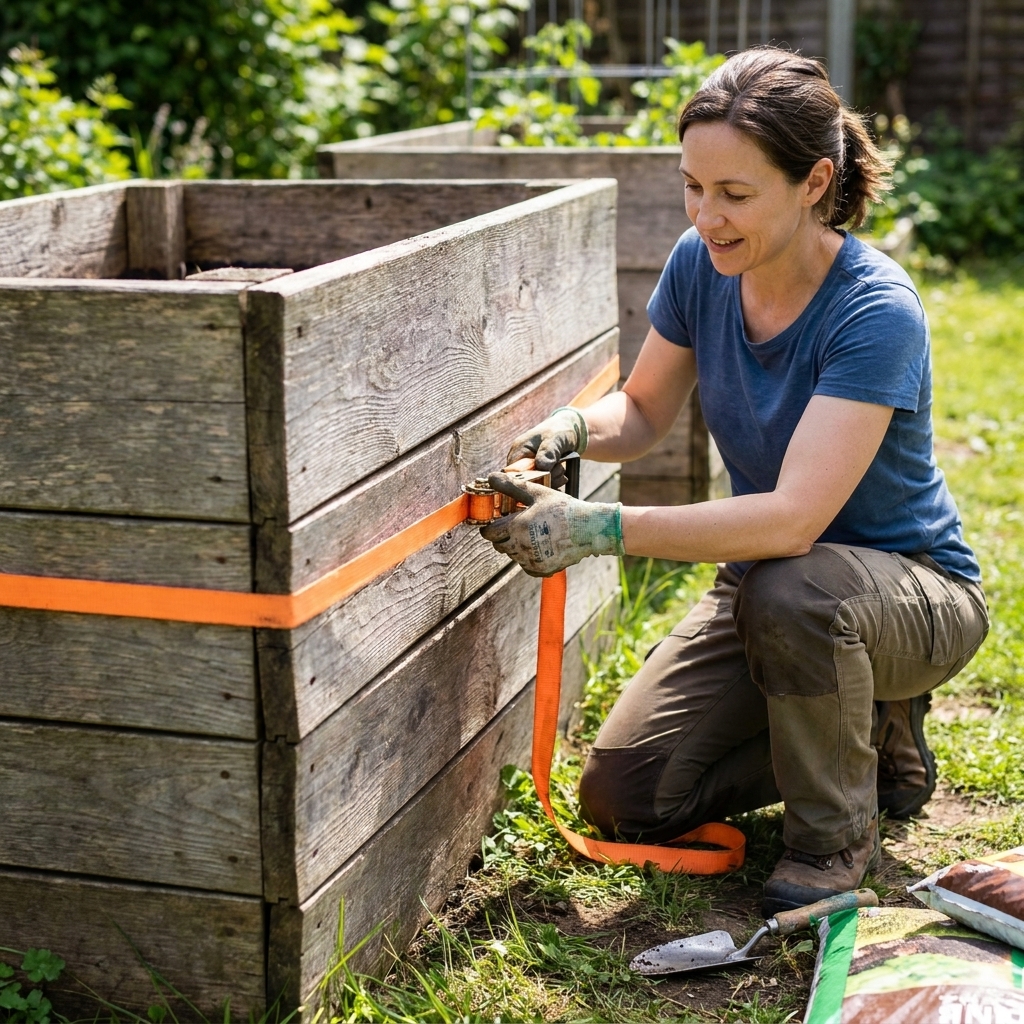
- For moderate to severe bows: Wrap a ratchet strap around the outside of the bed and cinch slowly until the wall straightens. Tighten a bit, pause, and check corners as you go.
Strap safety: Keep your hands and face out of the strap path, and make sure the strap is not riding up or slipping off the boards as you tighten.
Go slow. Old screws can snap, and brittle boards can split if forced too quickly.
Fix A: Cross-braces
If your bed is longer than about 4 feet, a cross-brace is one of the biggest upgrades you can make. It stops the walls from spreading apart again. Beds built with thick 2x lumber and solid corner posts may not need this right away, but on older builds it is cheap insurance.
2x4 cross-brace
This is my go-to for 4x8 beds and anything similar.
- Measure the inside width of the bed.
- Cut a 2x4 to that length.
- Position it across the bed from the bowed side to the opposite wall, roughly mid-height on the boards.
- Pre-drill to prevent splitting.
- Screw through the bed wall into the ends of the 2x4 using two structural screws per side.
Placement tip: For an 8-foot run, I like two braces, each about one-third of the way in from the ends, where bowing tends to start.
Threaded rod cross-tie
If you want maximum strength with minimal space taken up inside the bed, use threaded rod.
- Drill a hole through each long wall at the same height (3/8 inch or sized to your rod).
- Slide the rod through.
- Add a large washer and nut on each side, then tighten until snug. Big washers help keep the nut from crushing into softer wood.
- Recheck after a week as the wood compresses slightly and retighten.
Garden reality: You will occasionally bump a rod with a trowel while planting. It is worth it for beds that like to push outward every spring.
Tall bed note: On 18 to 30 inch beds, I often add two levels of restraint: one around mid-height and another lower down, because pressure increases with depth and tall walls like to bulge in more than one spot.
Fix B: Reinforce corners
Corner creep is sneaky. One corner loosens, the bed racks out of square, and the long side starts bowing because the structure no longer shares the load.
Fast corner rehab
- Remove any rusted or stripped screws.
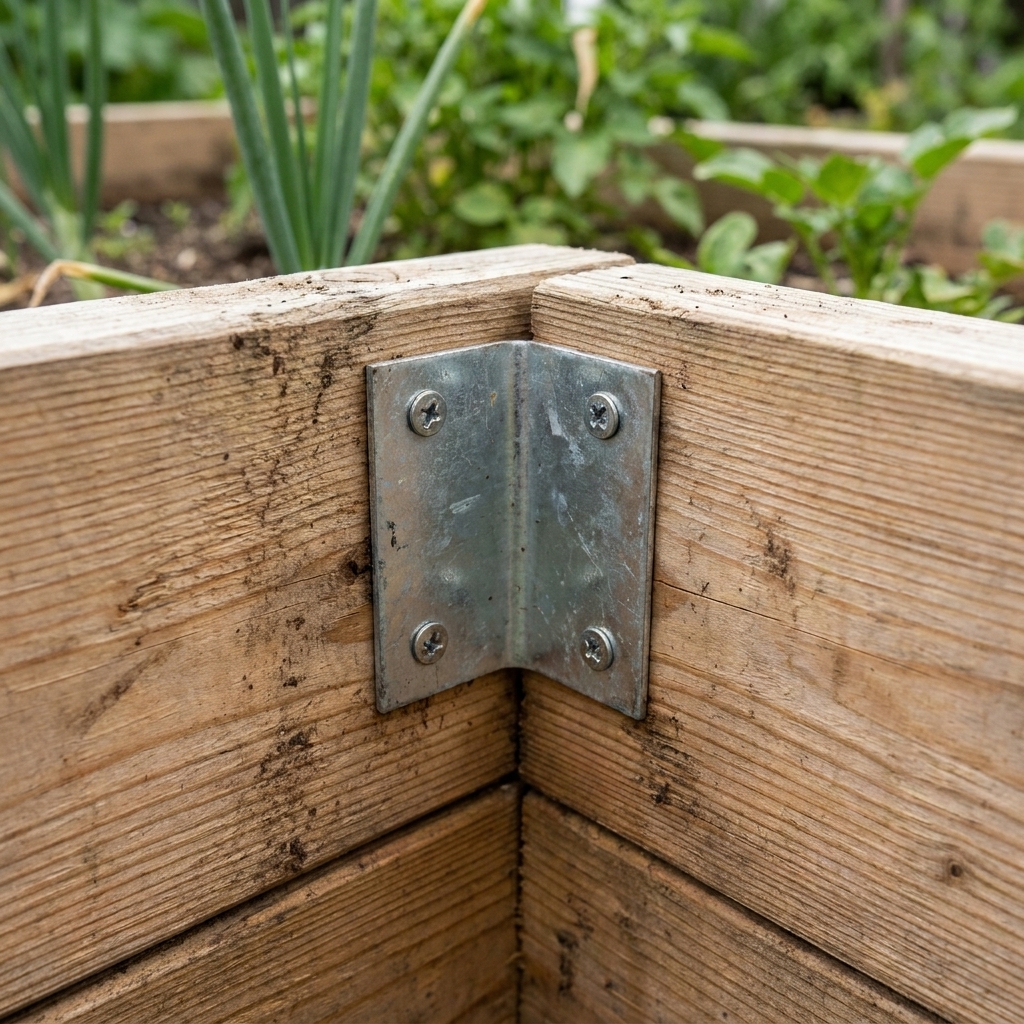
- Pull the corner back into a tight 90-degree angle (a clamp helps).
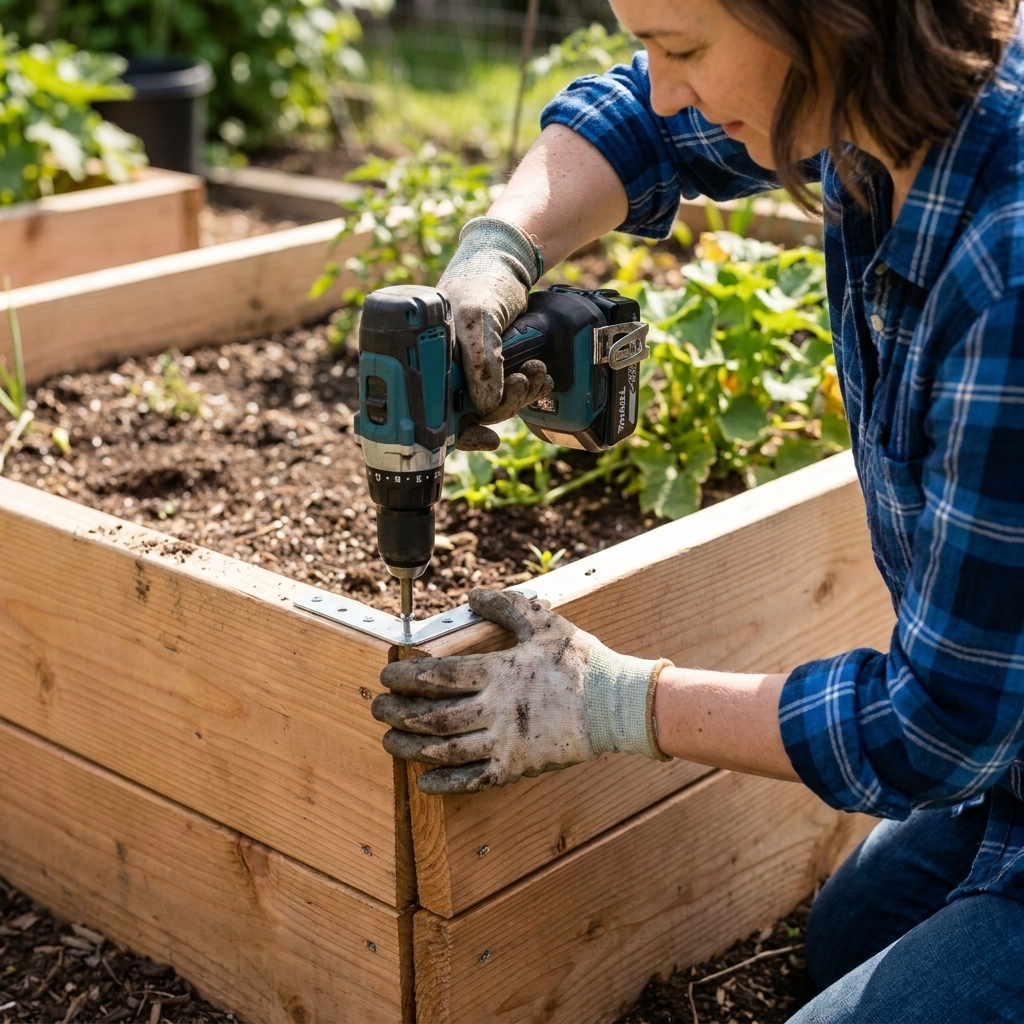
- Add two L-brackets on the inside of the corner, one near the top and one near the bottom.
- Use exterior structural screws, not drywall screws.
If your bed has corner posts, drive screws through the side boards into the post as well. Posts are your best anchor point.
Fix C: Outside stakes
Stakes are the quickest way to stop a bow from getting worse, especially when the boards have some age and flex but are not fully rotten.
Wood stakes
- Choose stakes long enough to sink at least 12 to 18 inches into the ground while reaching near the top of the bed. In sandy soil, loose fill, or very tall beds, go deeper if you can.
- Position a stake at the worst bulge (often the middle).
- Use a mallet to drive it down until it is firm.
- Screw the bed wall into the stake with two to three screws, spaced vertically.
Tip from my own mistakes: If you live somewhere with wet winters, treat the cut end of a wood stake or use cedar. Untreated stakes rot fast where soil stays damp.
Metal T-posts
T-posts are incredibly effective for beds that keep failing, especially tall beds. Drive the post outside the bed, then fasten the wood to it using heavy-duty zip ties, pipe straps, or post brackets designed for wood. Keep hardware tight and check it once a season.
Fix D: Replace one board
If one board has warped badly or is punky at the bottom, replacing just that board can buy you years.
- Shovel soil back from the inside of that wall section.
- Remove fasteners and take off the damaged board.
- Cut a new board to length. Use rot-resistant lumber if you can.
- Reattach using structural screws into corner posts or stakes.
- Add at least one cross-brace or stake so the new board is not asked to do all the work alone.
If you have a liner or landscape fabric, peel it back and re-staple after the repair.
Materials that change bracing needs
Not all raised beds bow the same way.
- Thicker boards hold shape longer: 2x lumber generally resists bowing better than 1x boards, especially on 6 to 8 foot runs.
- Cedar vs pine: Cedar is naturally rot-resistant, while standard pine often needs more bracing over time because it softens sooner at the soil line.
- Composite and kit beds: Many kits rely on metal corners and thin panels. They can still bulge, but the best fix is often adding internal ties (threaded rod or flat strapping) rather than trying to muscle the panels with heavy screws.
How many braces?
Here is a simple approach that keeps you from underbuilding. These are guidelines, not laws. Lumber thickness, corner posts, soil type, and bed height all matter.
- 4x4 beds: Usually no cross-brace needed, but corner brackets help as they age.
- 4x6 beds: One cross-brace across the 4-foot span is often enough if the boards are on the taller side.
- 4x8 beds: Two cross-braces or one threaded rod plus one brace.
- Any bed taller than 18 inches: Plan on bracing, often at two heights for the cleanest long-term fix.
When in doubt, add one more support than you think you need. Soil pressure does not get kinder over time.
Keep it from coming back
Do a seasonal hardware check
Once in spring, I walk my beds with a drill and tighten anything that looks suspicious. Ten minutes now beats a full repair later.
Keep the bottom board drier
- Avoid letting irrigation constantly soak the edges.
- Top up mulch so splashback does not keep the bottom board wet.
- If your bed sits in a low spot, consider improving drainage around it.
Mind the fill height
Filling soil to the absolute top increases outward pressure. Leaving an inch or two of headspace can reduce stress, especially in rainy seasons.
Common mistakes
- Using drywall screws: They snap and rust. Use structural exterior screws.
- Under-washing threaded rod: Small washers can sink into wood. Use large fender washers or a small plate.
- Skipping pre-drilling in old wood: Pre-drill to prevent splitting and to get a tighter hold.
- Bracing rotten boards: If the wood is soft, reinforcement is temporary at best.
- Forgetting to re-tighten threaded rod: Wood compresses. A follow-up tightening makes a big difference.
FAQ
Can I fix bowing without emptying the bed?
Usually, yes. Pulling soil back from the wall gives you enough space to straighten and reinforce. Full emptying is only necessary when multiple boards are failing or you are rebuilding corners and posts.
What is the strongest reinforcement for an 8-foot bed?
Threaded rod cross-ties are extremely strong and low profile. Two rods along the length, plus corner reinforcement, can turn a wobbly older bed into something that feels brand new.
Will corner brackets alone stop bowing?
They help, but long sides usually need a cross-brace or outside stakes too. Bowing is typically a mid-span problem, not just a corner problem.
Should I use pressure-treated lumber for braces?
Modern pressure-treated lumber is commonly used in raised bed builds. If you prefer to avoid it in the growing area, use cedar or another naturally rot-resistant wood for internal braces. For outside stakes, treated lumber can last longer since it is not in direct contact with your planting soil. If you are on the fence, a simple barrier between wood and soil can help you feel better about the choice.
When should I rebuild instead of reinforce?
If multiple sides are soft at the soil line, corners cannot be pulled tight, or the bed is sinking into uneven ground, you will usually spend less time and frustration rebuilding the frame than chasing one failure after another.
My go-to combo
If you want a simple plan that works for most older 4x8-ish beds: straighten the walls with a strap, add two cross-braces (or one brace plus a threaded rod), reinforce corners with inside brackets, and add a single outside stake at the worst bulge. That combination has rescued more of my aging beds than I can count.
And if your bed still looks a little imperfect afterward, welcome to real-life gardening. Straight enough to hold soil and grow food is the goal, not furniture-grade perfection.