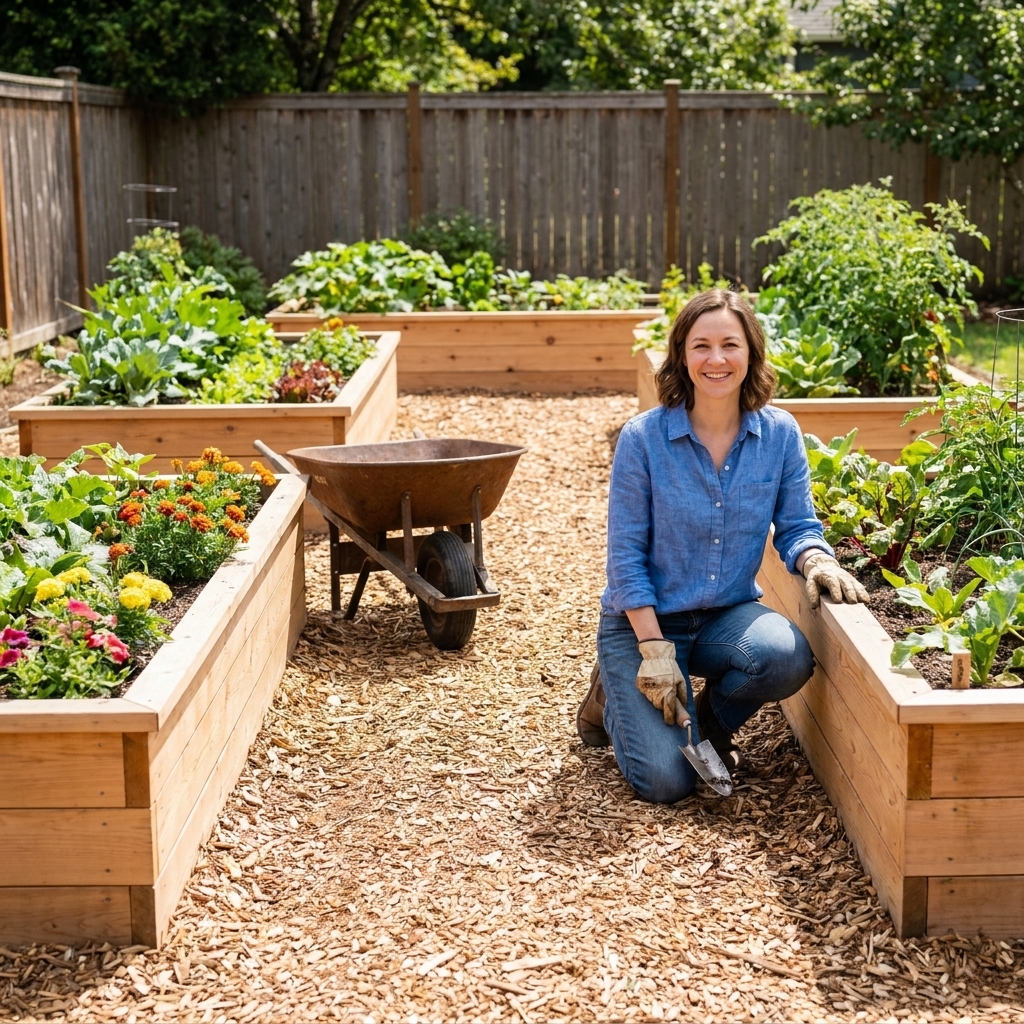

If you have ever planted a raised bed that looked perfect on day one and turned into a leafy traffic jam by July, welcome. I have absolutely done the “tiny tomato seedling next to lettuce” thing, only to watch the lettuce bolt in a heat wave while the tomato turns into a sun-blocking monster.
The fix is not complicated. You just need a simple map that respects two realities: the path of the sun and the mature height of your plants. Once you place tall, trellised crops so they cast shade where you actually want it, the rest of the bed falls into place.
Start with the sun, not the seed packets
Most “sun requirements” on plant tags assume open ground with no nearby fences, trees, or buildings. In real backyards, light is more like a moving patchwork. And it changes with the season as the sun angle shifts from spring to midsummer to fall.
Do a quick sun check (15 minutes, no gadgets)
- Pick a clear day and note where shadows fall at three times: morning, midday, and late afternoon.
- Mark bed orientation: stand at the bed and figure out where north is (a phone compass is fine).
- Write down the “best sun strip”: the area that stays sunny the longest, especially from late morning through mid-afternoon.
If you only do one thing, do this: find the sunniest edge of the bed and protect it from being shaded by your tallest crops.
Know your sun categories (in practical terms)
- Full sun (6+ hours): fruiting crops like tomatoes, peppers, cucumbers, squash, melons, eggplant, and most herbs. (If you can give them 8 hours, they usually act like it.)
- Part sun (4 to 6 hours): many roots and leafy greens can do well, especially if the light is strongest earlier in the day.
- Bright shade (3 to 4+ hours or dappled light): lettuce, arugula, spinach (in mild weather), cilantro, parsley, some Asian greens. More light is usually better, but shade can extend the season in heat.
The golden rule: put tall stuff on the north side (most of the time)
In the Northern Hemisphere, the sun tracks across the southern sky. That means shadows generally fall north. So if you place your tallest plants and trellises along the north edge of a raised bed, they shade less of the bed overall.
Southern Hemisphere note: Flip it. Your sun tracks across the northern sky, so tall crops typically belong on the south edge to keep them from shading the rest of the bed.
Exceptions: If your bed is shaded by a fence or house on one side, you may need to flip the plan. Follow the actual shadows you observed rather than a rule on the internet.
Common tall and trellised crops to “park” on the north edge
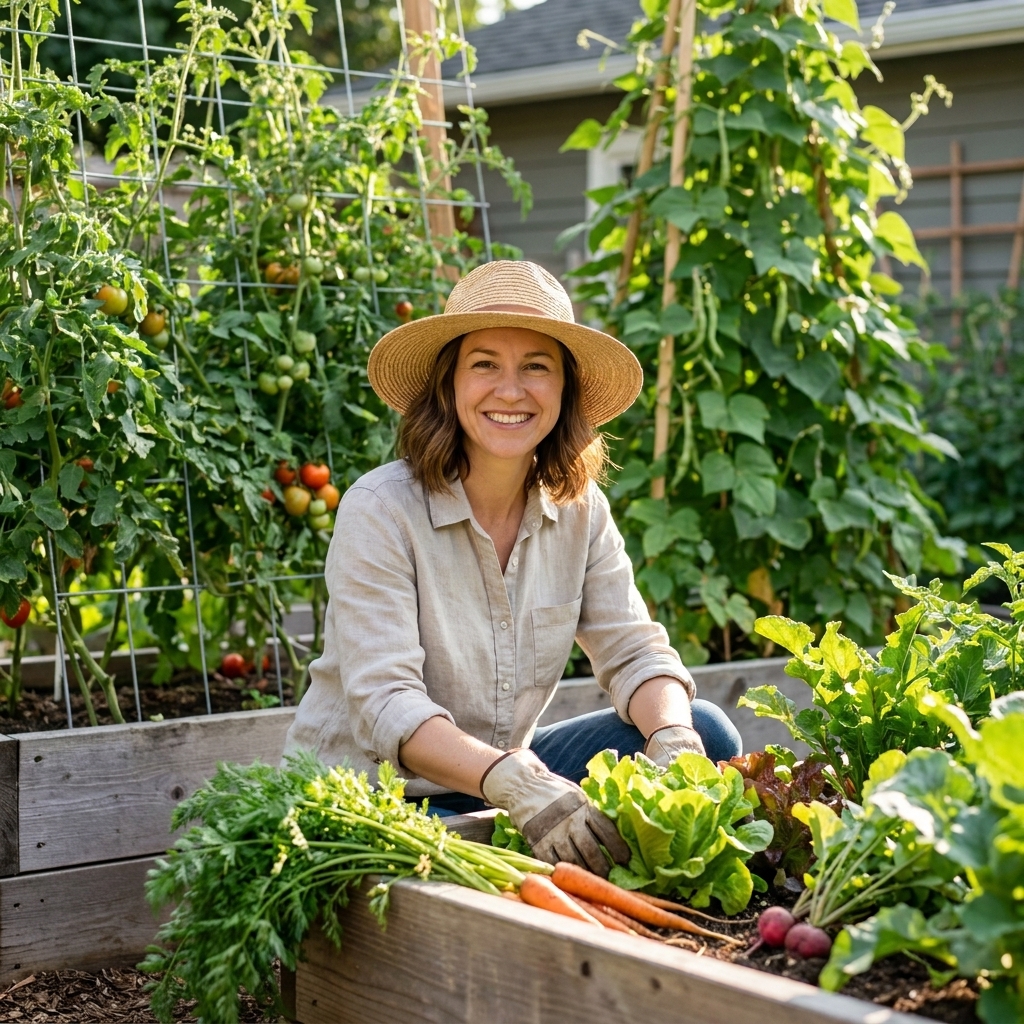
- Indeterminate tomatoes (cages count as tall)
- Pole beans
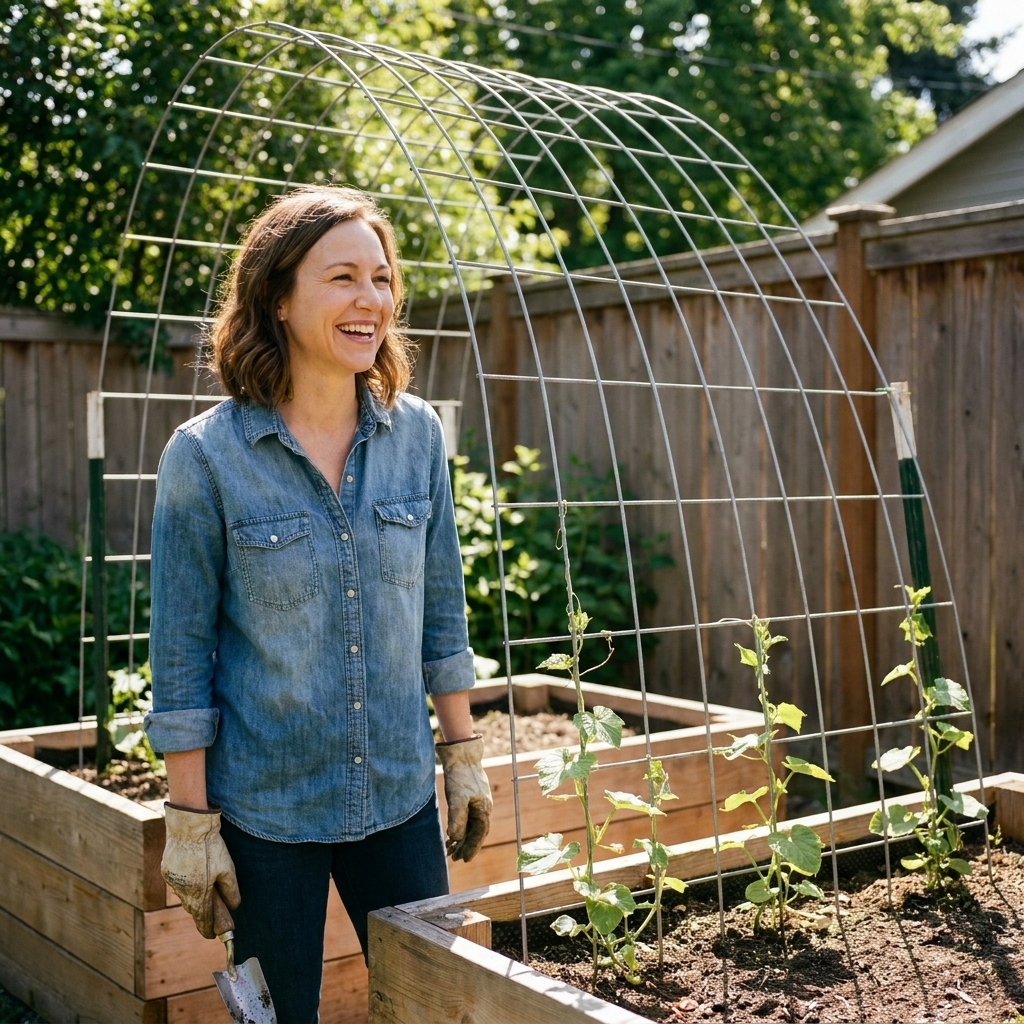
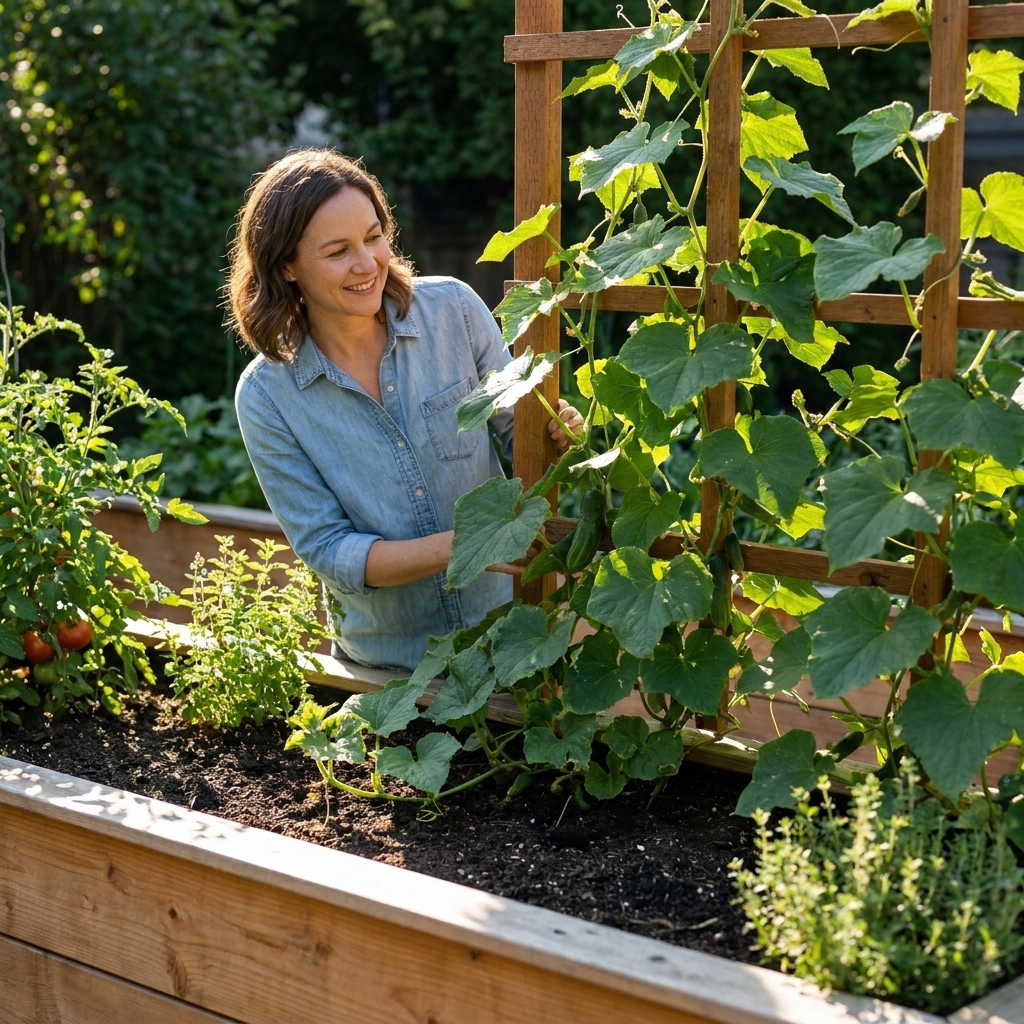
- Cucumbers (on a trellis)
- Peas (spring)
- Malabar spinach (summer climber)
- Sunflowers (yes, even these can be intentional shade)
- Corn (tall block planting, if you have enough space)
Build your bed map in three height zones
I like to map raised beds using three layers: tall, medium, and low. This keeps sunlight moving across the bed instead of slamming into a wall of leaves.
Zone 1: Tall (back row)
Placement: North edge (or the edge that least shades the rest of your bed). Think “back row = north side” if you are standing on the south side looking into the bed.
Spacing note: Trellised plants need airflow. If you pack them too tight, you will trade sun problems for mildew problems.
Zone 2: Medium (middle band)
Placement: Center of bed, in front of tall crops.
Good candidates:
- Peppers
- Bush beans
- Determinate tomatoes
- Chard
- Kale (it becomes “tall-ish” later)
- Compact zucchini (still big, just laterally big)
- Basil and most herbs
Zone 3: Low (front band)
Placement: South edge, where sun hits first and longest.
Good candidates:
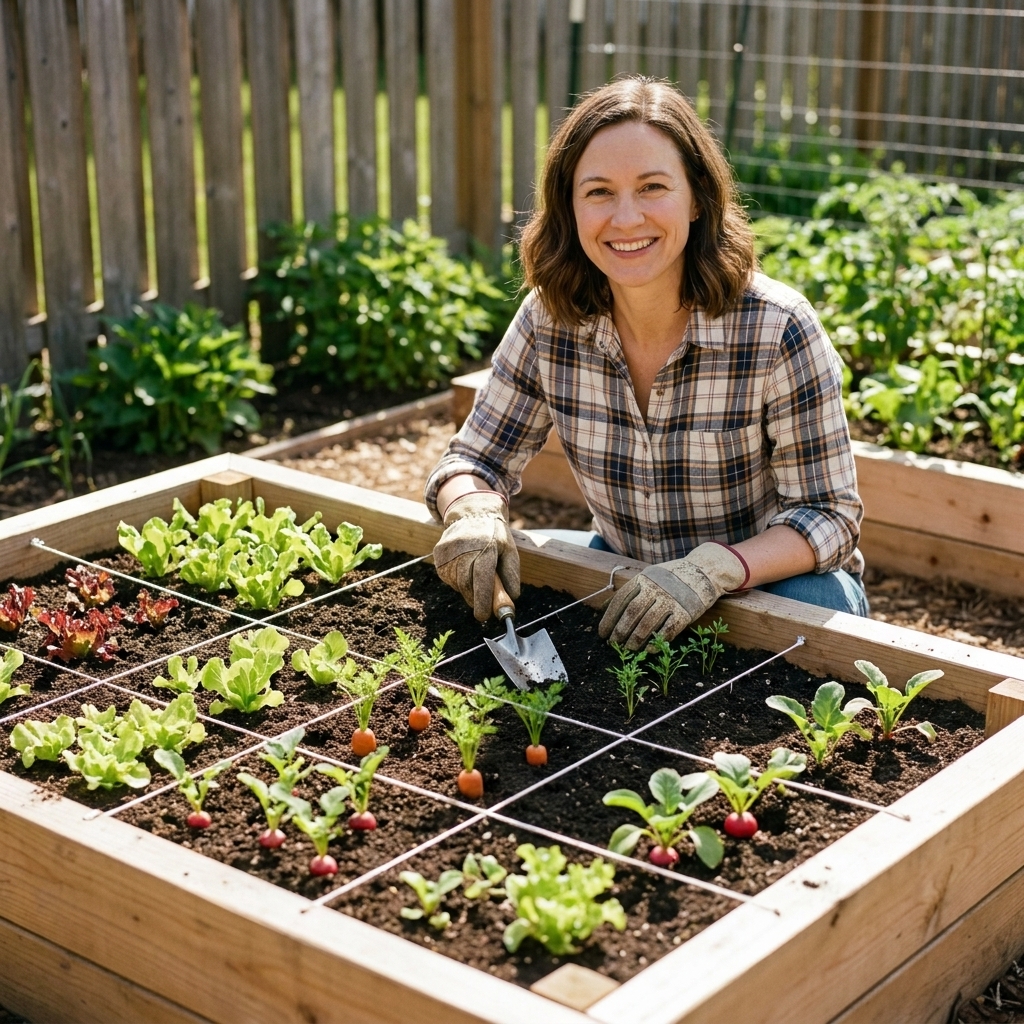
- Carrots, beets, radishes
- Green onions
- Lettuce and arugula (especially in spring and fall)
- Strawberries (perennial beds)
- Thyme, oregano (if not shaded out)
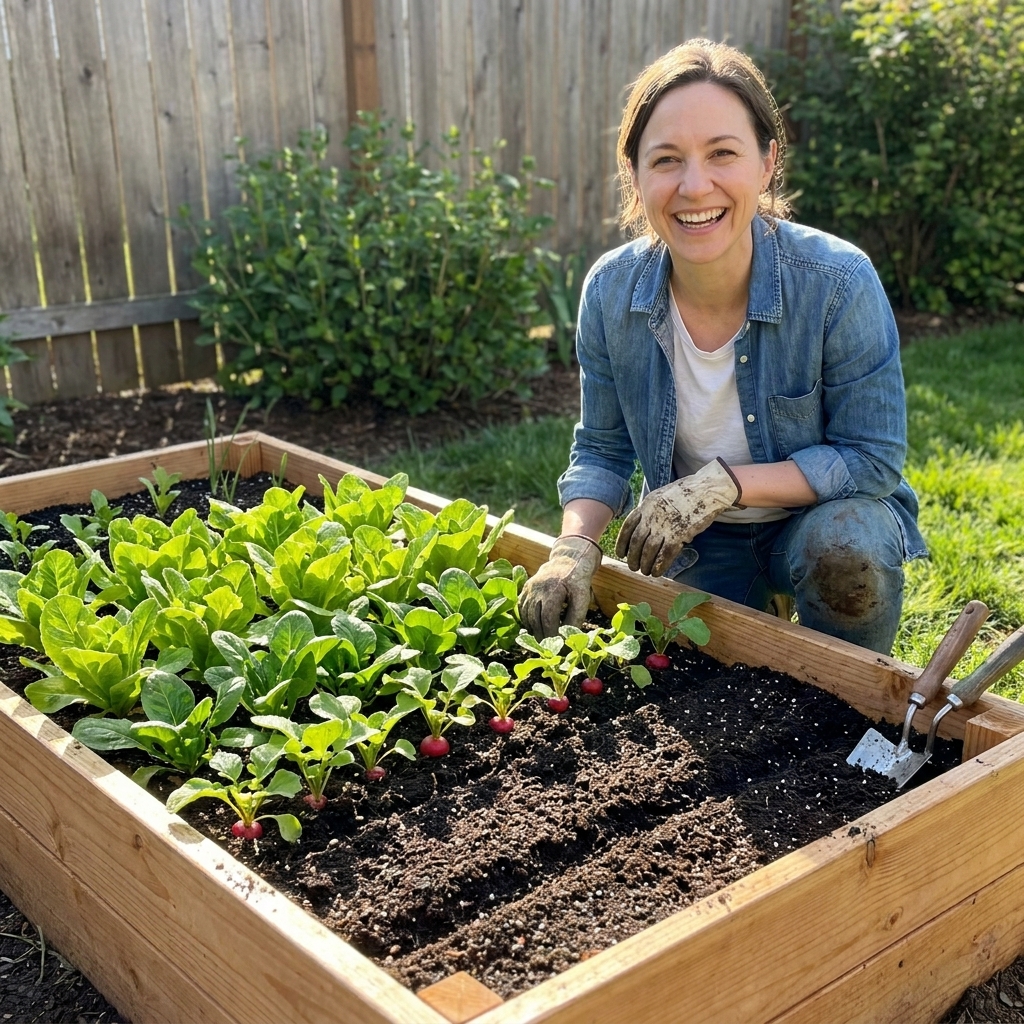
This is also where I tuck “quick wins” like radishes and baby greens that mature before the big plants start throwing serious shade.
Use shade on purpose (your greens will thank you)
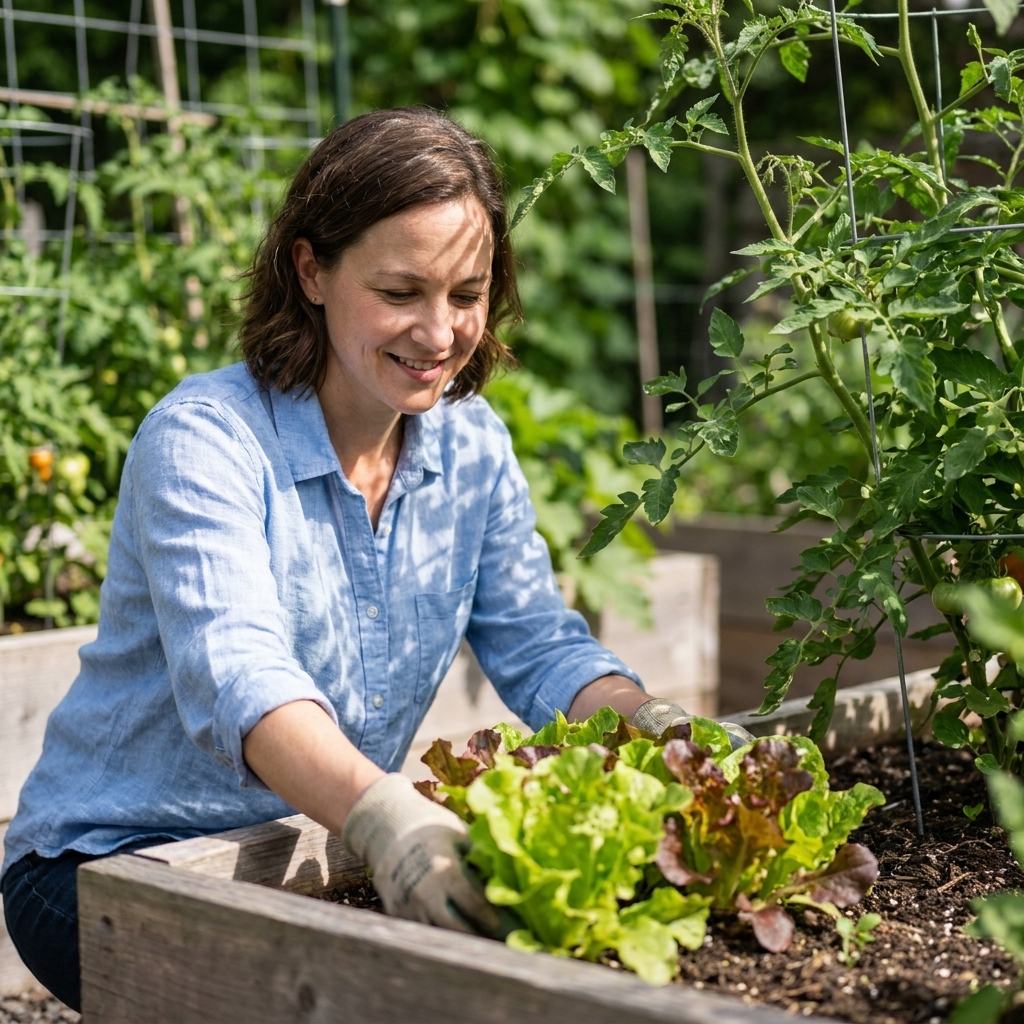
In hot summers, a little afternoon shade can be the difference between crisp lettuce and bitter, bolted lettuce. The trick is making sure the shade lands on the plants that prefer it.
Best spots for shade-tolerant greens
- East side of tall crops: Gets morning sun, then shade later.
- Under light trellises: Cucumbers and pole beans can create a softer, dappled shade than a dense tomato wall.
- North-east corner: This can become a cooler pocket in midsummer, depending on your structures and airflow.
Greens that handle partial shade well
- Lettuce (especially looseleaf types)
- Spinach (best in spring and fall, shade helps extend it)
- Arugula
- Cilantro (shade slows bolting)
- Parsley
- Mizuna, tatsoi, and many Asian greens
Account for the “July problem”: plants triple in size
When you map your bed, you are not mapping seedlings. You are mapping what those plants look like at maturity, at peak summer sun, when everything wants to sprawl.
My quick maturity checklist
- Height: Indeterminate tomatoes and vigorously trellised cucumbers can easily hit 5 to 7 feet, sometimes more.
- Width: A pepper might stay tidy, but a squash plant can claim multiple square feet.
- Leaf density: Kale and tomatoes cast heavier shade than pole beans on an open trellis.
- Season timing: Peas are tall in spring, but gone by summer. That changes your shade map mid-season. Also, the sun’s angle shifts as the season goes on, which can stretch or shrink your shadow zones.
If you want a low-effort way to handle this, plan for swaps: put spring climbers (peas) on the trellis first, then replace them with summer climbers (cucumbers or pole beans) when heat arrives.
Simple mapping method: sketch, then place by “sun value”
You do not need fancy software. I map beds with a pencil because I change my mind constantly.
Step-by-step bed sketch
- Draw your bed rectangle and label the edges N, S, E, W.
- Draw the trellis line (if you have one) on the north edge or the least-shading edge.
- Mark permanent features like a fence shadow or a tree shade zone.
- Place tallest crops first (tomatoes, cucumbers, pole beans).
- Fill in medium crops in front of them (peppers, bush beans, basil).
- Assign the remaining brightest strip to your most sun-hungry plants, usually fruiting crops.
- Use the cooler spots for greens, herbs, and roots.
I like to use three highlighters on the sketch:
- Yellow: Full sun strip
- Green: Part sun
- Blue: Likely afternoon shade
Then I match plants to the color zones. It feels almost too simple, but it prevents the most common layout mistakes.
Placement patterns that work in real raised beds
Here are a few layout patterns I have used repeatedly because they stay productive even when the season gets messy.
Pattern 1: Trellis + salad lane
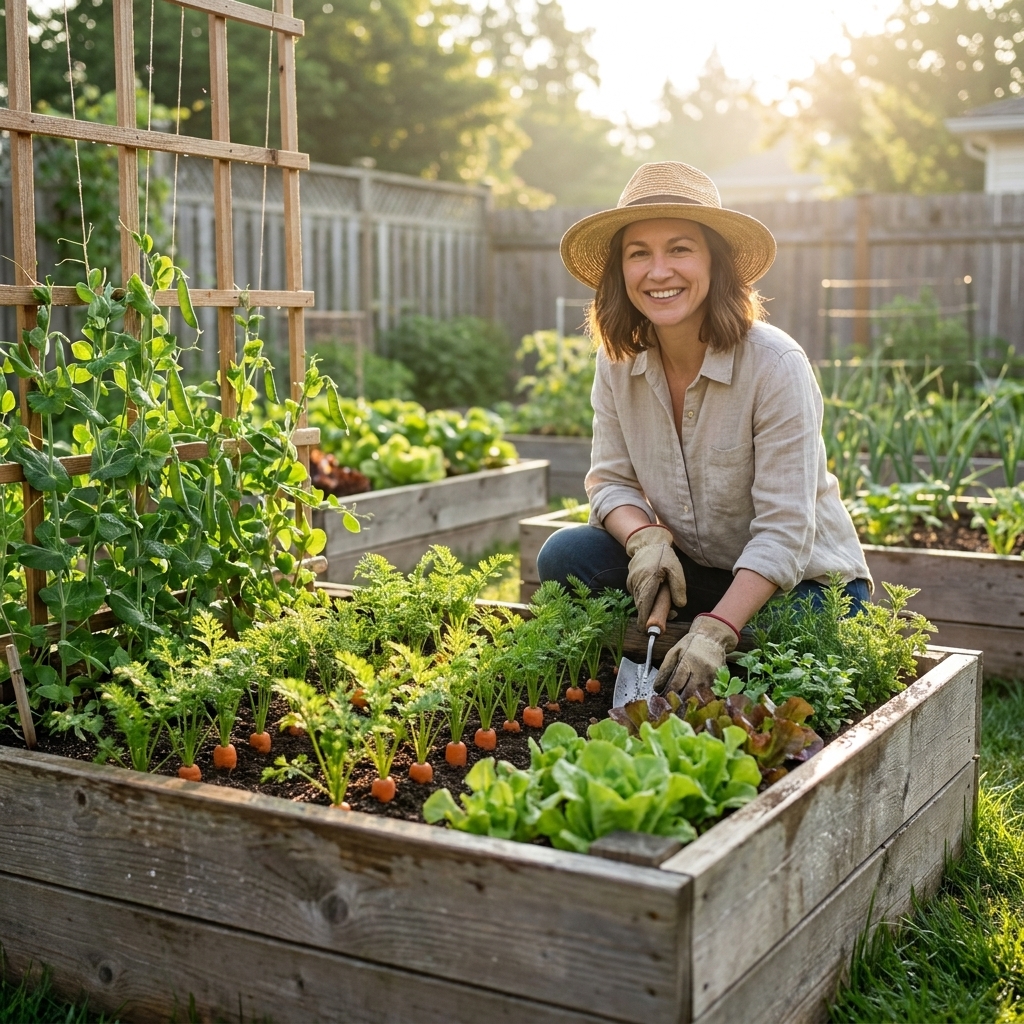
- North edge: Trellis with cucumbers or pole beans
- Middle: Peppers or basil
- South edge: A “salad lane” of lettuce, scallions, radishes, and arugula
The trellis makes light shade later in the season, which can keep the salad lane going longer.
Pattern 2: Tomato wall + heat buffer
- North edge: Tomatoes (caged or staked)
- Middle: Chard and basil (both handle heat better than lettuce)
- South edge: Carrots or beets
Carrots and beets do fine with a bit of shade in mid to late summer, especially if they get solid morning sun.
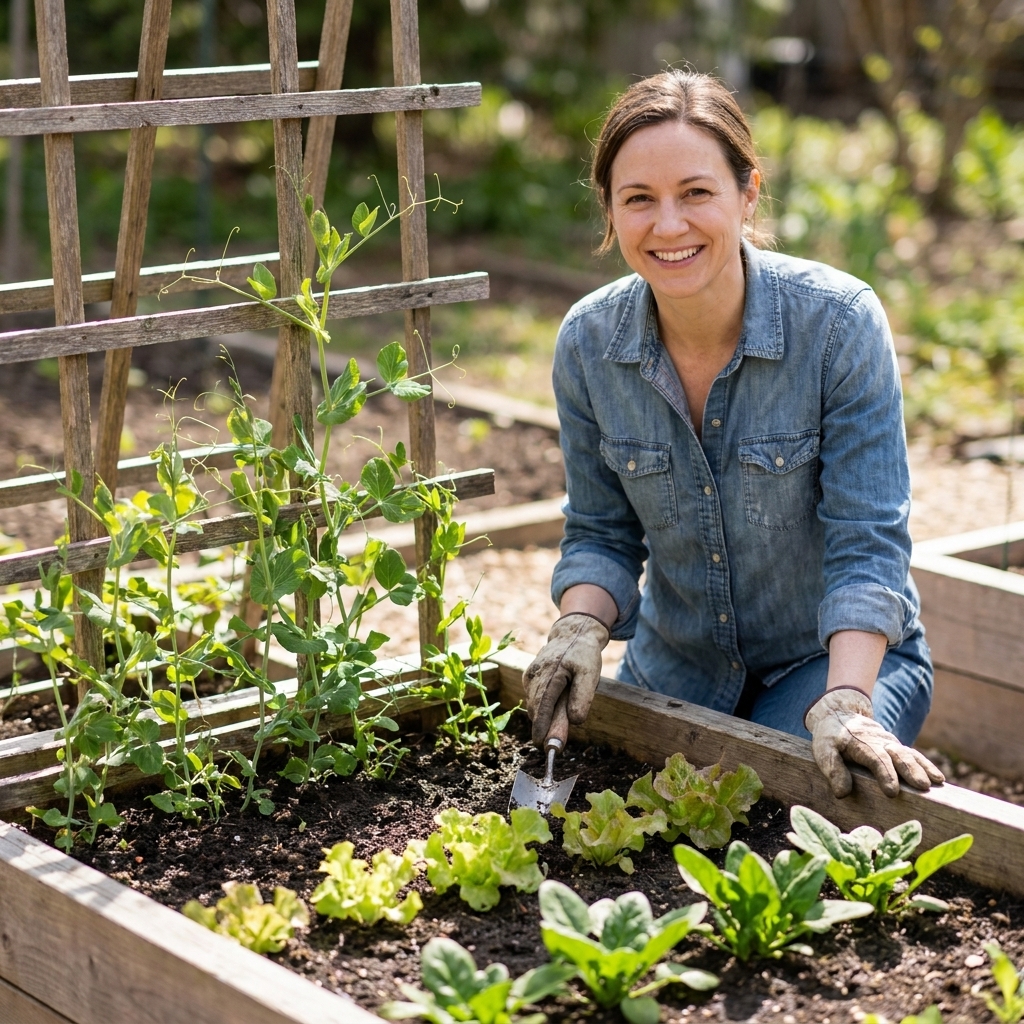
Pattern 3: Spring to summer swap
- Early season trellis: Peas
- Under peas: Spinach or lettuce
- After peas finish: Replace with cucumbers, then re-seed greens as temperatures cool
Common sun-mapping mistakes (I have made every one)
Putting a trellis on the south side
This is the fastest way to shade a large portion of your bed (in the Northern Hemisphere). Sometimes you have to do it due to access, but if you can choose, avoid it.
Ignoring afternoon sun intensity
In many gardens, afternoon sun is harsher than morning sun. If your area gets brutal summer heat, plan for greens to receive morning sun and afternoon shade.
Overestimating “partial shade tolerance” for fruiting crops
Tomatoes, peppers, and cucumbers can survive in less sun, but yields often drop. If your bed has one premium sunny strip, spend it on fruiting plants.
Planting tall and wide together
Tomatoes plus squash in one corner sounds fine until both mature. If you must combine, give the wide plant its own spill zone toward a path.
Quick reference: who wants what light?
| Crop type | Ideal light | Best placement in a bed map |
|---|---|---|
| Tomatoes, peppers, eggplant | Full sun (6+ hours) | Sunny strip, but keep tomato height on the north edge |
| Cucumbers, pole beans (trellised) | Full sun to part sun | North edge trellis, can create useful shade |
| Squash, zucchini | Full sun | Sunny area with room to sprawl outward |
| Carrots, beets, radishes | Full sun to part sun | Front or middle, tolerate some later shade |
| Lettuce, spinach, arugula | Part sun in heat | East side or in afternoon shade zones |
| Basil, parsley, cilantro | Full sun to part sun | Basil in sun, parsley and cilantro appreciate some shade in summer |
FAQ
What if my raised bed runs east to west?
Orientation is less important than where the sun actually hits. Still, the north-edge rule usually holds. Put tall crops on the north side of that east to west bed so they cast shade outward, not across your planting area.
What if I only get 4 to 5 hours of sun?
Lean into it. Prioritize greens, herbs, and many root crops. You can still grow tomatoes, but expect fewer fruits and choose compact or early varieties, and give them the brightest spot you have.
Can I plant greens under tomatoes?
You can, but pick the right timing. Early in the season, tomatoes are small and let plenty of light through. That is a great window for lettuce and spinach. By midsummer, the shade is heavier, so switch to shade-tolerant herbs or let that space become a mulched walkway for airflow.
How far should a trellis be from the next row?
Enough that you can harvest and that air can move. In most raised beds, I treat 18 inches as a practical minimum. For dense growers like indeterminate tomatoes or a thick cucumber trellis, 18 to 24+ inches is often more comfortable for access and airflow, especially in narrower beds where shading gets intense fast.
A simple way to sanity-check your plan
Before you plant, stand where the bed is and imagine the tallest crop at full height. If that mental picture makes you think, “Wow, that is going to cast a lot of shade,” it probably will.
When in doubt, do this: keep the south edge low, the middle moderate, and the north edge tall. Then use that unavoidable shade to your advantage by planting greens where the afternoon sun would otherwise cook them.