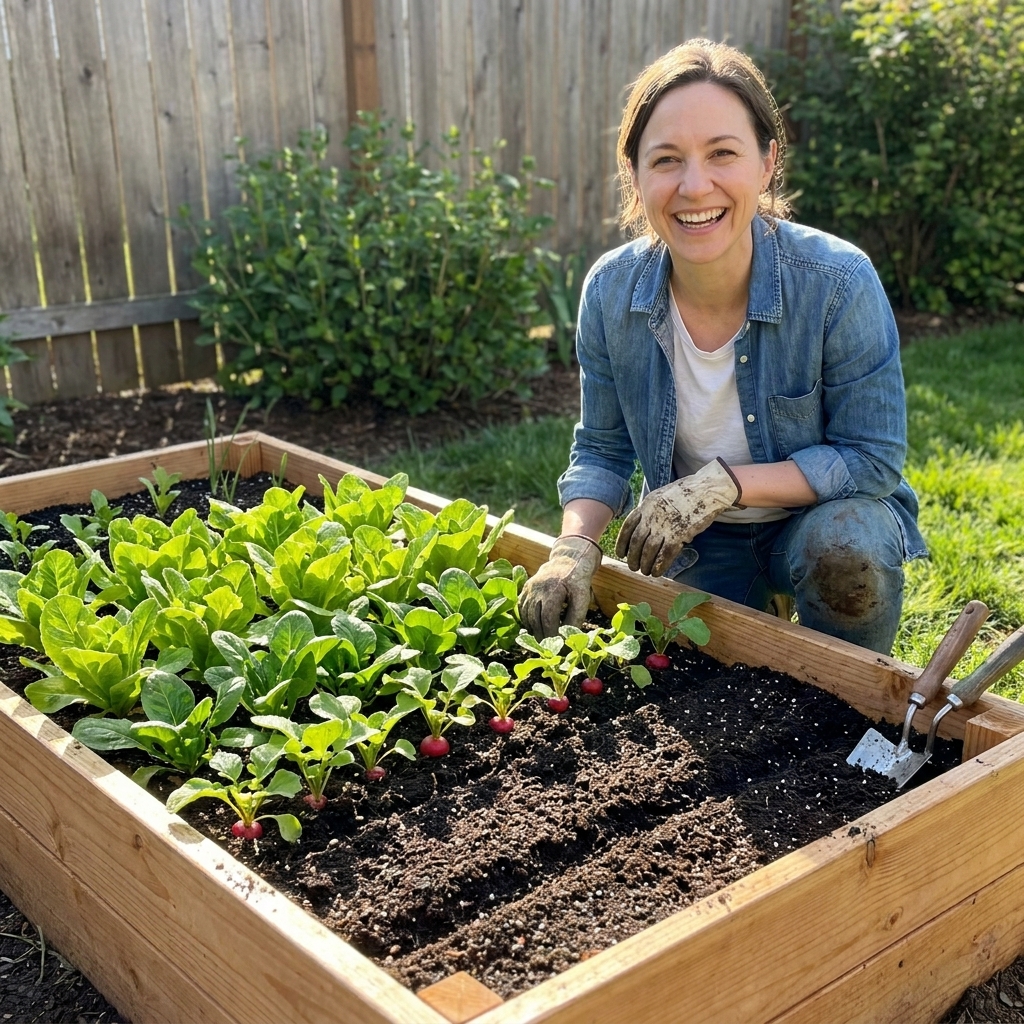

When I built my first raised bed, I planted like I was scattering confetti. Some spots were packed, others were bare, and I still somehow managed to lose half my lettuce to crowding and the other half to drying out. Square foot gardening fixed that for me.
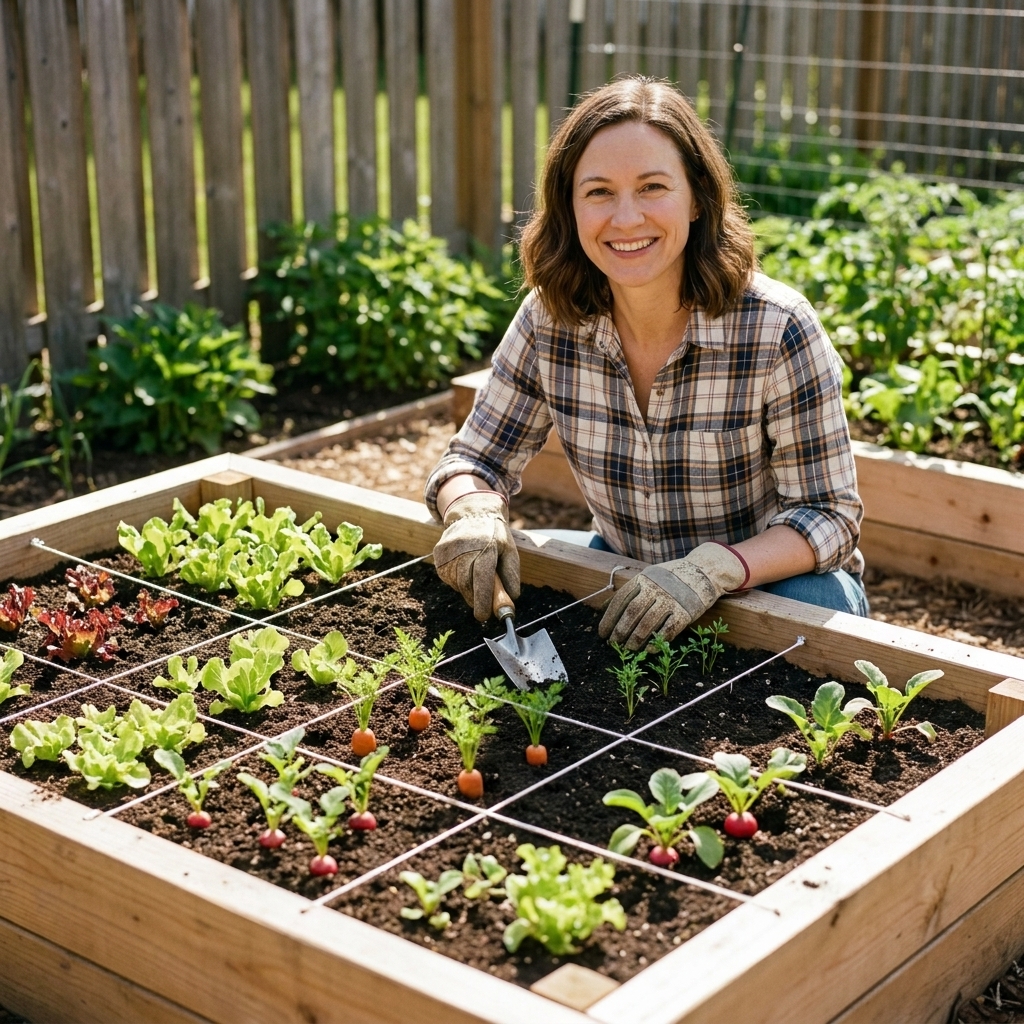
The idea is simple: you divide your raised bed into a grid of 1 foot squares, then plant each square with a specific number of plants based on spacing. It is neat, it is efficient, and it makes planning feel like a cozy puzzle instead of guesswork.
What it is (and why it works)
Square foot gardening is a spacing and planning method popularized by Mel Bartholomew. Instead of planting in long rows, you plant in blocks, using a 12 inch by 12 inch square as your basic unit.
Raised beds are basically the perfect stage for this method because:
- You can reach everything. A 4 foot wide bed lets you access the center from either side, which matters when every square is productive.
- Soil stays fluffy. No walking in the bed means less compaction, which means stronger roots and better drainage.
- Water and fertilizer are targeted. You feed a smaller, defined area instead of broadcasting inputs everywhere.
- Spacing becomes predictable. Each square has a job, which keeps you from overplanting in spring excitement.
Raised bed sizing
You can use square foot gardening in any raised bed, but a few sizes make life easier.
Best bed width
4 feet wide is the sweet spot. Wider than that and you will be leaning too far, crushing seedlings with your elbows, or skipping harvests because it is annoying to reach.
Best bed length
Length is flexible. Common options:
- 4x4 bed: 16 squares, perfect for beginners and patios.
- 4x8 bed: 32 squares, a great “family workhorse” bed.
- 4x10 or 4x12: still doable, but plan for paths and access.
Best bed depth
At least 10 to 12 inches of soil is ideal for most vegetables. Root crops and tomatoes are happiest with 12 to 18 inches, but you can still grow a lot in 10 inches if your soil is light and well-fed.
Make a grid (3 ways)
You want visible squares at planting time. After a few weeks of growth you might not see the lines, and that is fine. The grid’s main job is planning and early spacing.
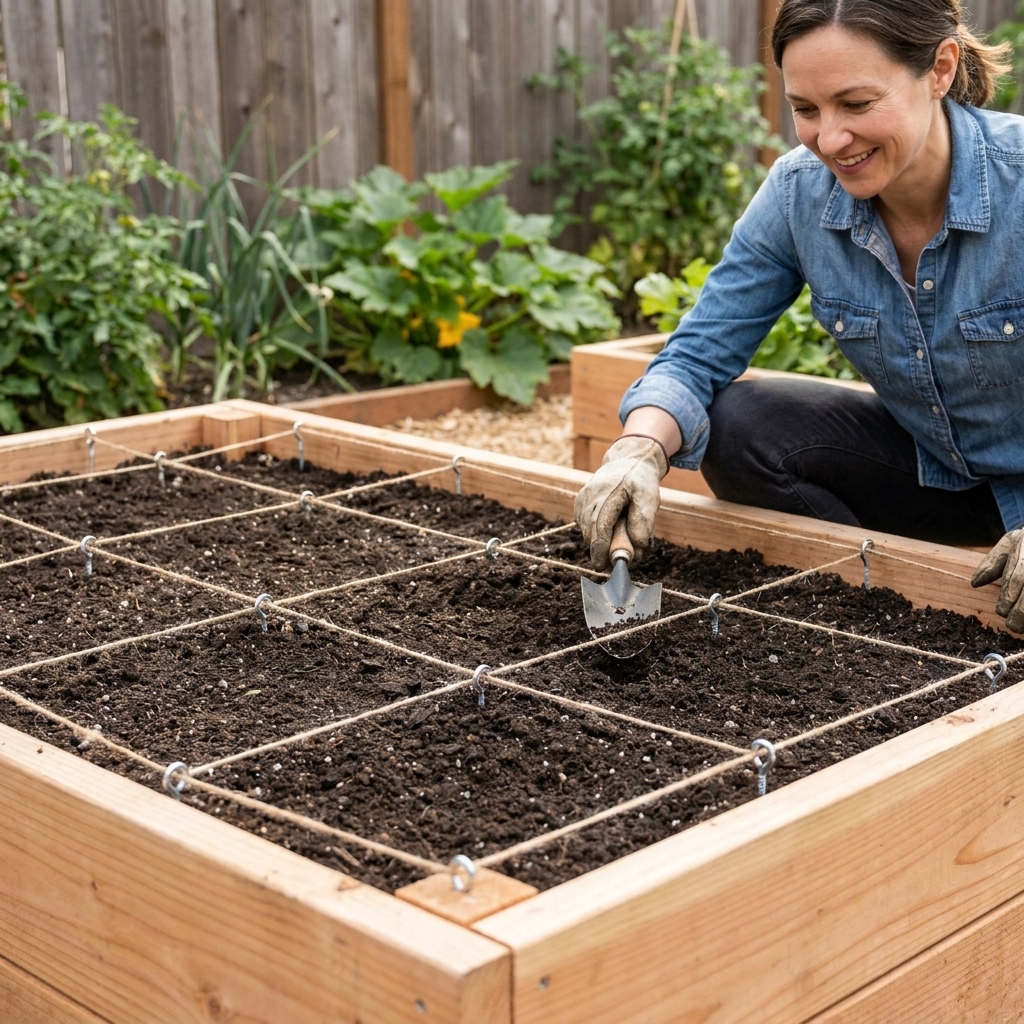
Option 1: String grid (my go-to)
- Screw small hooks or eyelets along the inside top edge of the bed frame every 12 inches.
- Run string tightly across one direction, then the other.
- Tie off so the string stays taut.
Why I like it: it is inexpensive, adjustable, and you can remove it mid-season if it gets in the way.
Option 2: Wood slat grid
Build a removable lattice from thin wood strips (like 1x2s) laid in a crisscross pattern. Place it on top of the soil.
Tip: Seal the wood or use cedar so it holds up longer.
Option 3: Marked frame
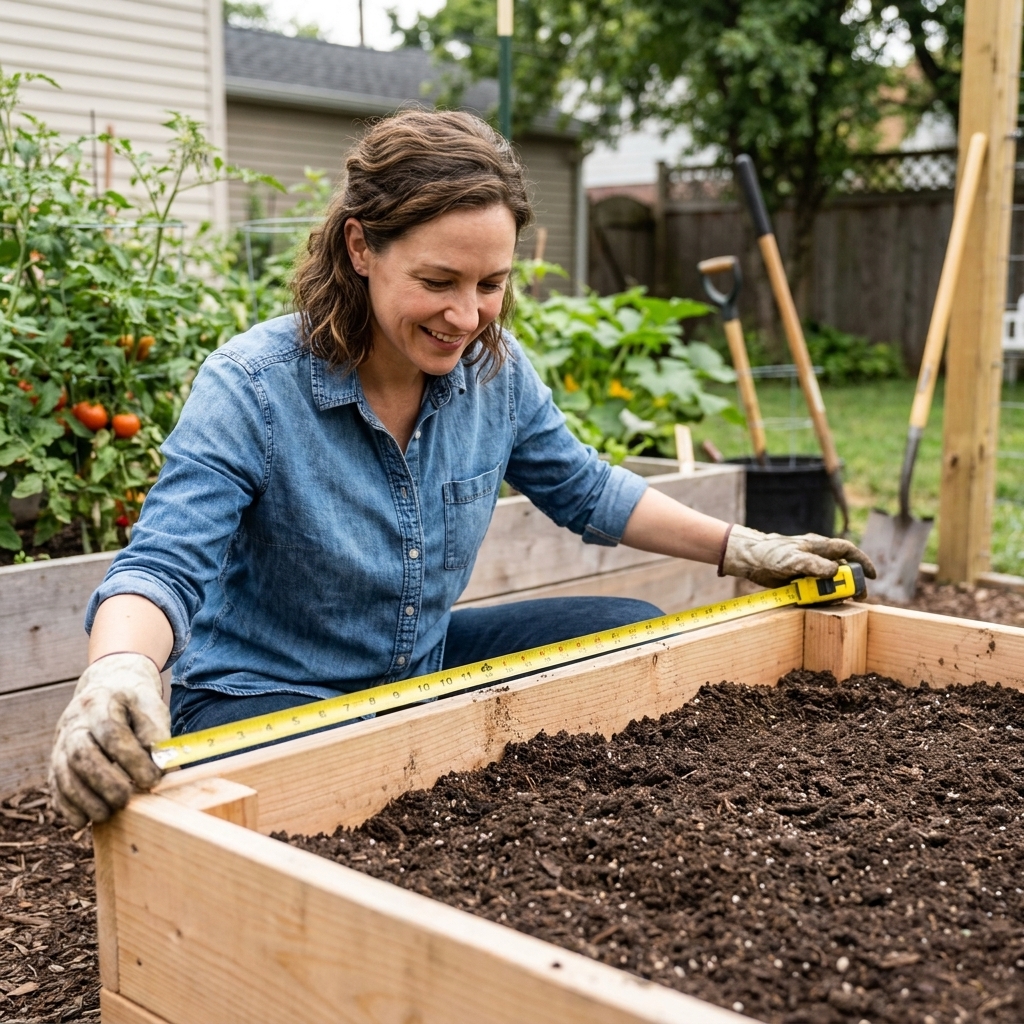
Measure and mark your bed’s top rail every 12 inches with a permanent marker or burned notch, then use a tape measure to visualize squares as you plant.
This works, but beginners usually do better with a visible grid the first season.
Spacing: plants per square
Square foot gardening uses a simple pattern based on plant spacing. Take the typical spacing for a crop, then fit it into the square.
- 12 inch spacing = 1 plant per square
- 6 inch spacing = 4 plants per square
- 4 inch spacing = 9 plants per square
- 3 inch spacing = 16 plants per square
To place plants, imagine the square like a tic-tac-toe board (for 9) or a 4x4 checkerboard (for 16). You are spacing plants evenly, not cramming them randomly.
One important reality check: spacing depends on whether you are harvesting baby or full-size. You can pack squares tighter for cut-and-come-again greens, scallions, and baby beets, but full-size heads and full-size roots need breathing room and time.
Quick reference table
| Plants per square | Typical crops | Notes |
|---|---|---|
| 1 | Tomato, pepper, eggplant, broccoli, cauliflower, cabbage | Most need support or extra airflow. Large cabbage may want more than one square. |
| 1 to 2 | Cucumber (trellised) | Start with 1 for most slicing varieties. You can push to 2 with compact types and aggressive training. |
| 4 | Lettuce (head), basil, chard, beets | Harvest baby leaves tighter, thin for bigger roots if growing beets to full size. |
| 4 to 9 | Bush beans | Some varieties stay polite at 9, others are happier at 4 to 6 for airflow and easier picking. |
| 6 to 9 | Pole beans (trellised) | Sow about 8 seeds, then thin to 4 to 6 strong plants if it gets crowded. |
| 9 | Spinach, onions, garlic, turnips | Great for cool season succession planting. |
| 16 | Carrots, radishes, green onions | Requires fluffy soil and consistent moisture. Thin if you want larger carrots. |
My failure-to-success note: I used to plant carrots too thick, then avoid thinning because it felt wasteful. In a 16-per-square approach, you still may thin a bit, but you start closer to the correct density and get better-sized roots.
Grow up for more yield
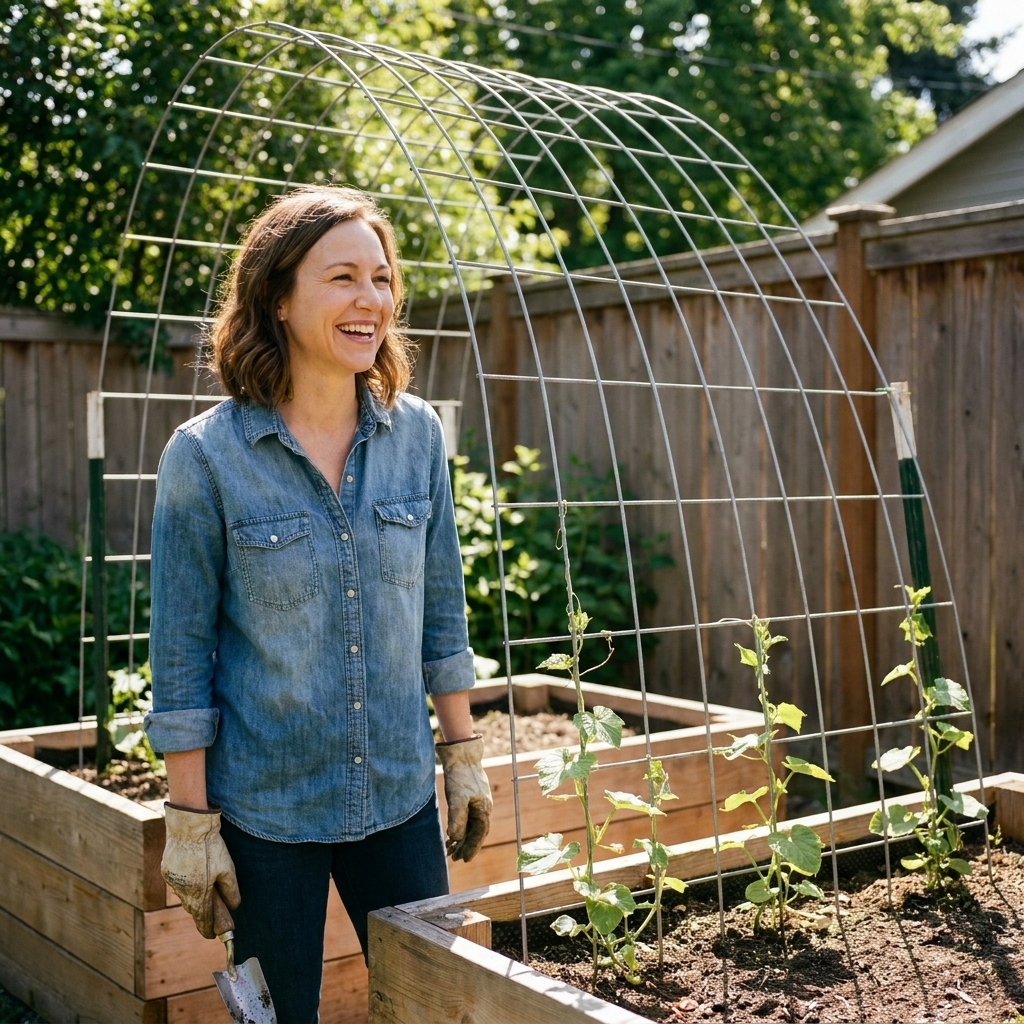
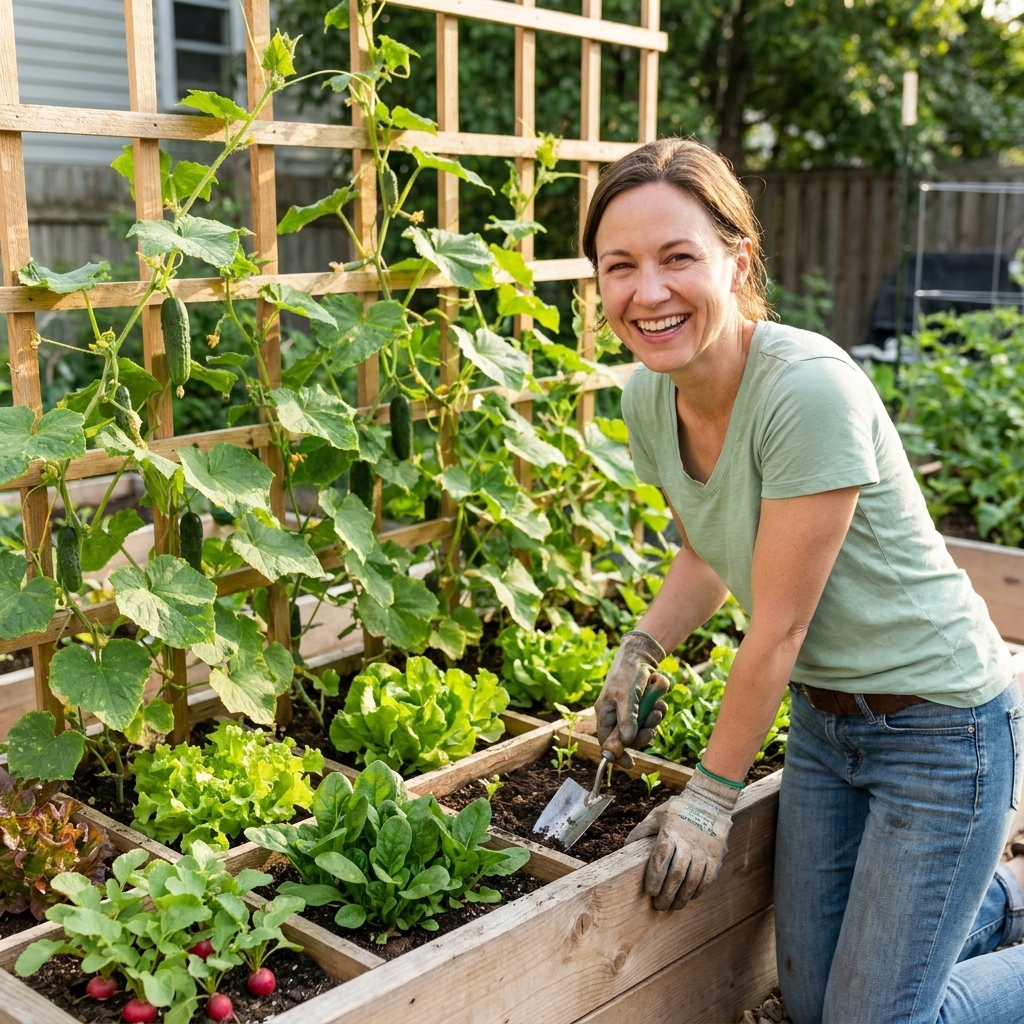
Square foot gardening really shines when you grow up, not out. In raised beds, vertical growing also improves airflow and makes harvesting easier.
Trellis placement
Place tall crops on the north side of the bed so they do not shade everything else.
Southern hemisphere note: flip that. Put tall crops on the south side so shorter plants still get sun.
- Peas
- Pole beans
- Cucumbers
- Indeterminate tomatoes
- Small melons (with slings)
Plan your layout
Once you understand spacing, layout becomes about three things: sun, height, and timing.
1) Group by season
Cool-season crops (lettuce, spinach, peas, radishes) can occupy squares early, then you can replant those squares with warm-season crops later.
2) Prevent shade
Tall on the north side, medium in the middle, short on the south side is the easiest rule to remember. If you are in the southern hemisphere, flip north and south.
3) Put snacks near the edge
Herbs, salad greens, and green onions are easier to snip when they are right by the path. The center squares are great for crops you harvest once (like onions or carrots) or less often (like cabbage).
4) Use anchor squares
I like to choose 4 to 8 squares per bed that stay planted all season, then fill the rest with quicker crops.
- Anchors: tomatoes, peppers, eggplant, basil, chard
- Fillers: radishes, baby greens, cilantro, scallions
Layout ideas
These are proven, beginner-friendly layouts. Adjust based on your climate and what you actually like to eat. A perfect layout is useless if you never cook zucchini.
4x4 layout: salad and stir-fry (16 squares)
North row (tall): 2 squares peas on a trellis (one square each), 1 square cucumber on trellis (1 plant, or 2 if compact), 1 square basil (4 plants).
Middle rows: 3 squares lettuce (4 per square), 1 square chard (4 per square), 2 squares spinach (9 per square), 2 squares bush beans (4 to 9 per square depending on variety and how much airflow you want).
South row (short): 4 squares total: 2 squares radishes (16 per square), 2 squares carrots (16 per square).
Succession tip: When radishes finish, replant those squares with more bush beans, basil, or heat-tolerant greens.
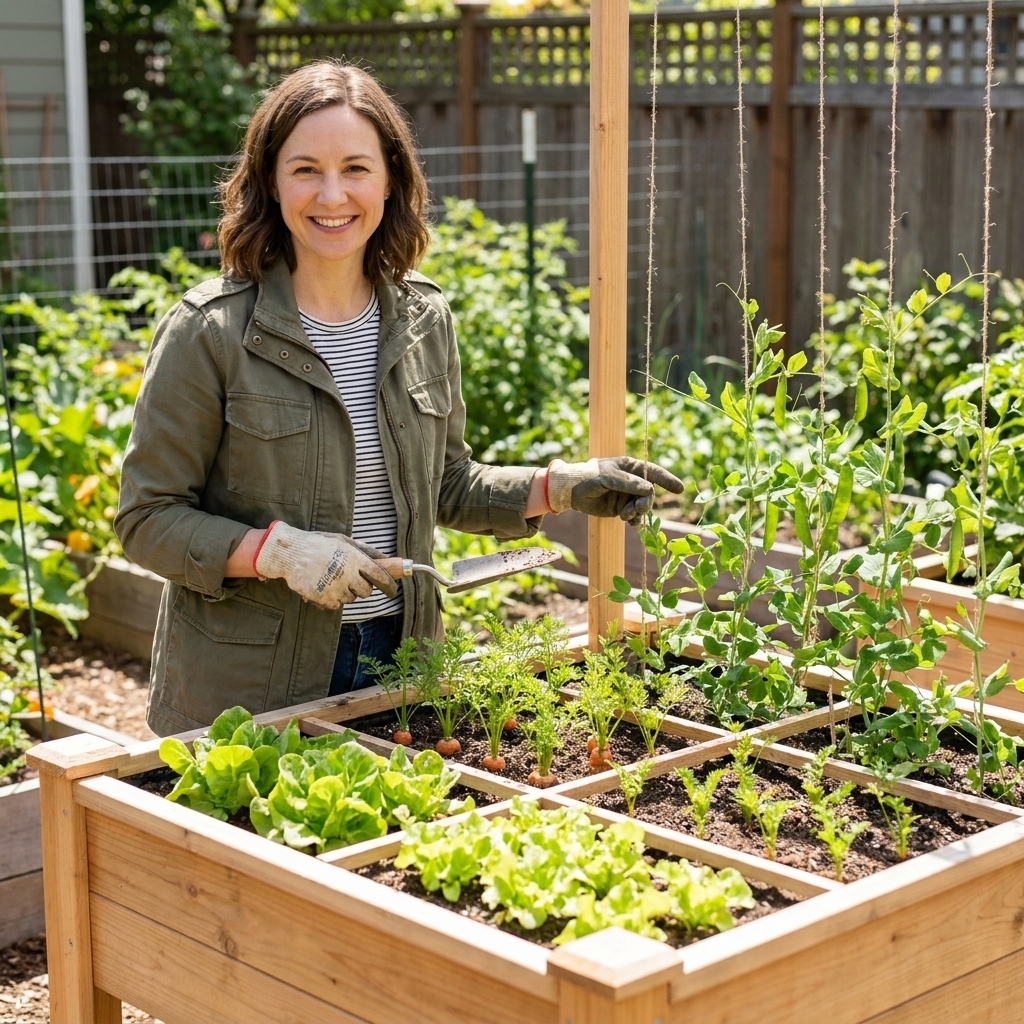
4x8 layout: family salsa bed (32 squares)
This one is a classic because it keeps you harvesting for months, and it actually uses the whole bed.
- North long edge (8 squares): 4 tomato plants (1 per square) on sturdy cages, plus 4 squares pole beans on a trellis (sow about 8 seeds per square, thin to 4 to 6 plants as they climb).
- Middle (12 squares): 6 pepper plants (1 per square), 2 squares onions (9 per square), 2 squares garlic (9 per square), 2 squares basil (4 per square).
- South edge (12 squares): 4 squares cilantro (9 per square, succession plant every 2 to 3 weeks), 4 squares lettuce for early season then swap to cilantro or basil, 2 squares jalapeños or extra peppers (1 per square), 2 squares scallions (16 per square).
Spacing reality check: Tomatoes are the one crop that can bully their neighbors. Give them their squares, prune a bit, and do not be afraid to sacrifice a nearby square to airflow if they get wild.
4x8 layout: cool-season powerhouse (32 squares)
This is my “stuff the fridge” bed for early spring or fall. Plan to replant squares as things bolt or finish.
- 6 squares lettuce (4 per square, or harvest baby and sow thicker)
- 6 squares spinach (9 per square)
- 4 squares kale (1 per square)
- 6 squares carrots (16 per square, thin if growing big roots)
- 4 squares onions (9 per square)
- 2 squares radishes (16 per square)
- 4 squares peas on a trellis (plant along the back edge and let them climb)
Succession planting
Square foot gardening is not just about where you plant. It is about when you replant.
My easy routine
- Every 1 to 2 weeks: re-sow a square of radishes, scallions, or quick salad mix.
- Monthly: start a few replacement seedlings (lettuce, basil, kale) so you can plug them in when a square opens.
- As soon as a square finishes: add compost and replant within a day or two if the season allows.
Mini soil reset: After you pull a crop, sprinkle 1 to 2 inches of finished compost into that square and gently scratch it into the top couple inches. You do not need to dump fertilizer everywhere, just feed the square you are replanting.
Companion planting
A grid makes companion planting simpler, but you do not need a complicated map. Focus on a few reliable pairings:
- Tomatoes + basil: easy, practical, and you will use them together.
- Carrots + onions: classic combo and they fit well in square foot densities.
- Brassicas + dill: dill flowers can attract beneficial insects. Just keep it from shading smaller plants.
- Lettuce under taller crops: lettuce appreciates a little afternoon shade in warm weather.
And one caution: avoid placing mint in a square foot bed unless it is contained in its own pot buried in the bed. Ask me how I know.
Common mistakes
Counting squares, ignoring size
“One per square” is a starting point. A full-size cabbage can sprawl into neighboring squares. Either give it breathing room or pick compact varieties.
Forgetting airflow
Dense beds can hold humidity, especially with tomatoes and cucumbers. Trellis, prune, and do not hesitate to remove a plant if powdery mildew is taking over.
Overwatering
Thick planting shades soil, so beds often need less frequent watering than row gardens. Water deeply, then let the top inch dry a bit before watering again.
No path space
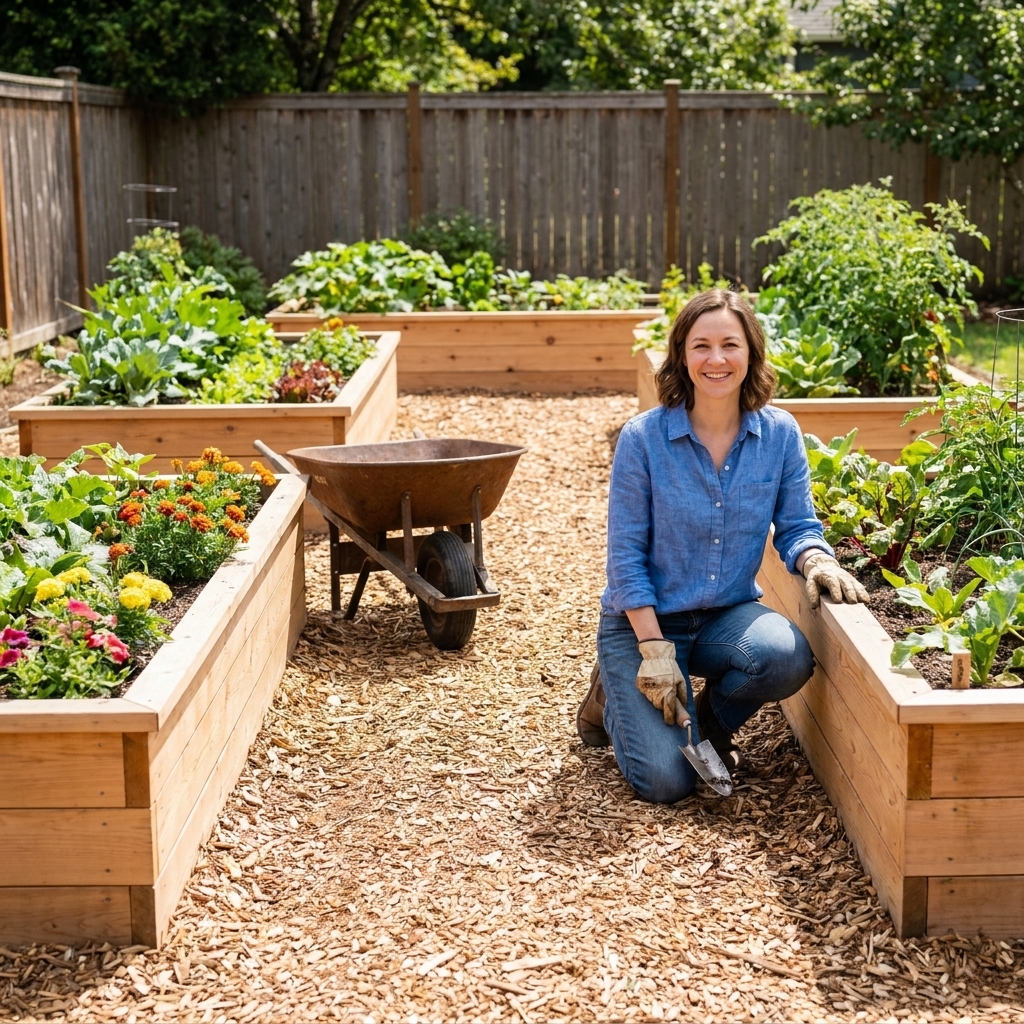
You need room to kneel, harvest, and haul compost. Give yourself at least 18 to 24 inches of path space around raised beds if you can.
FAQ
Do I have to use a 12 inch grid?
No, but 12 inches is the standard because spacing math stays simple. If you have an odd-sized bed, you can still mark 12 inch intervals and accept a partial strip at one end for herbs or flowers.
How many squares are in a 4x8 raised bed?
A 4x8 bed has 32 one-foot squares.
Can I use perennials?
Yes, just be realistic. Perennial herbs like thyme, oregano, chives, and strawberries can live in squares long-term, but they will reduce your flexible space for succession planting.
Best soil for raised beds?
You want a light, fertile mix that holds moisture but drains well. A practical raised bed blend is quality compost plus a fluffy base (like aged bark fines or coco coir) plus mineral structure (like a loamy garden blend). Avoid filling beds with straight topsoil, especially if it is clay-heavy, because it can turn into a brick.
Can I direct sow seeds in squares?
Absolutely. Direct-sow carrots, radishes, peas, beans, and spinach. For tomatoes, peppers, and brassicas, I prefer transplanting because it helps each square start strong and on schedule.
Start this week
If all of this feels like a lot, here is your low-stress starter plan:
- Pick one raised bed.
- Add a string grid.
- Choose 6 to 10 crops you actually eat.
- Assign each crop to squares using the 1, 4, 9, 16 rule.
- Leave 2 to 4 squares open for “oops” space. You will use it.
The first season is about learning your bed’s sun and your own habits. By mid-summer, you will be planning your next layout like a plant nerd. Welcome to the club.