
If you have ever stood in the garden center aisle holding a bale of peat moss in one hand and a brick of coco coir in the other, welcome to a very normal raised bed dilemma. Both are used as “base” ingredients because they add bulk, improve texture, and help your bed hold moisture. But they are not interchangeable in the real world.
After a lot of experimenting in my own beds (including a few soggy spring disasters and one summer where my seedlings baked), here is the most useful way to think about it: peat moss is a highly effective soil builder with a bigger sustainability question mark, while coco coir is a renewable byproduct that tends to be more pH neutral but can come with quality control issues if it is not properly processed.
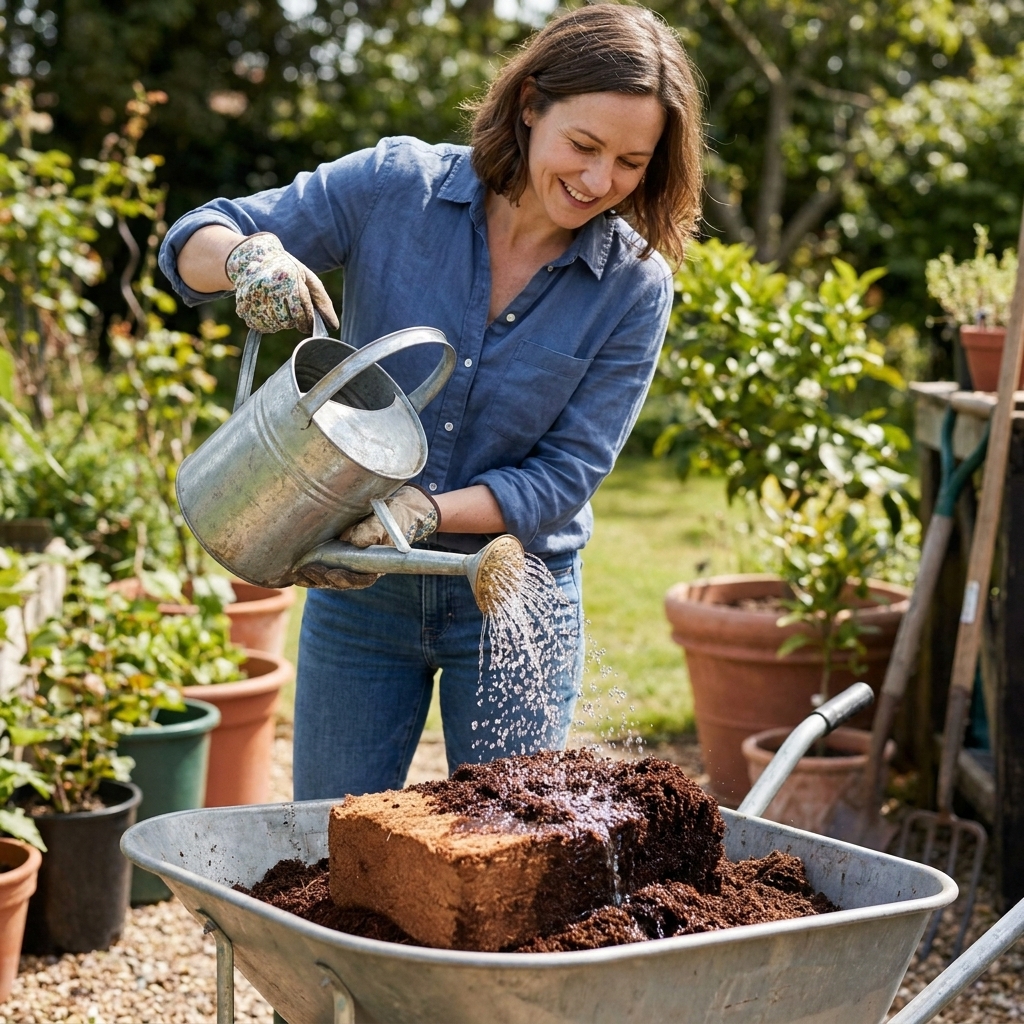
Quick answer: which one is best?
Choose peat moss if you want a very consistent, lightweight base that holds moisture extremely well and you are already planning to balance pH with compost and a little lime if needed.
Choose coco coir if you want a more renewable option that is typically closer to neutral pH, rewets more easily after drying out, and performs well in beds that swing between wet and dry.
And my honest gardener-to-gardener answer: in most raised beds, either can work beautifully if the rest of your mix is solid. The “best” base depends on climate, what you grow, and how you water.
What peat moss and coco coir do
Both materials are mainly used to improve soil structure in raised beds. They are not fertilizers. They have very little nutrition on their own, so they need to be paired with compost and a mineral component (like a quality loam or topsoil) plus whatever organic nutrients you normally rely on.
In a raised bed mix, a base ingredient helps:
- Hold water so roots can access moisture between waterings
- Improve aeration so soil does not compact into a brick
- Stretch compost so you can fill beds without spending a fortune
- Support biology by keeping moisture and oxygen in a healthier balance
Peat and coir can do all of that. They just do it a little differently.
Sustainability: the big difference
Peat moss sustainability
Peat moss is harvested from peatlands, which are wetlands that build up layers of partially decomposed plant material over a very long time. Because peat accumulates slowly, harvesting raises concerns about habitat disruption and carbon release. Many regions have tighter regulations and restoration requirements, but the sustainability debate is still real.
Coco coir sustainability
Coco coir is made from coconut husks, a byproduct of the coconut industry. Because it is a byproduct, it is often framed as the more renewable choice. The main sustainability tradeoffs tend to be processing and transport (it is usually shipped long distances) and whether the coir was washed and buffered responsibly. In some supply chains, washing can also create wastewater issues if runoff is not handled well.
My take for Bed Bounty readers: If sustainability is your top priority and you have access to a reputable, well-processed coir, coir usually wins that category. If your priority is consistent performance and you use peat thoughtfully and sparingly, peat can still be a practical choice.

Water retention and rewetting
Peat moss: high water holding, can resist rewetting
Peat moss holds a lot of water for its weight, which is one reason it is so popular in raised beds and potting mixes. The catch is that when peat dries out completely, it can become hydrophobic, meaning it resists absorbing water at first. If you have ever watered and watched it bead up or run down the side of the bed, you have seen this.
What helps: pre-moisten peat before mixing, water more slowly, and keep a mulch layer on top of your bed to prevent the mix from drying out too hard.
Coco coir: good moisture retention, often rewets faster
Coco coir also holds water well, but in my experience it often rewets more easily than peat after a hot stretch. It is not universal, though. Coir performance can vary depending on the fiber-to-pith ratio and how compressed and dried the product was.
Where coir shines: climates with intense heat, windy sites, and gardeners who rely on drip irrigation or intermittent watering.
A practical note about soggy beds
Neither peat nor coir fixes poor drainage on its own. If your raised bed mix is mostly fine compost with no structure, it can stay soggy regardless of the base. For most beds, the goal is a balanced blend: compost for biology and nutrients, plus a loam or quality topsoil component for mineral structure (not straight clay), and enough coarse texture in the overall mix to keep air moving through the root zone.
pH: why peat needs balancing
Peat moss pH
Peat moss is naturally acidic. That is not “bad,” it is just chemistry. Many vegetables prefer slightly acidic to near-neutral soil, so peat-based mixes often benefit from being balanced with compost and sometimes a small amount of garden lime, depending on your starting ingredients and your local water.
If you grow acid lovers (like blueberries), peat can be a useful tool. For most veggie beds, you just do not want a peat-heavy mix with no counterbalance.
Coco coir pH
Coco coir is typically closer to neutral. That makes it easier to build a veggie-friendly mix without needing as much pH adjustment. It is one reason many gardeners feel coir is more “plug and play.”
Best practice either way: if you are building beds you plan to use for years, do a simple soil test after everything settles for a few weeks. pH is much easier to correct early than after you have planted.

Quality and consistency
Peat moss is generally consistent
Peat is generally uniform from bag to bag, especially from major brands, although you can still see differences in particle size and whether a wetting agent was added. It is also typically low in salts, which makes it predictable for seedlings and sensitive plants.
Coco coir depends on processing
Coir can be excellent, but quality varies. The main concern is salts. Some coir is not fully washed, or it may be processed with salty water. High salts can stress plants, especially seedlings, and can cause poor germination or burnt leaf edges.
Another nuance: coir can naturally run high in potassium and sodium, and unbuffered coir can tie up calcium and magnesium at first. When a coir product is labeled buffered, it usually means it was pre-treated (often with calcium) to reduce these cation-exchange headaches.
How to avoid problems:
- Buy coir from brands that specify it is washed and ideally buffered
- If you are unsure, rinse and soak expanded coir and let it drain before mixing
- Use compost generously to help balance the bed and support microbes
How I use each one
There are lots of “perfect recipes” online. In real gardens, the perfect recipe is the one that fits your climate, your budget, and how often you can water.
If you want a simple starting point, I usually treat peat or coir as about 10 to 30 percent of the mix by volume, then adjust based on how heavy or dry-prone the bed is. (Go lighter if your compost is already fine and moisture-holding, and go higher if your mix feels dense or dries too fast.)
When I lean toward peat moss
- Cooler, wetter spring beds where I want steady moisture without constant irrigation
- When I need a very consistent ingredient for a big batch mix
- When I am already adding enough compost and loam or topsoil to buffer acidity
When I lean toward coco coir
- Hot summers where beds dry out fast
- Shallower raised beds that can swing from soaked to bone dry
- When I want a more renewable base and can source good quality coir
Can you mix peat and coir?
Yes. If you have partial bags of both, blending them is a totally reasonable way to use what you have. The key is still the same: do not let your base ingredient crowd out compost and the mineral part of the mix.
Decision table
| Category | Peat moss | Coco coir |
|---|---|---|
| Sustainability | Concerns due to peatland harvesting | Byproduct of coconut industry, transport and processing still matter |
| Water retention | Excellent water holding | Excellent to very good water holding |
| Rewetting after drying | Can resist water when fully dry | Often rewets more easily, varies by product |
| pH | Acidic | Near neutral |
| Consistency | Generally consistent and low salt | Varies by brand, salts and buffering can be issues |
| Best use cases | Predictable mixes, moisture buffering, acid-loving plants | Heat and drought swings, gardeners seeking renewable options |
Base myths to ignore
Myth: “Peat or coir is basically compost.”
Nope. They improve texture, not fertility. If your plants look hungry in a peat- or coir-heavy bed, they probably are. Compost and slow-release organic nutrients matter.
Myth: “Coco coir always holds more water than peat.”
They are both strong moisture holders. The bigger difference most gardeners notice is rewetting behavior and how the mix performs once it dries.
Myth: “If you use peat, your veggies will fail because it is acidic.”
Peat is acidic, but raised bed mixes are blends. Compost, loam or topsoil, and your irrigation water all influence final pH. Balance matters more than any single ingredient.
FAQ
Do I need to add lime if I use peat moss?
Not always. If your mix includes a healthy portion of compost and mineral soil, your pH may land in a perfectly workable range. Lime is a tool, not a requirement. If you are unsure, test the soil after the bed is filled and settled.
Is coco coir safe for vegetable gardens?
Yes, as long as it is good quality and not overly salty. Washed and buffered coir is ideal. If you see seedling stress that looks like burn, salts are one possible culprit.
Will either one attract fungus gnats?
Fungus gnats are more about consistently wet conditions and fresh, damp organic material than about peat vs. coir specifically. Avoid overwatering, improve airflow, and top-dress with compost and mulch thoughtfully.
What about using neither?
You can build a great raised bed without peat or coir by leaning on compost, aged leaves, and a quality loam or topsoil, but peat and coir are convenient texture builders when you need to fill beds quickly and keep them light and workable.
My bottom line
If you want the simplest decision, here it is: peat moss is the consistency champion, and coco coir is usually the sustainability favorite with a more neutral pH. In raised bed gardening, both can be excellent as long as you treat them like what they are: a base ingredient that supports structure and moisture, not the thing that feeds your plants.
Whatever you pick, your bed will thrive most when you pair it with plenty of compost, keep the surface mulched, and build a mix that drains well while staying evenly moist. That is the raised bed sweet spot where carrots actually form and tomatoes stop sulking.