
If you have ever watered a raised bed in the morning and found it bone dry by late afternoon, you already understand why a top layer matters. A simple cover protects your soil from sun, wind, pounding rain, and that endless parade of weed seeds that seem to parachute in overnight.
Top dressing is just “what you put on top” of your bed’s soil surface. In this article, I am using top dressing to include both nutrient layers (like compost) and mulch layers (like straw, leaf mold, and wood chips). In raised beds, it is one of the highest impact, lowest effort habits you can build. The trick is choosing the right material for the season and the crop.
What a top dressing does
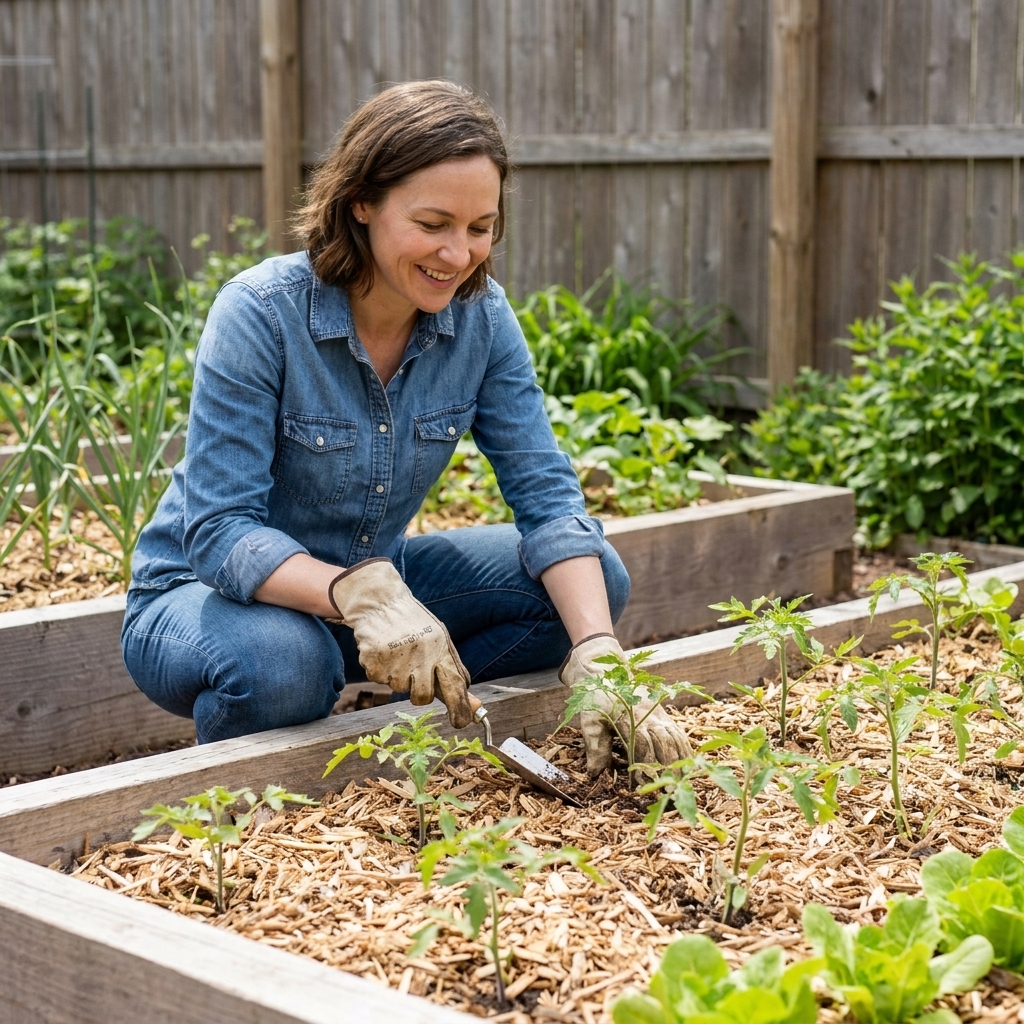
A good top layer is more than a tidy finishing touch. Here is what you are buying yourself when you top dress a raised bed:
- Moisture control: reduces evaporation and keeps watering more consistent.
- Weed suppression: blocks light so most weed seeds never get going.
- Soil protection: prevents crusting, compaction, and splashback that spreads disease onto leaves.
- Temperature buffering: keeps roots cooler in heat and steadier through temperature swings.
- Better biology: creates a humid, protected zone where worms and beneficial microbes thrive.
The best top dressings also slowly feed the soil as they break down, but different materials do that at very different speeds.
Quick comparison
| Top dressing | Best for | Moisture retention | Weed control | Main cautions |
|---|---|---|---|---|
| Straw | Veg beds, around transplants, summer water savings | High | High when applied thick | Can contain seeds, can blow around, can give slugs cover in damp sites |
| Wood chips | Perennials, bed edges, long lasting mulch, paths | High | High | Too chunky for direct seeding, keep off stems, use on top only |
| Leaf mold | Gentle mulch for seedlings, moisture sponge, improving soil texture | Very high | Moderate to high | Needs more thickness to block weeds well, can look messy if thin |
| Compost | Feeding beds, refreshing soil, fall or spring top-up | Moderate | Low to moderate alone | Weeds can sprout in it, can crust, best paired with a mulch layer |
Note: “High” and “moderate” are relative comparisons to help you choose, not lab measurements.
Straw
If I could only keep one mulch in my shed for summer, it would be straw. It is light, easy to spread between plants, and it dramatically cuts down on how fast raised beds dry out.
Where straw shines
- Tomatoes, peppers, eggplant: keeps soil evenly moist and reduces splashback.
- Squash and cucumbers: keeps fruits cleaner and slows weeds in sprawling beds.
- Garlic and overwintered onions: great for winter insulation in colder zones.
How thick to apply
For weed suppression, straw needs to be thicker than most beginners expect: 3 to 6 inches fluffed up. After rain and time, it settles. If you can easily see soil through it, weeds can too.
My straw gotchas
- Straw vs. hay: buy straw, not hay. Hay often contains far more viable seeds. (And yes, some straw can still have seeds depending on how it was grown and handled.)
- Wind management: water it in after spreading, or lay it down right after a rain so it knits together.
- Slugs: in cool, wet climates or heavily shaded beds, straw can give slugs and snails a place to hide. Pull it back a couple inches from stems and check under it if you suspect slug damage.
- First watering: if straw is very dry, it can shed water at first. Soak it once so water can move through to the soil below.

Wood chips
Wood chips are the tortoise of the mulch world: slow, steady, and excellent when you want long term coverage. In a raised bed context, I love them for perennial zones like asparagus, strawberries, raspberries planted in beds, and along bed edges where weeds creep in.
Where wood chips shine
- Perennial beds and bed borders: a tidy, durable weed barrier.
- Paths between raised beds: stops mud and suppresses weeds for months.
- Areas you are not direct seeding: chips are chunky and can be annoying around tiny seedlings.
How thick to apply
Aim for 2 to 4 inches. More is not always better in a raised bed, especially if you are working in a small space and want easy access for planting.
Will chips steal nitrogen?
You might hear that wood chips “rob nitrogen.” The nuance: nitrogen tie-up happens where microbes are actively breaking down wood in contact with soil. If chips are on top and you are not mixing them in, your plants’ roots will not suddenly starve. The biggest problems show up when fresh chips are worked into the soil, or when very fine wood material gets blended into the top layer where seedlings feed.
I keep chips on the surface and a couple inches away from plant stems to reduce rot risk and to avoid creating cozy cover right against the crown for pests like slugs, earwigs, and sometimes voles.
Leaf mold
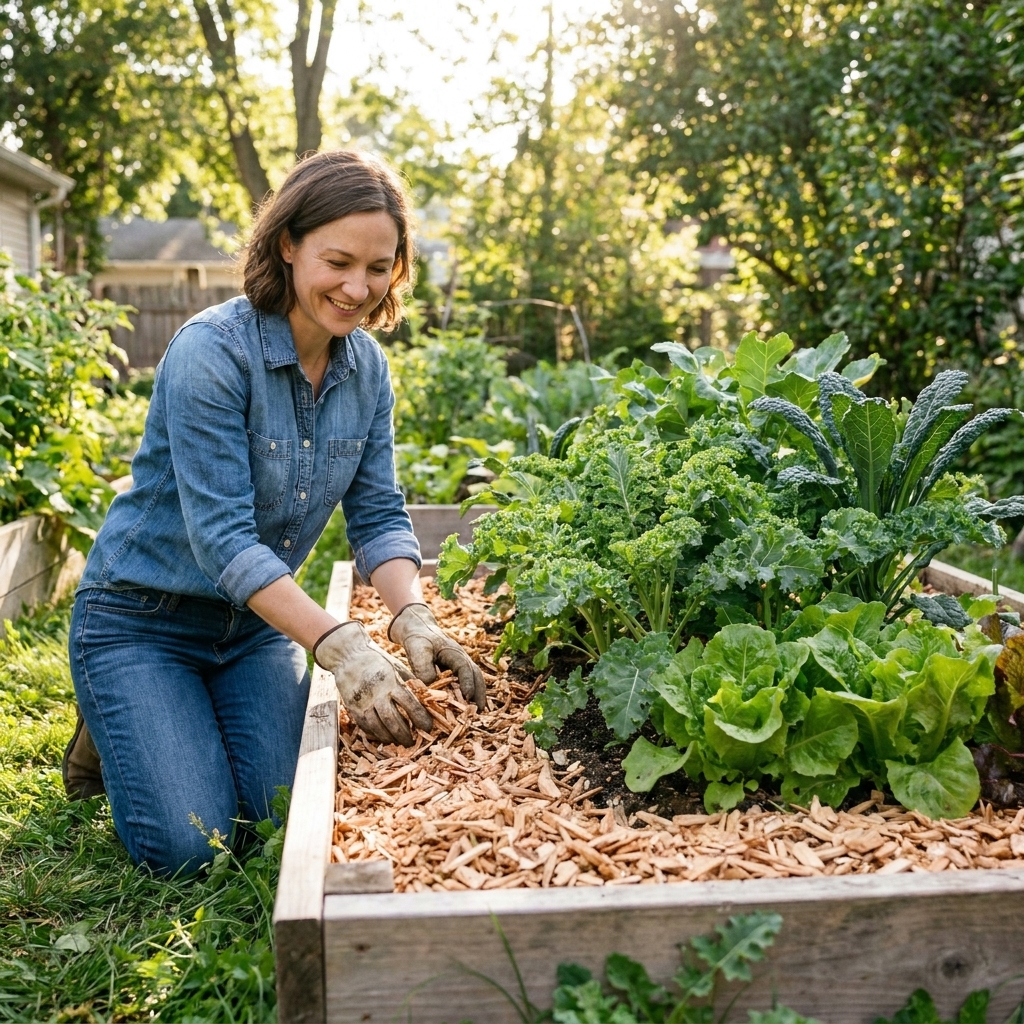
Leaf mold is what happens when fallen leaves break down into dark, crumbly goodness. It is one of the gentlest top dressings you can use, and it is fantastic for moisture retention. If straw is a blanket, leaf mold is a thick, cozy comforter.
If you have never made it, the simplest explanation is this: it is partially decomposed leaves. Whole leaves can take roughly 6 to 18 months to turn into leaf mold depending on moisture, airflow, and whether the leaves were shredded. (Shredded leaves usually break down faster.)
Where leaf mold shines
- Seedling zones: it is soft and does not block tiny plants the way chips can.
- Moisture sensitive crops: lettuce, spinach, cilantro, and shallow rooted greens.
- Soil texture improvement: helps sandy mixes hold water and helps heavy mixes loosen up.
How thick to apply
Use 2 to 3 inches for a true mulch effect. A thin dusting disappears quickly.
My favorite way to use it
I often spread leaf mold as the first layer, then add a lighter layer of straw on top in peak summer. The leaf mold holds water like a sponge, and the straw reduces evaporation. Together they are a dream team for raised beds that bake in the sun.

Compost
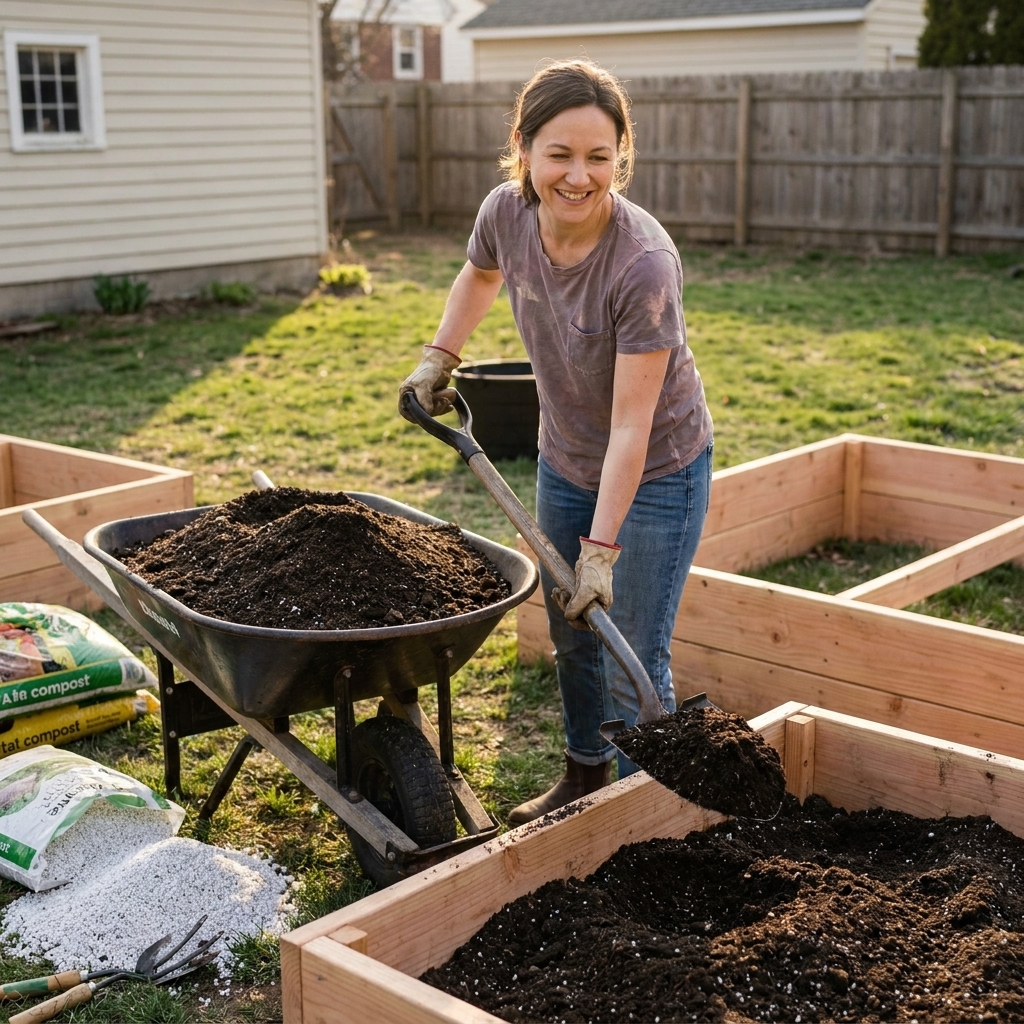
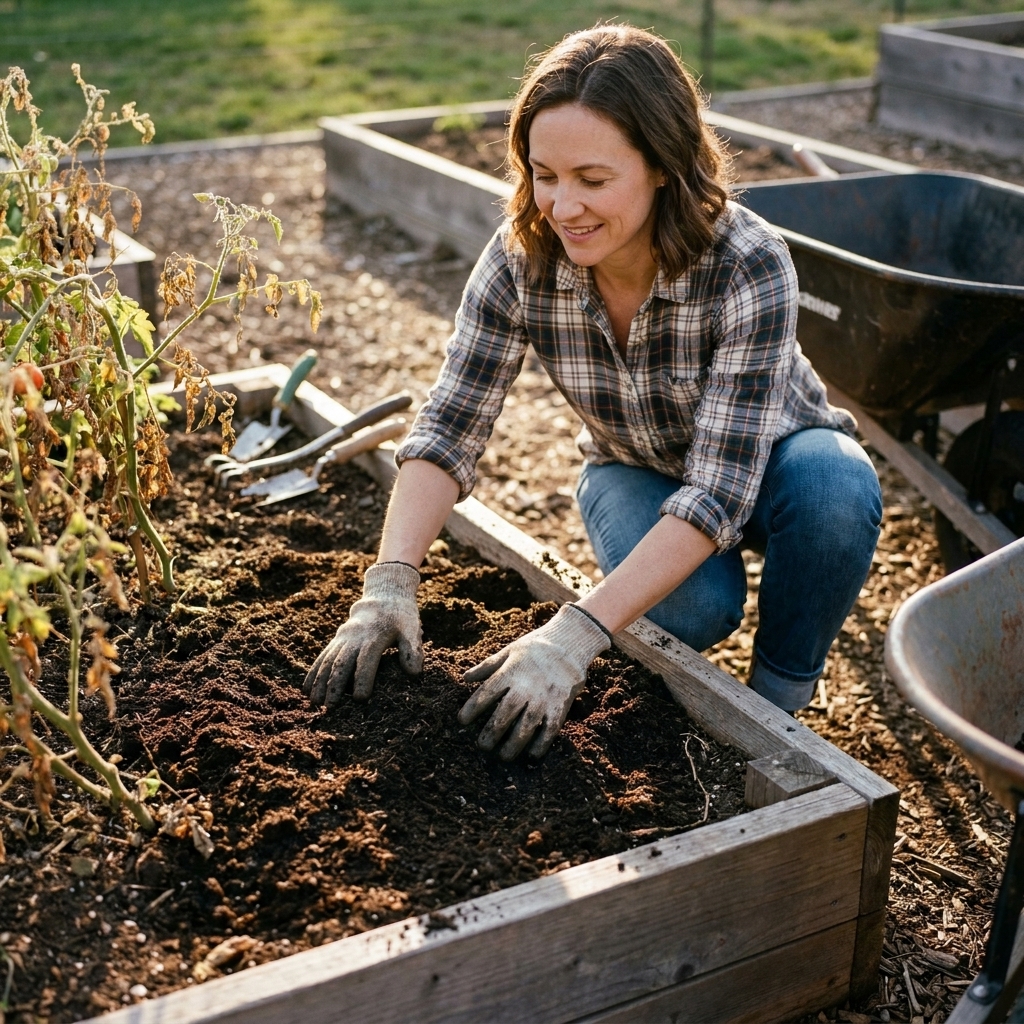
Compost is the top dressing that can make a noticeable difference in soil structure and fertility over time, especially when you apply it consistently. It is my go-to for spring refreshes and fall rebuilding, particularly after a heavy feeding crop like tomatoes or squash.
Where compost shines
- Spring bed reset: adds organic matter and beneficial biology right before planting.
- Fall top dressing: protects soil over winter and feeds it slowly into spring.
- Between successions: after you pull a crop, a thin layer of compost helps the next one take off.
How thick to apply
For a fertility boost, 1/2 inch to 2 inches is plenty in most raised beds. More than that can be overkill, and it can make the surface crusty if it dries out.
The compost truth
Compost alone is not the strongest weed blocker. Weed seeds can sprout in it, especially if it stays moist. If weeds are your main battle, use compost as your base layer (food for soil), then cap it with straw, leaf mold, or even a thin layer of chips depending on what you are growing.
Sourcing and safety
One quick sourcing note that is worth knowing: some mulches and composts can be contaminated with persistent herbicides (often from treated hay fields or grass clippings). These chemicals can survive the composting process and damage sensitive crops like tomatoes, peppers, beans, and peas.
If you are using straw, hay based compost, manure compost, or “free” municipal compost and you do not know the source, consider doing a simple bioassay: pot up a little of the material with some seed starting mix and plant a few peas or beans. If the new growth comes in twisted or stunted compared to a control pot, do not put that material in your beds.
How to choose
Pick based on your goal
- Maximum weed suppression: wood chips (perennials and paths) or thick straw (annual veggies).
- Maximum moisture retention: leaf mold, or leaf mold plus straw.
- Maximum soil feeding: compost, ideally capped with another mulch.
- Fastest and easiest: straw in most veggie beds.
Pick based on your planting style
- Direct seeding (carrots, beets, salad mix): keep the seed row clear until seedlings are established, then mulch between rows with leaf mold or a light layer of straw.
- Transplants (tomatoes, peppers, brassicas): mulch right away, just keep a small donut of space around stems.
Pick based on your climate
- Hot and dry: prioritize moisture retention with leaf mold and straw. Use thicker layers.
- Cool and wet: use mulch, but watch slug and snail cover. Pull mulch back from stems and avoid piling it too deep early in the season.
- Windy sites: wood chips stay put better than straw. If using straw, water it in and tuck it around plants.
How to apply
- Weed first. Mulch is not magical if you trap established weeds under it.
- Water deeply. Mulch holds moisture best when you start with moist soil.
- Add compost if needed. If the bed looks tired, spread 1/2 to 1 inch of compost.
- Apply your mulch layer. Straw 3 to 6 inches, leaf mold 2 to 3 inches, chips 2 to 4 inches.
- Leave breathing room. Keep mulch pulled back 1 to 2 inches from stems to reduce rot and pest issues.
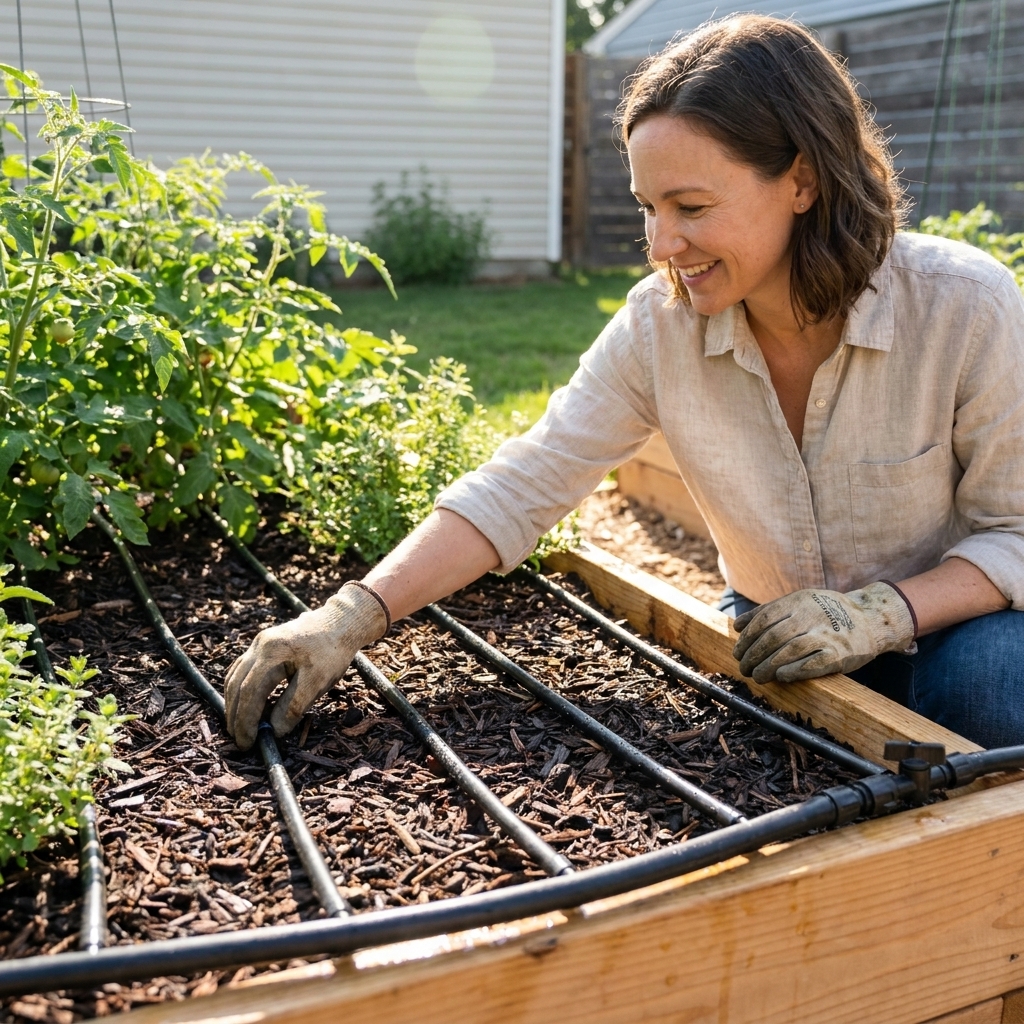
- Check drip and hoses. If you use drip irrigation, run it under the mulch so water goes straight into the soil instead of evaporating off the surface.
- Check and top up. Straw and leaf mold break down and settle. Plan to refresh mid-season if weeds start peeking through.
Seasonal plan
Spring
After your bed thaws and dries enough to work, spread 1/2 to 1 inch of compost to recharge. If nights are still cold and you are direct seeding, hold off on heavy mulching until seedlings are a few inches tall. Mulch too early and you can slow soil warming.
Summer
This is prime mulching season for raised beds. Go thicker with straw or leaf mold to fight evaporation. If you only mulch once all year, do it when the heat arrives.
Fall
Once crops come out, I like a 1 to 2 inch compost top dressing and then a protective cap of leaf mold or straw. It keeps the bed from getting pounded by winter rain and gives soil life something to chew on.
Winter
If your bed is bare, cover it. Even a simple layer of leaves or straw beats exposed soil. In freeze-thaw areas, mulch can reduce the surface swings that contribute to heaving and erosion.
Common mistakes
- Mulching too thin: if you can see soil, weeds can see soil.
- Mixing wood chips into the bed: chips belong on top, not tilled in.
- Mulch piled against stems: invites rot and can shelter pests right where you do not want them.
- Using hay when you meant straw: it often comes with a bonus weed crop.
- Assuming compost is a weed blocker: it is plant food, not a blackout curtain.
FAQ
Can I top dress raised beds with compost only?
You can, especially in cool weather or when you want to feed the bed. For weed control and moisture retention, compost works better when it is capped with straw, leaf mold, or chips.
How often should I replace mulch in a raised bed?
Straw usually needs a refresh once or twice per growing season as it settles and breaks down. Leaf mold may last longer but still thins over time. Wood chips can last a full season or more. Compost is typically applied 1 to 2 times per year.
Will mulch attract bugs?
Mulch creates habitat, which is not automatically bad. You will see more soil life, and that is usually a win. If you struggle with slugs or earwigs, keep mulch pulled back from stems and avoid overly thick, wet mulch early in the season.
What is the best mulch for carrots in raised beds?
Carrots are easiest if you leave the seed row uncovered until germination, then mulch between rows with leaf mold or a light layer of straw once tops are up and sturdy.
My rule of thumb
If you want your raised beds to stay moist and calm, keep their soil covered. Use compost to feed, then choose straw or leaf mold for vegetables and wood chips for perennials and paths. Your watering can will get lighter, your weeding sessions will get shorter, and your soil will look and feel more like the living thing it is.