
High-density raised beds are my favorite kind of chaos. You can get more food per square foot, fewer weeds, and that lush, living-mulch look. The tradeoff is airflow and light. When leaves overlap like roof shingles, moisture lingers, mildew shows up, and lower growth turns into a pale, unproductive jungle.
The good news is you do not need to “prune everything” to fix it. In tight beds, the goal is targeted maintenance: a little thinning, a little leaf removal, a little training. Done consistently, it keeps disease pressure down and boosts yields because more of the plant stays in that sweet spot of bright light and quicker-drying foliage.
Think like air and light
Before you grab snips, stand at the edge of the bed and look at it like wind and sunshine would.
- Airflow goal: foliage should dry reasonably quickly after watering or dew. In humid climates or coastal fog, that might not be “a few hours” no matter what you do, so the real goal is avoiding a canopy that stays wet into late afternoon.
- Light goal: you should be able to see dappled light hitting the soil in most of the bed by midmorning. If the canopy is a solid roof, lower leaves will yellow and diseases love it.
- Access goal: you should be able to harvest without snapping stems. If harvesting requires wrestling, it is time to thin or train.
I like to do a quick canopy check twice a week in peak season. It takes two minutes and prevents the big, painful prune later.
Watering that helps
Dense beds get dramatically easier to manage when leaves stay dry.
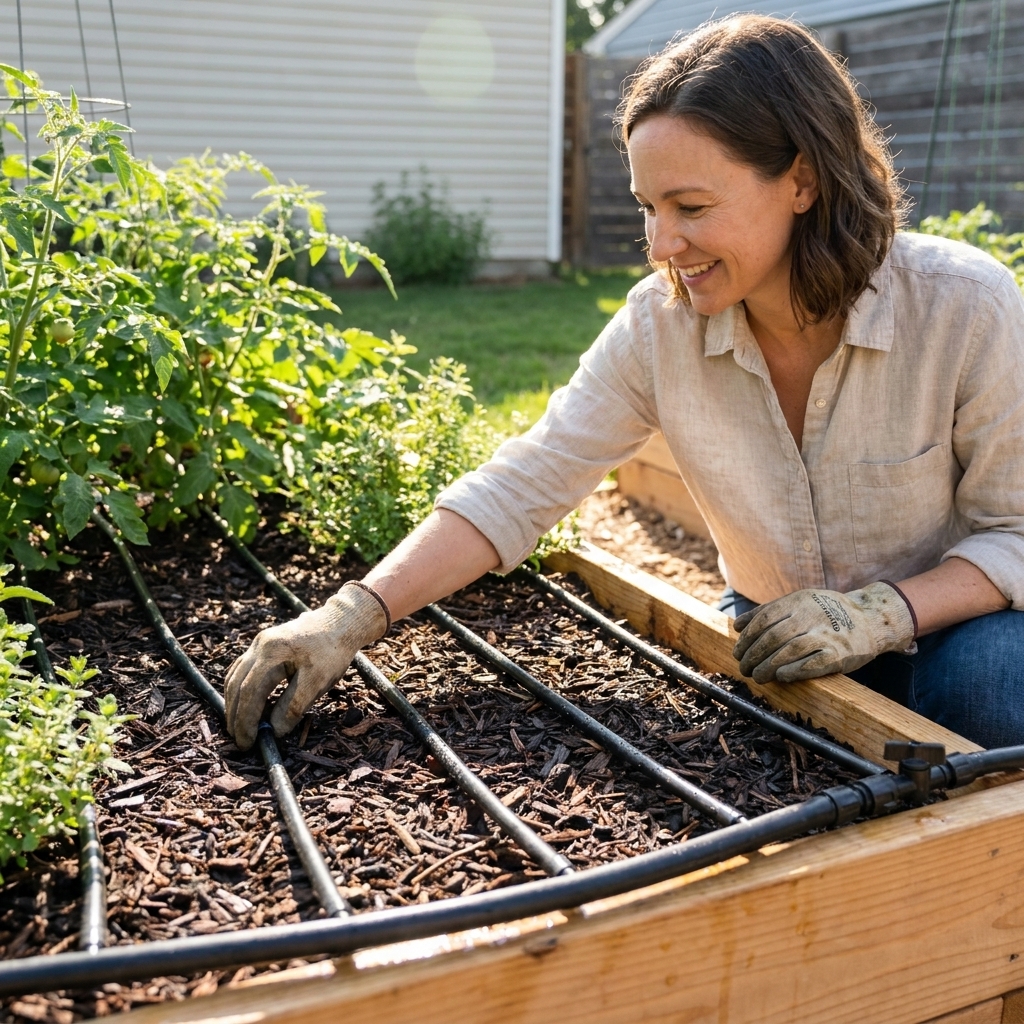
- Best setup: drip lines or soaker hoses under mulch.
- Best timing: morning watering so any splashes dry fast.
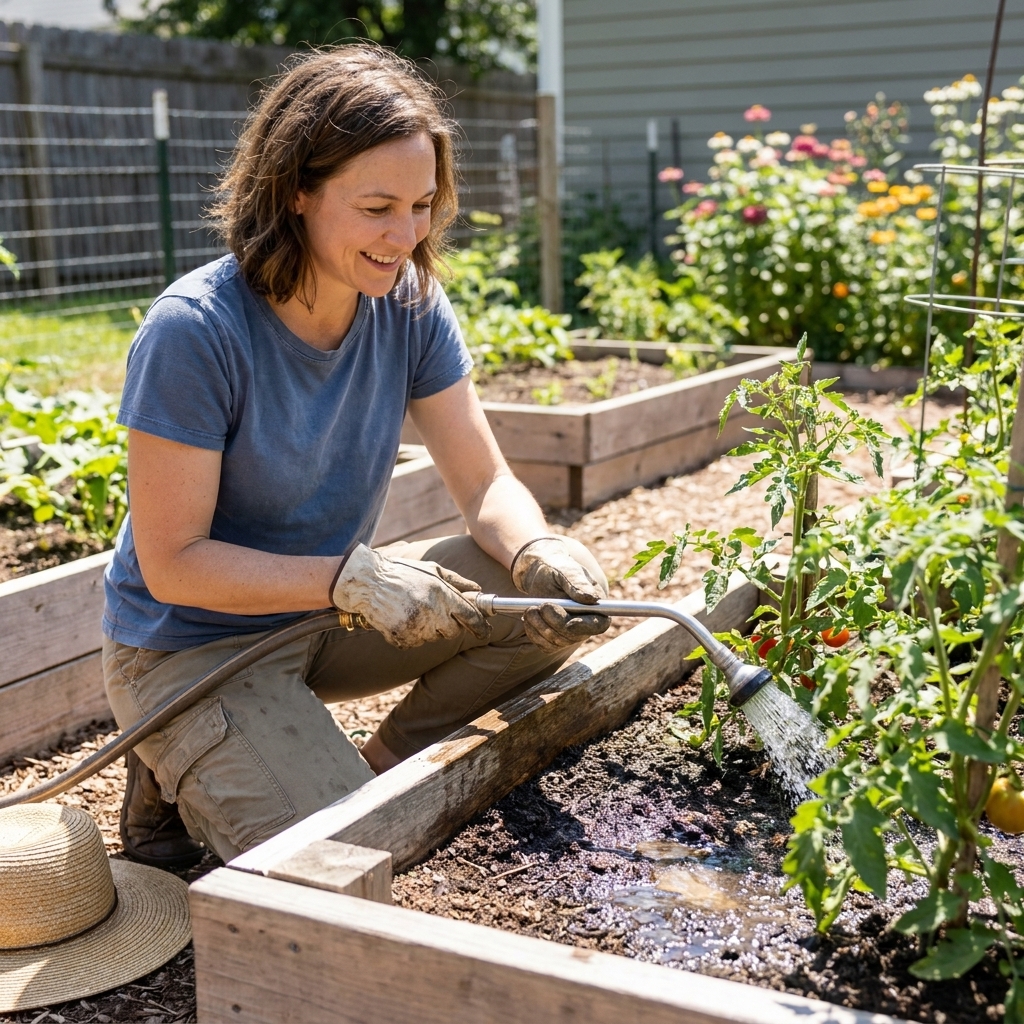
- If you must overhead water: water early and aim low, then thin and prune a bit more aggressively for airflow.
In hot, arid weather, do the opposite of panic-pruning. Keep a little extra canopy as shade for fruit and soil, and open the bed in smaller, slower steps.
Your routine
If you want a simple rhythm, this is the one I use when beds are packed.
Twice weekly: 5-minute tidy
- Pinch off yellowing lower leaves.
- Remove any leaf touching soil or resting on damp mulch.
- Harvest outer leaves from greens and herbs to open the center.
- Check for powdery mildew, spots, or gray fuzz and remove affected leaves promptly.
Weekly: thin and train
- Thin seedlings that are competing shoulder-to-shoulder.
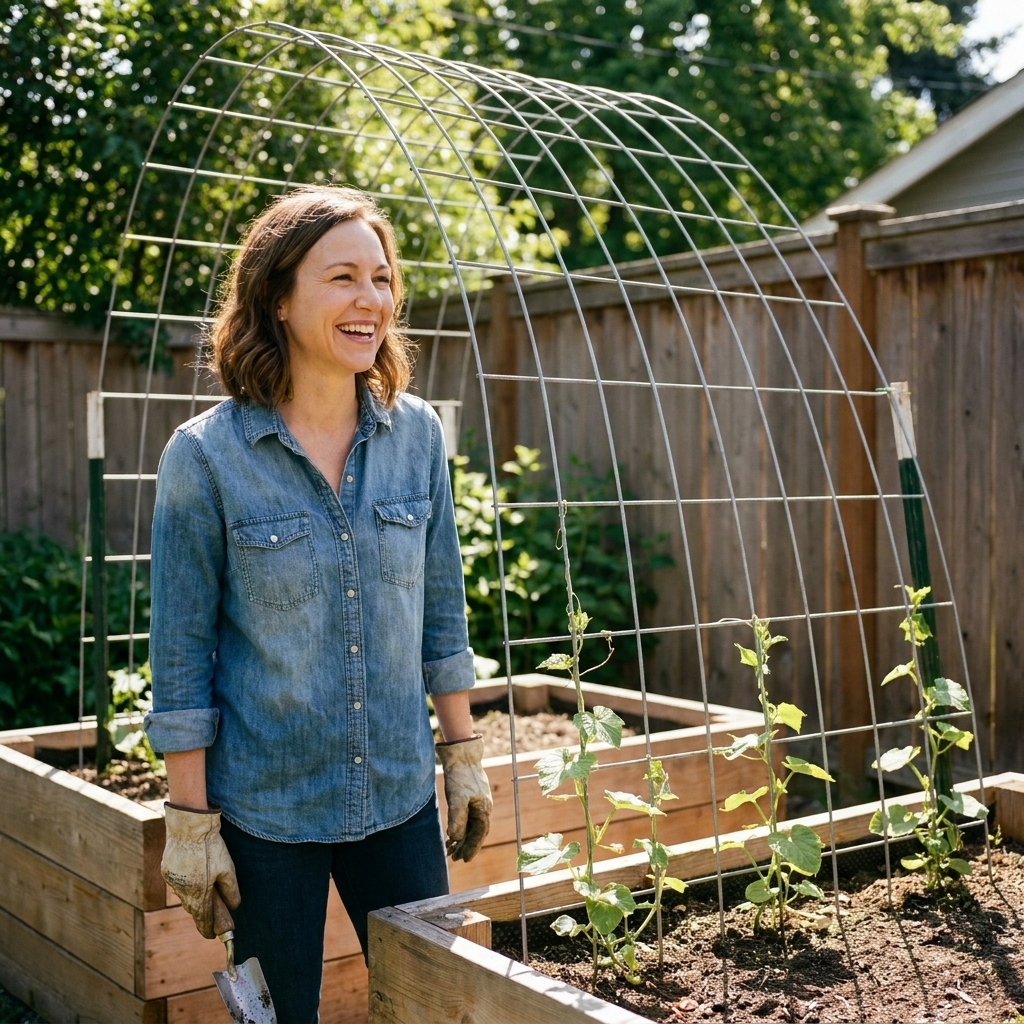
- Train vines upward on trellises so they stop smothering neighbors.
- Create a couple of small airflow gaps where foliage is layered. Think of these as little “air windows” that let a breeze through the middle.
Monthly: reset
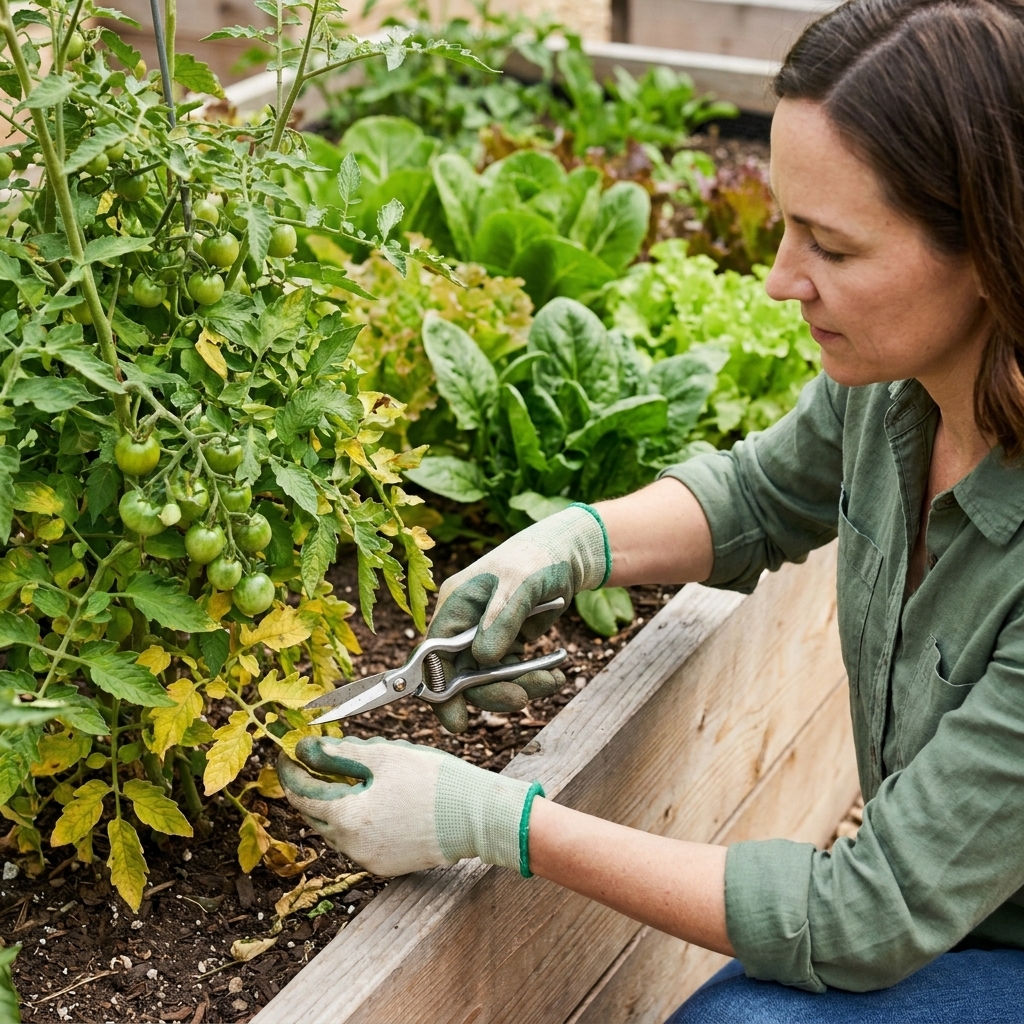
- Tomatoes: remove suckers as needed and clear the lower 8 to 12 inches of leaves once plants are established and growing strongly.
- Cucumbers and squash: remove the oldest, most shaded leaves, especially those with damage.
- Peppers and eggplant: lightly thin interior crossing growth to keep light reaching the fruiting zone.
In high-density beds, small maintenance beats dramatic pruning every time. Dramatic pruning tends to trigger stress, sunscald, and a few days of slower growth.
Thinning
Thinning feels like betrayal the first year. I get it. You nurtured those seedlings. But crowded plants compete for light and nutrients, and they also create a humid microclimate where mildew and leaf spot thrive.
When to thin
- Seedlings are touching and stretching upward, getting leggy or leaning.
- Leaves overlap so tightly you cannot see the soil at all in the morning.
- Lower leaves are yellowing early.
- You see mildew starting deep in the canopy, not on the outer leaves.
How to thin cleanly
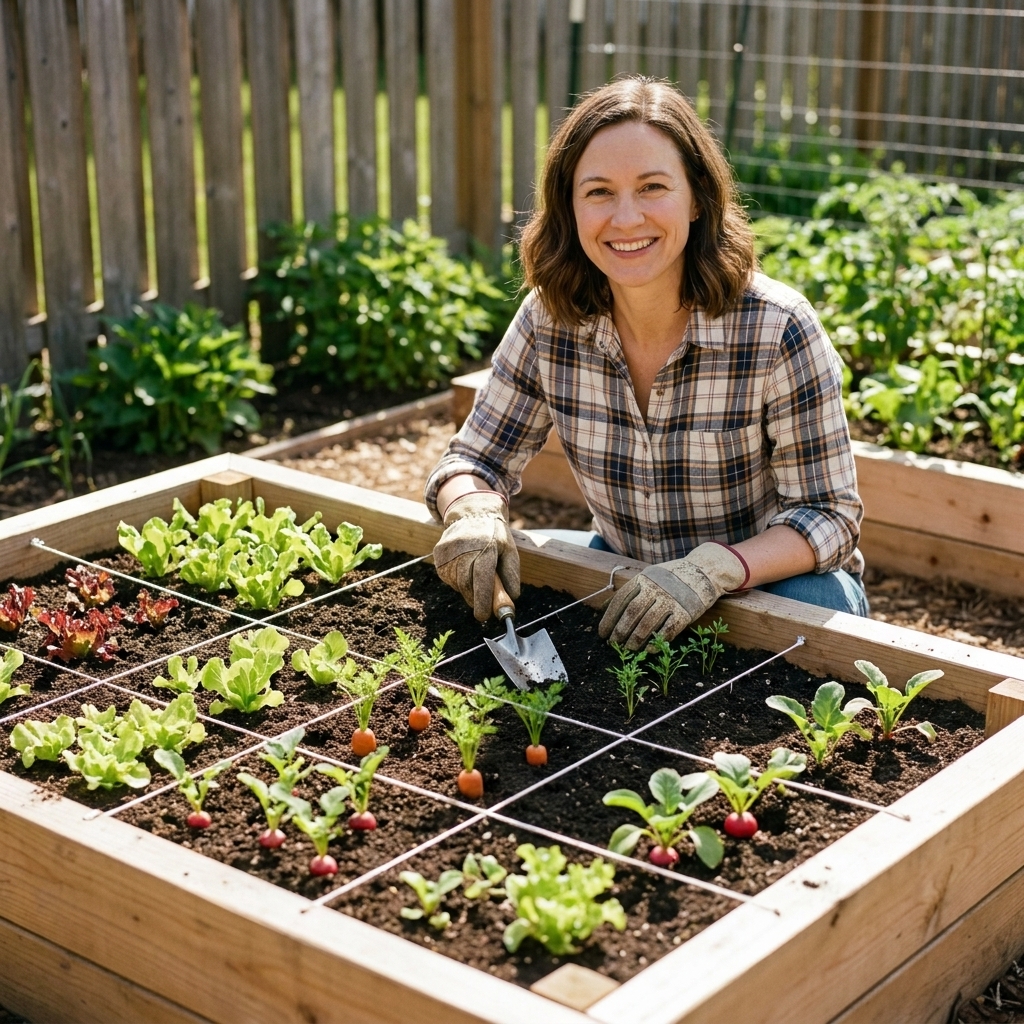
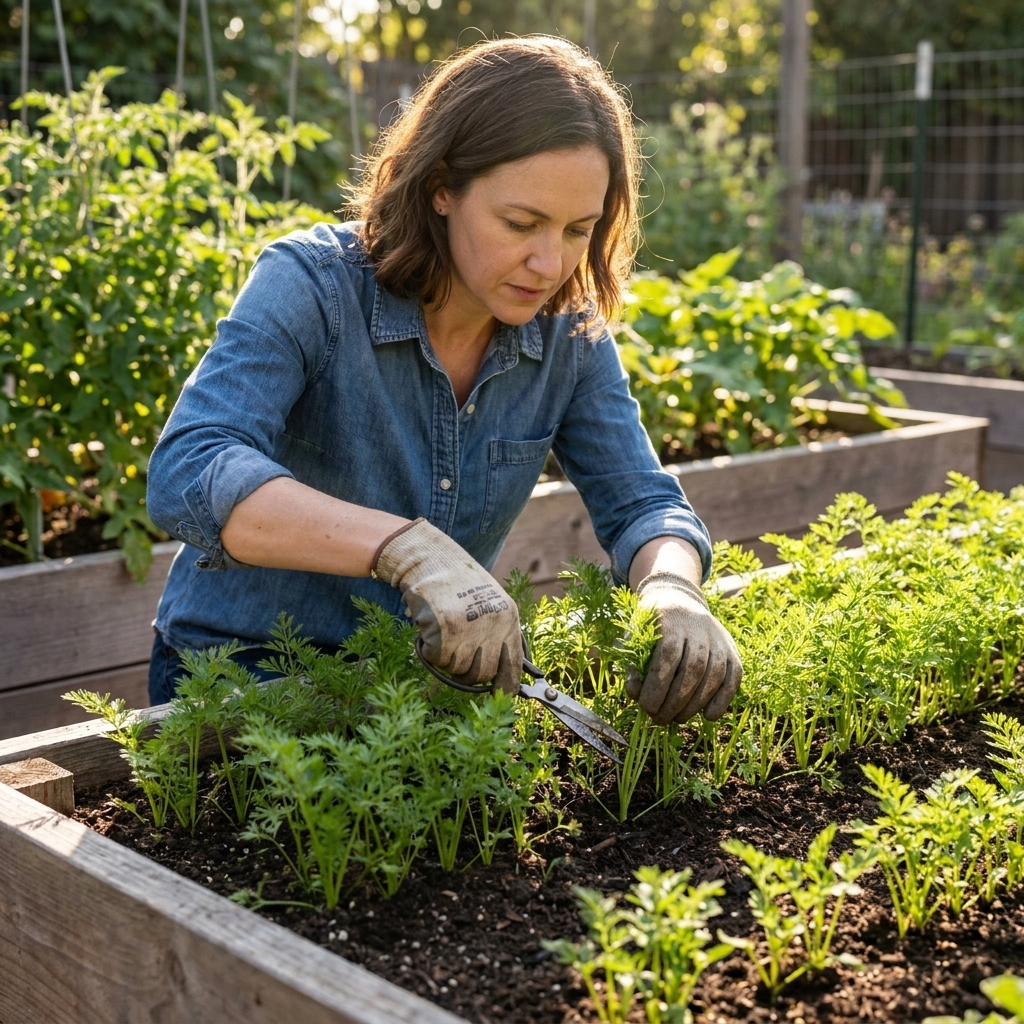
For most direct-sown crops, I prefer snip-thinning. Use scissors and cut unwanted seedlings at soil level. Pulling can disturb neighbors, especially in close spacing.
If you want to transplant thinnings (like lettuce or beets), water first, lift gently with a dibber or spoon, and transplant immediately. But be honest about your time. Snipping is faster and often kinder to the bed.
Spacing examples
You can grow densely without inviting disease if you still respect each crop’s mature footprint. These are starting points, not commandments, so check your seed packet for variety-specific spacing.
- Carrots: thin to about 1.5 to 2 inches apart for full-size roots. For baby carrots, 1 inch is fine.
- Beets: thin to 3 to 4 inches apart. Crowding tends to produce smaller roots.
- Radishes: thin to 2 inches for rounds, 3 inches for longer types.
- Leaf lettuce: 6 to 8 inches for heads, 4 to 6 inches for cut-and-come-again.
- Spinach: 3 to 5 inches, then harvest as it fills in.
- Onions (bulbing): 3 to 4 inches for decent bulbs, tighter if you want smaller onions.
- Bush beans: 4 to 6 inches, with an easy-to-reach picking lane if you can manage it.
If you are not sure, aim for the spacing where each plant has its own “circle of light” at midday.
Pruning basics
Pruning in raised beds is not about making plants pretty. It is about preventing leaf-on-leaf moisture traps and getting sunlight to the fruiting zone.
Start with problem leaves
- Any leaf with active disease spots or mildew gets removed and tossed in the trash, not compost.
- Any leaf touching soil gets removed. Soil splash is a big pathway for disease.
- Any leaf that is permanently shaded and yellowing is already costing the plant energy.
How much to remove
A good rule of thumb for most veggies is removing no more than 20 to 30 percent of leaf mass in a single session. In hot weather, be even gentler. Leaves are sun umbrellas.
Keep it clean
If you are removing diseased foliage, handle sick plants last if you can. If you cannot, pause and clean your hands and tools before touching healthy plants again.
By crop
Tomatoes
Tomatoes are where pruning really pays off in high-density beds. Dense tomato foliage plus overhead watering equals mildew trouble.
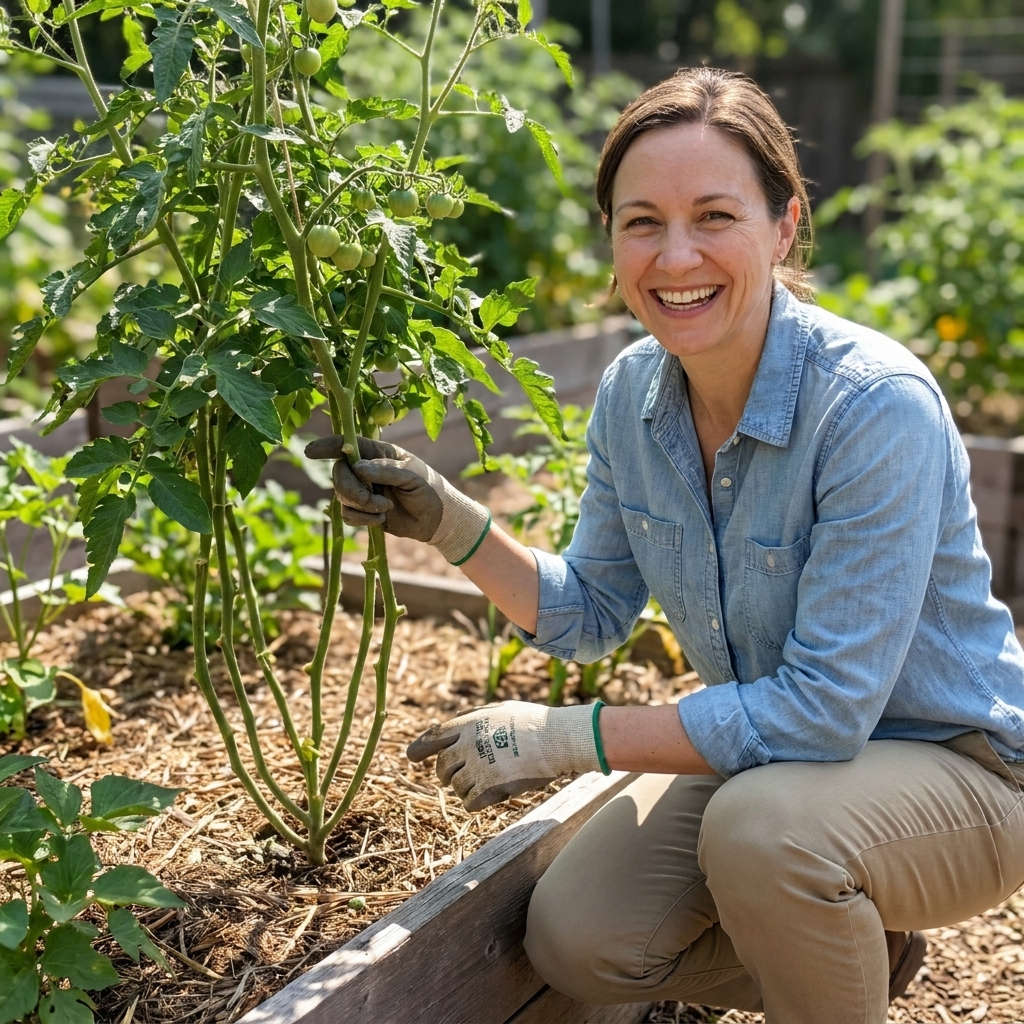
- Indeterminate tomatoes: train to 1 or 2 main stems. Pinch suckers when they are small. Once plants are established and the first flower cluster is forming or fruit is setting, remove the lowest leaves up to about 8 to 12 inches from the soil to reduce splash and improve airflow.
- Determinate tomatoes: prune lightly. Focus on removing lower leaves and anything diseased. Heavy pruning can reduce yield.
- Extra tip: keep fruit off the ground and avoid a leaf wall against the bed edge. A little breathing room between plant and wood sides helps leaves dry faster.
Peppers and eggplant
These can turn into dense shrubs in a raised bed. I do a gentle interior edit.
- Remove a few inward-growing stems to keep the center from becoming a humid pocket.
- Snip leaves that heavily shade developing peppers, but leave enough foliage to prevent sunscald.
- If plants are staked, tie branches outward to widen the plant’s shape.
Cucumbers
High-density cucumbers do best when vertical.
- Train the main vine up a trellis early.
- Remove yellowing lower leaves routinely.
- If the base gets thick, prune a few older leaves that block airflow near the stem.
- Pinch aggressive side shoots if they are smothering neighboring crops.
Summer squash and zucchini
Zucchini is famous for turning one plant into a whole bed. In tight spaces, you will prune. The trick is doing it gradually.
- Remove the oldest, largest leaves first, especially those shading the crown.
- Keep the center open so flowers are easy for pollinators to find and you can spot squash bugs early.
- Do not remove a bunch of leaves right before a heat wave. Sudden exposure can scorch stems and fruit.
Leafy greens
For lettuce, kale, chard, spinach, and mustard greens, you can maintain airflow simply by harvesting the right way.
- Take outer leaves first, leaving the center growing point intact.
- In mixed plantings, harvest the biggest plants first to relieve crowding.
- Cut-and-come-again beds: do a full haircut only when temperatures are mild and plants are well-watered.
Herbs
Basil, mint, oregano, thyme, and friends can become dense mats. In high-density beds, frequent pinching keeps them productive and prevents them from shading smaller crops.
- Pinch basil above a leaf set to encourage branching.
- Thin mint aggressively or keep it contained, because it will spread fast.
- Remove flowering tops if you want leaf production to keep going.
Best timing
Timing matters more than most people think, especially in tight beds where disease can move fast.
- Best time of day: late morning after dew dries, or early afternoon. Leaves are dry, so you are less likely to spread disease.
- Avoid: pruning right before rain or when foliage is wet.
- Heat caution: in extreme heat, prune lightly and only what you must. Leaves protect fruit and stems from sunburn.
- After watering: thinning seedlings is easiest when soil is slightly moist, but try to keep leaf surfaces dry.
Tools and hygiene
I learned the hard way that pruning tools can spread problems from plant to plant, especially in a packed bed where you touch a lot of foliage quickly.
- Snips you actually like using: sharp, spring-loaded snips reduce torn stems.
- Quick disinfect: wipe blades with isopropyl alcohol between plants if you see any disease.
- Gloves: optional, but I like them for tomatoes and squash because the stems can be scratchy.
- Cleanup: do not leave pruned diseased leaves on the soil surface. Bag them or trash them.
If you only adopt one hygiene habit, make it this: never prune wet plants. In dense canopies, wet pruning makes it easy for fungal issues to travel.
Common mistakes
Over-pruning and sunscald
It is tempting to open everything up in one go. But tomatoes, peppers, and cucumbers can get sunscald if fruit suddenly goes from shade to full sun. Aim for gradual changes over a week or two.
Thinning too late
If seedlings are already tangled, their roots are too. Snip-thinning avoids root disruption and reduces transplant shock.
Keeping a damp base layer
In high-density beds, the bottom 6 to 12 inches is where trouble starts. Keep that zone clear of drooping leaves, especially on tomatoes and cucumbers.
Ignoring the bed edge
Plants pressed against the wooden sides often stay damp longer. I try to keep a small gap by training vines upward and pruning leaves that plaster themselves to the edges.
Troubleshooting
Powdery mildew keeps returning
- Increase airflow by removing a few interior leaves, not just the worst ones.
- Water at the soil level in the morning.
- Avoid heavy nitrogen feeding that triggers soft, dense growth.
Lots of leaves, not much fruit
- Check spacing and thin competitors.
- For tomatoes, reduce to 1 or 2 main stems and stay on top of suckers.
- Make sure flowers are accessible for pollinators. Zucchini and cucumbers especially benefit from an open center.
Yellow lower leaves
- Often normal aging, but in dense beds it is also a sign of shading and slow drying.
- Remove them, then create a little more space for light to reach the lower canopy.
Aftercare
After a pruning or thinning session, I like to do two quick things:
- Water at soil level (if needed) to reduce stress and avoid wetting fresh cuts.
- Top-dress lightly with compost or worm castings if plants are in heavy growth. Healthy, steady growth is less disease-prone than boom-and-bust growth.
Then I walk away. The bed usually looks a little sparse for a day, and then it fills back in with healthier, better-lit growth.
FAQ
Is pruning always necessary in raised beds?
No. If you plant at standard spacing and have good sun and airflow, you might only remove damaged leaves. Pruning becomes essential when you intentionally plant densely, grow vining crops, or have persistent humidity and mildew.
How much can I thin without wasting potential harvest?
More than you think. One healthy, well-spaced plant often outproduces two crowded ones. For greens, thinning can be edible. Use the extras as microgreens or baby salad.
Should I prune peppers like tomatoes?
Not in the same way. Tomatoes handle more structural pruning (especially indeterminates). Peppers do best with light thinning and training so you keep leaf cover to prevent sunscald.
Can I compost pruned leaves?
Healthy leaves, yes. Diseased leaves, I usually do not. Some gardeners hot-compost reliably, but many home piles do not stay consistently hot enough to kill pathogens, and dense raised beds are quick to reinfect.
Takeaway
In high-density raised beds, pruning and thinning are not extra chores. They are the maintenance that makes tight spacing work. Focus on three things and you will get most of the benefit: keep leaves off the soil, open a couple of airflow gaps in the canopy, and thin seedlings early so every plant has light.
If you are new to this, start small. Remove five leaves, thin one patch of carrots, train one cucumber vine up a trellis. Your bed will teach you fast, and your harvest basket will usually say thank you.