
If you have ever stood in the garden center doing math on your phone while a pallet of soil bags stares you down, hi. I have been there. The good news is: raised bed soil math is wonderfully predictable once you know two things: your bed’s inside dimensions and the depth you plan to fill.
This guide walks you through measuring correctly, calculating volume in cubic feet, converting to cubic yards, and translating all of that into either bulk delivery or bag counts, without guesswork.
Step 1: Measure your bed the right way
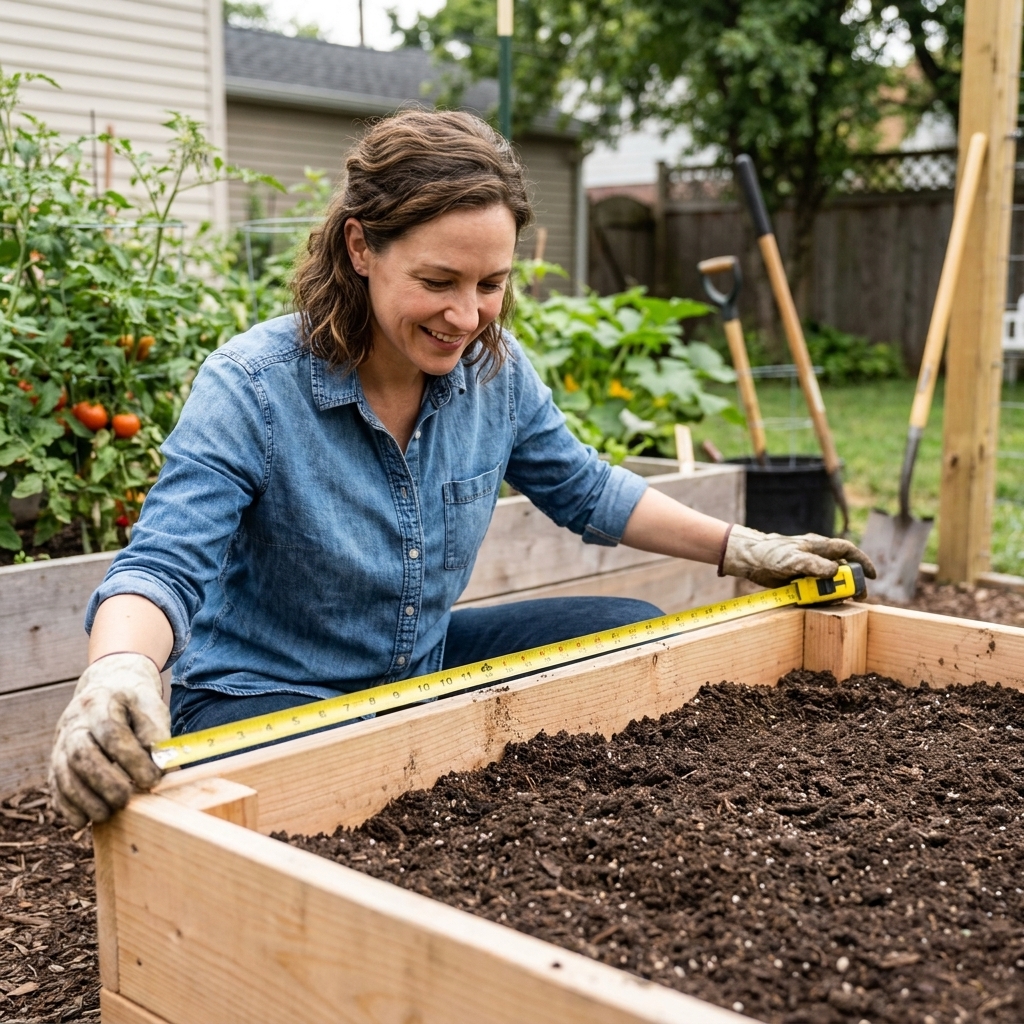
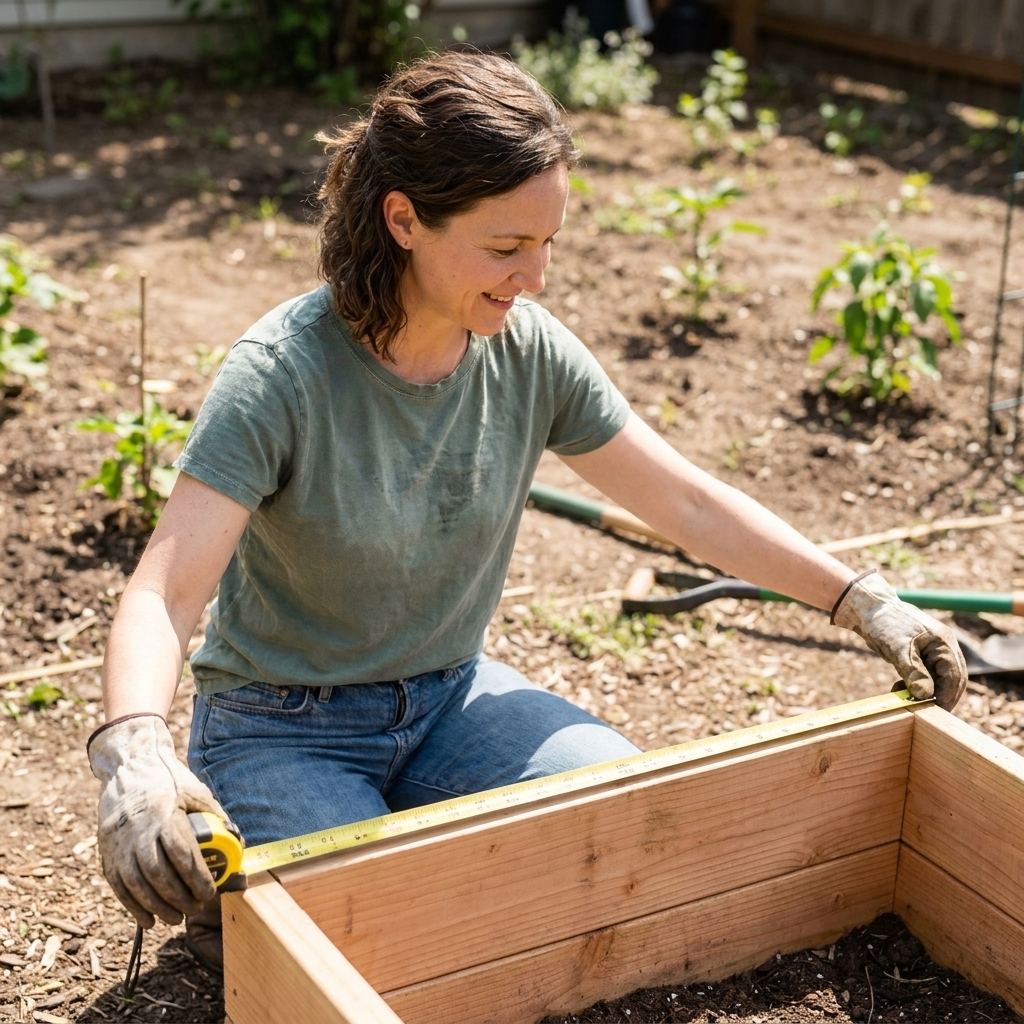
For soil calculations, always measure the inside of the raised bed, not the outside. Lumber thickness can steal more space than you think, especially with thick boards or stone walls.
What to measure
- Inside length (in feet or inches)
- Inside width
- Fill depth you want (not necessarily the bed’s full height)
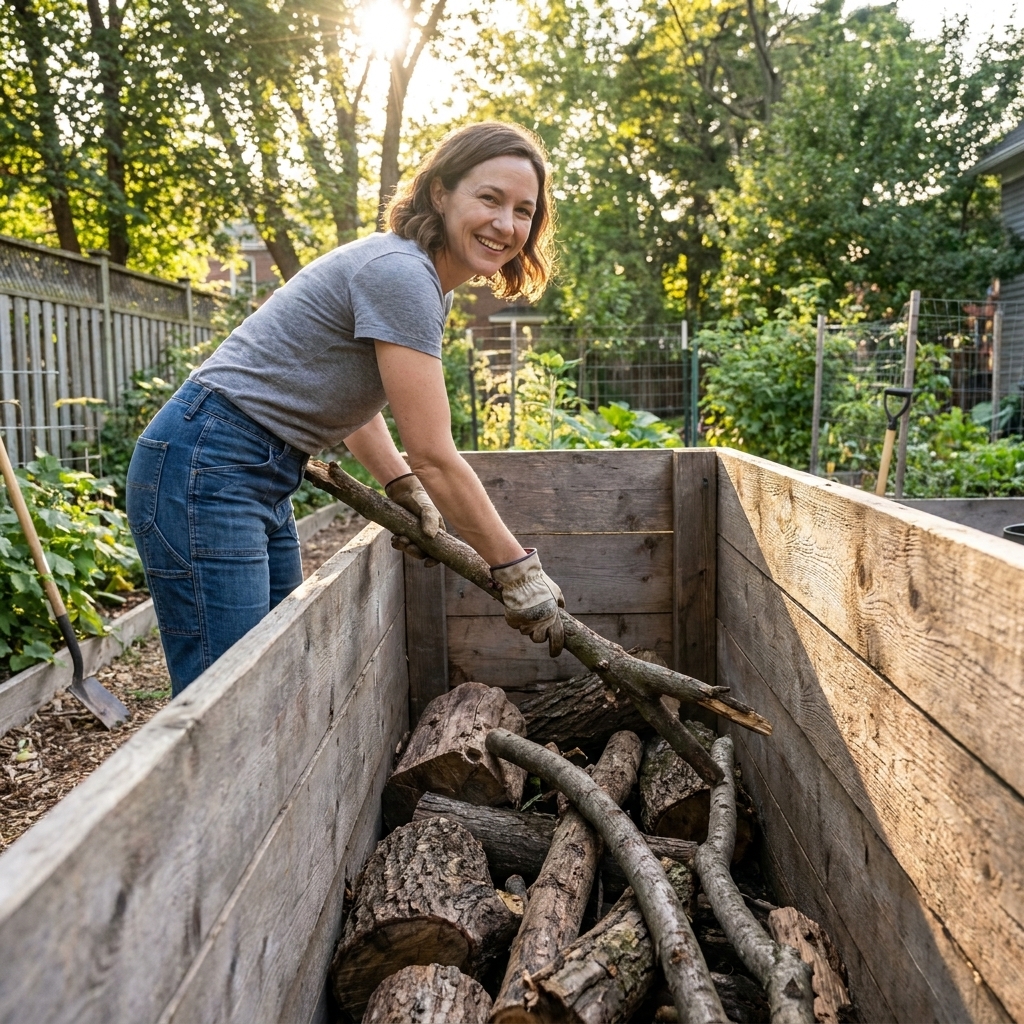
Depth is where gardeners accidentally overbuy. If your bed is 12 inches tall, you might not need 12 inches of purchased soil if you are using cardboard, logs, sticks, leaves, or old potting mix at the bottom.
Pick a realistic fill depth
- 6 inches: decent for shallow-rooted greens, but dries faster
- 8 to 12 inches: my sweet spot for most mixed vegetables
- 12 to 18 inches: helpful for deeper-rooted crops (like carrots and parsnips) and for extra moisture buffering in hot weather
If you are doing a layered fill (wood, leaves, other organic matter), remember those materials settle as they break down. They can also temporarily tie up nitrogen while decomposing, so I like to make sure I still have a generous top layer of finished mix for planting.
The soil volume formula
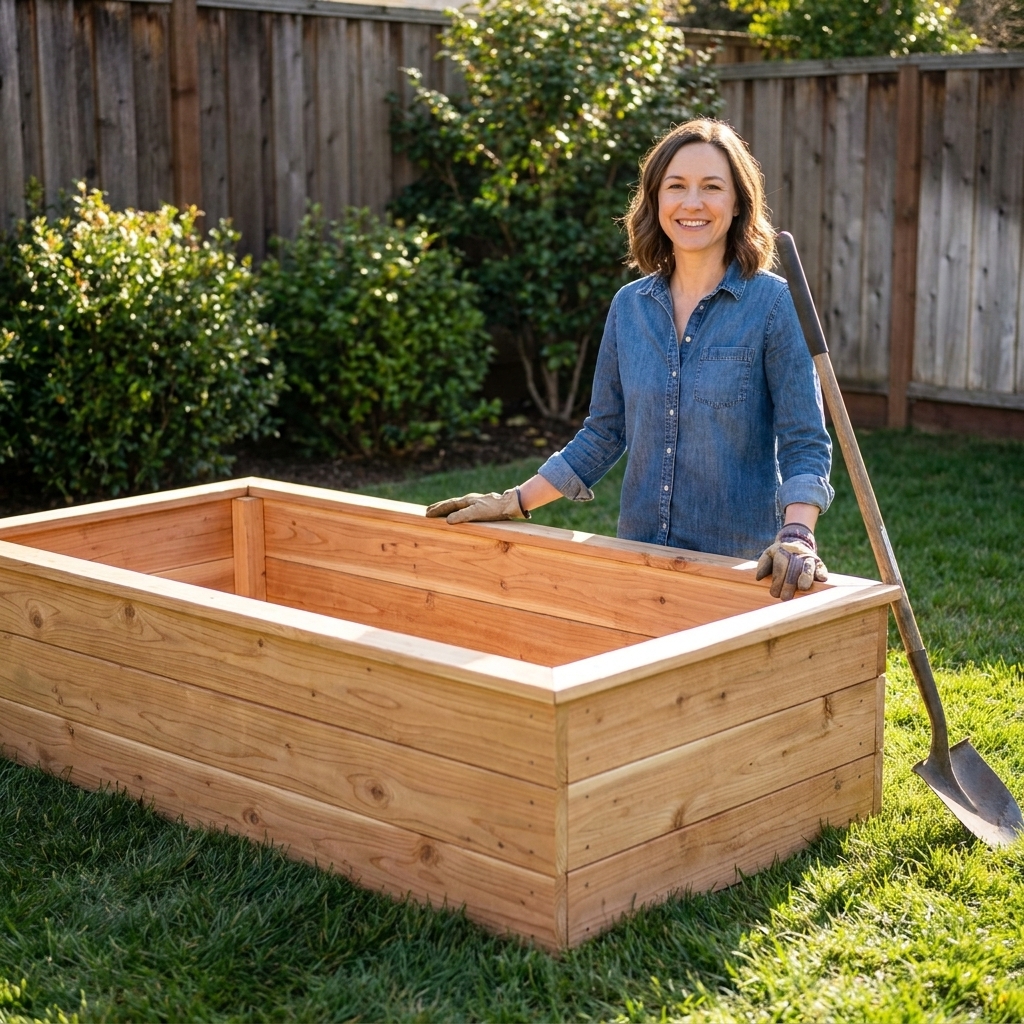
Most raised beds are simple rectangles. The volume formula is:
Length × Width × Depth = Volume
Just make sure all three measurements use the same unit.
If you are measuring in feet
Cubic feet = (Length in feet) × (Width in feet) × (Depth in feet)
To convert inches to feet, divide by 12.
- 6 inches = 0.5 ft
- 8 inches = 0.67 ft (rounded)
- 12 inches = 1 ft
- 18 inches = 1.5 ft
If you measured in inches
Cubic feet = (Length in inches × Width in inches × Depth in inches) ÷ 1,728
Because 12 × 12 × 12 = 1,728 cubic inches in a cubic foot.
Worked examples
Example 1: A classic 4×8 bed, filled 12 inches deep
- Length = 8 ft
- Width = 4 ft
- Depth = 12 in = 1 ft
8 × 4 × 1 = 32 cubic feet
That is the number you use to estimate bags or convert to cubic yards for bulk.
Example 2: A 4×8 bed, filled 8 inches deep
- Depth = 8 in = 0.67 ft
8 × 4 × 0.67 ≈ 21.4 cubic feet
To keep it simple, I would plan for about 22 to 24 cubic feet. That range covers a little extra for leveling and the fact that fluffy mixes settle after watering. If you are topping up an existing bed, you can usually stick closer to the calculated number.
Example 3: A 3×6 bed, filled 12 inches deep
6 × 3 × 1 = 18 cubic feet
Example 4: A round bed
If your bed is a circle, use:
Volume = π × r² × depth
Where r is the radius (half the diameter). Use feet for everything to get cubic feet.
Convert cubic feet to cubic yards
Bulk soil is usually sold by the cubic yard.
1 cubic yard = 27 cubic feet
Cubic yards = cubic feet ÷ 27
Example conversions
- 32 cubic feet ÷ 27 ≈ 1.19 cubic yards
- 18 cubic feet ÷ 27 ≈ 0.67 cubic yards
- 21.4 cubic feet ÷ 27 ≈ 0.79 cubic yards
My ordering rule: for bulk delivery, round up to the next easy fraction or half yard, unless your supplier sells quarter yards. Being a little over is better than trying to stretch soil and ending up with a shallow bed that dries out all summer.
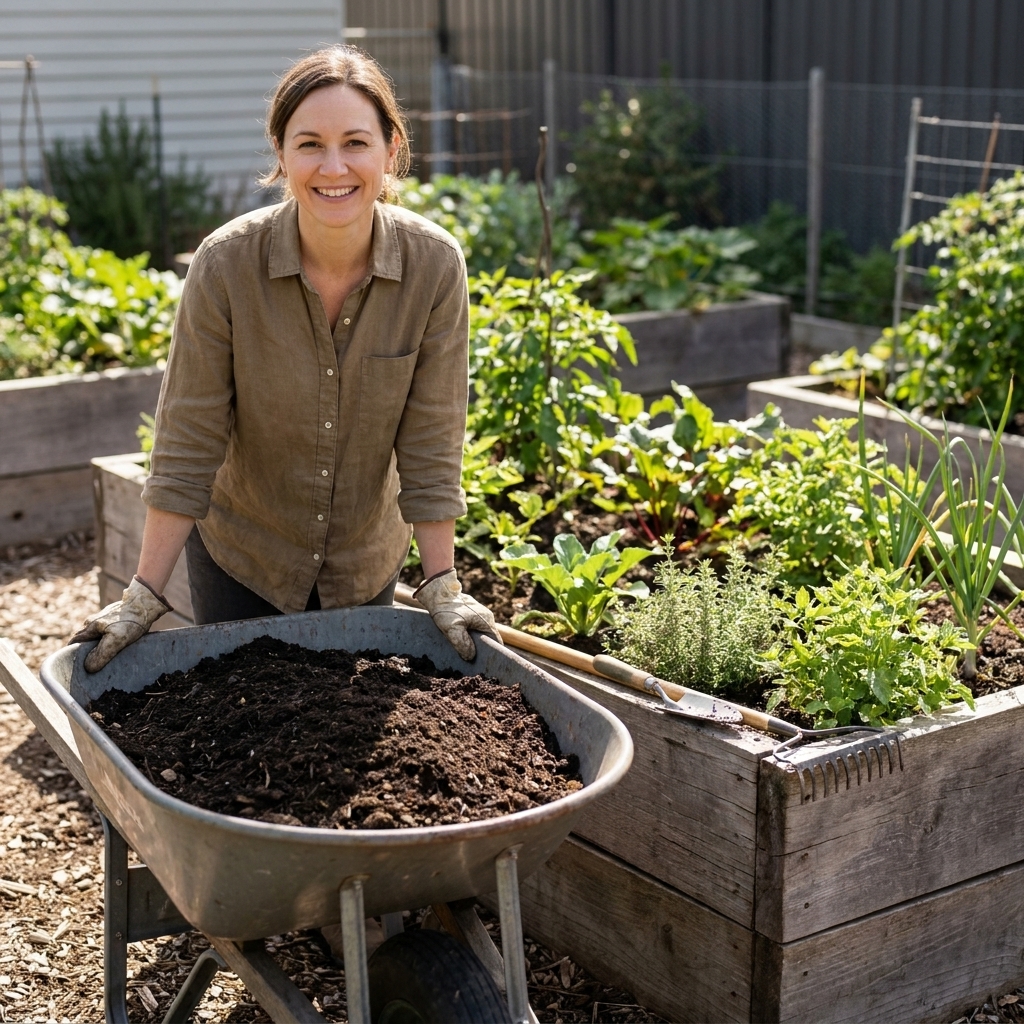
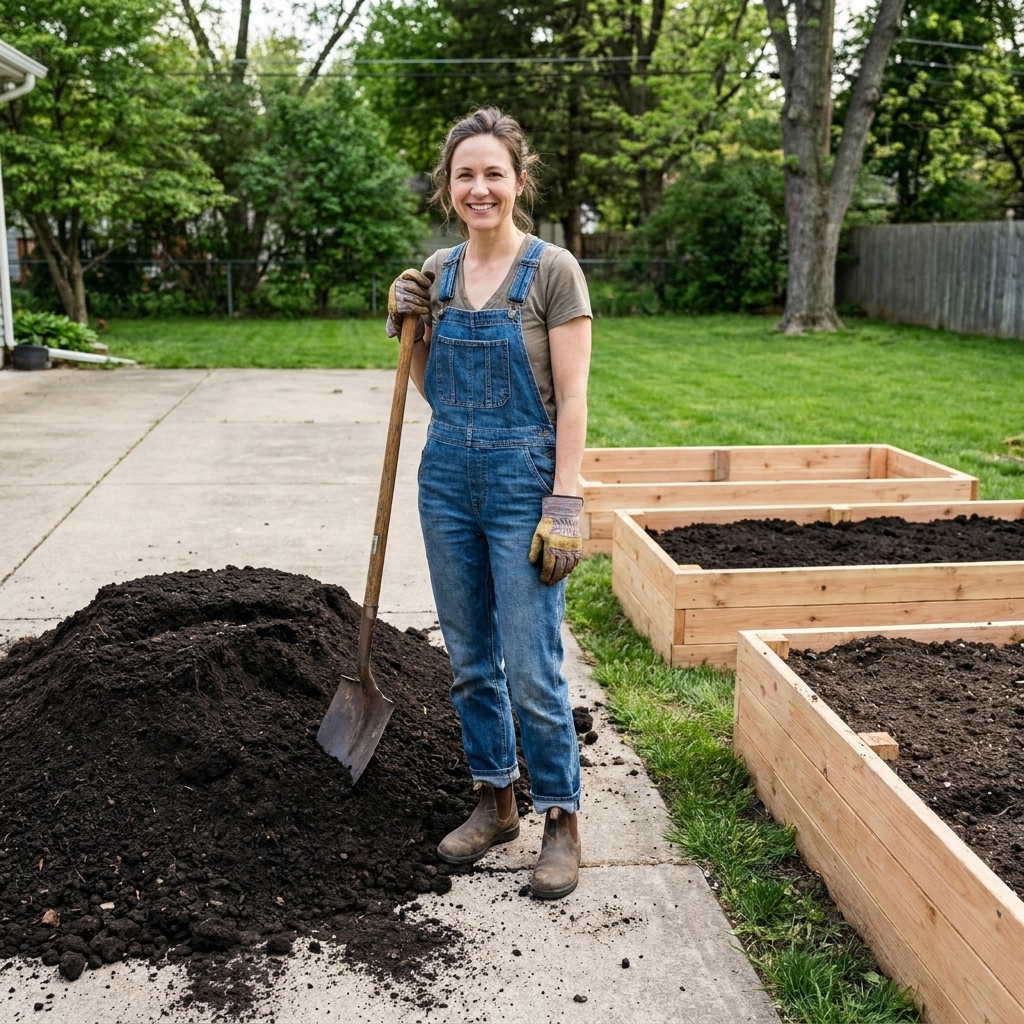
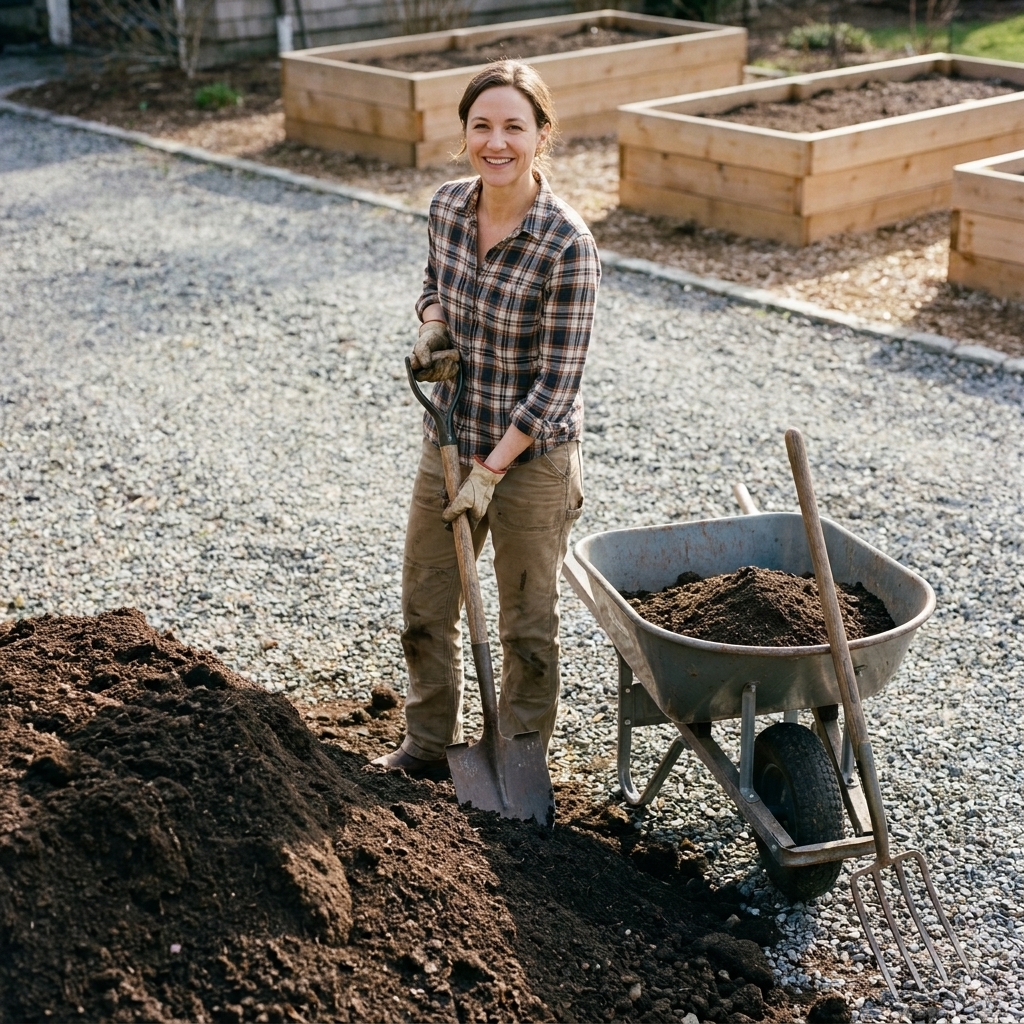
One practical heads-up: some suppliers have minimum delivery amounts (and delivery fees), and most will only dump in a driveway or at the curb. If your beds are in the backyard, think through the wheelbarrow trip before you order.
Convert cubic feet to soil bags
Bagged soil is labeled by volume, usually in cubic feet.
Number of bags = total cubic feet needed ÷ bag size in cubic feet
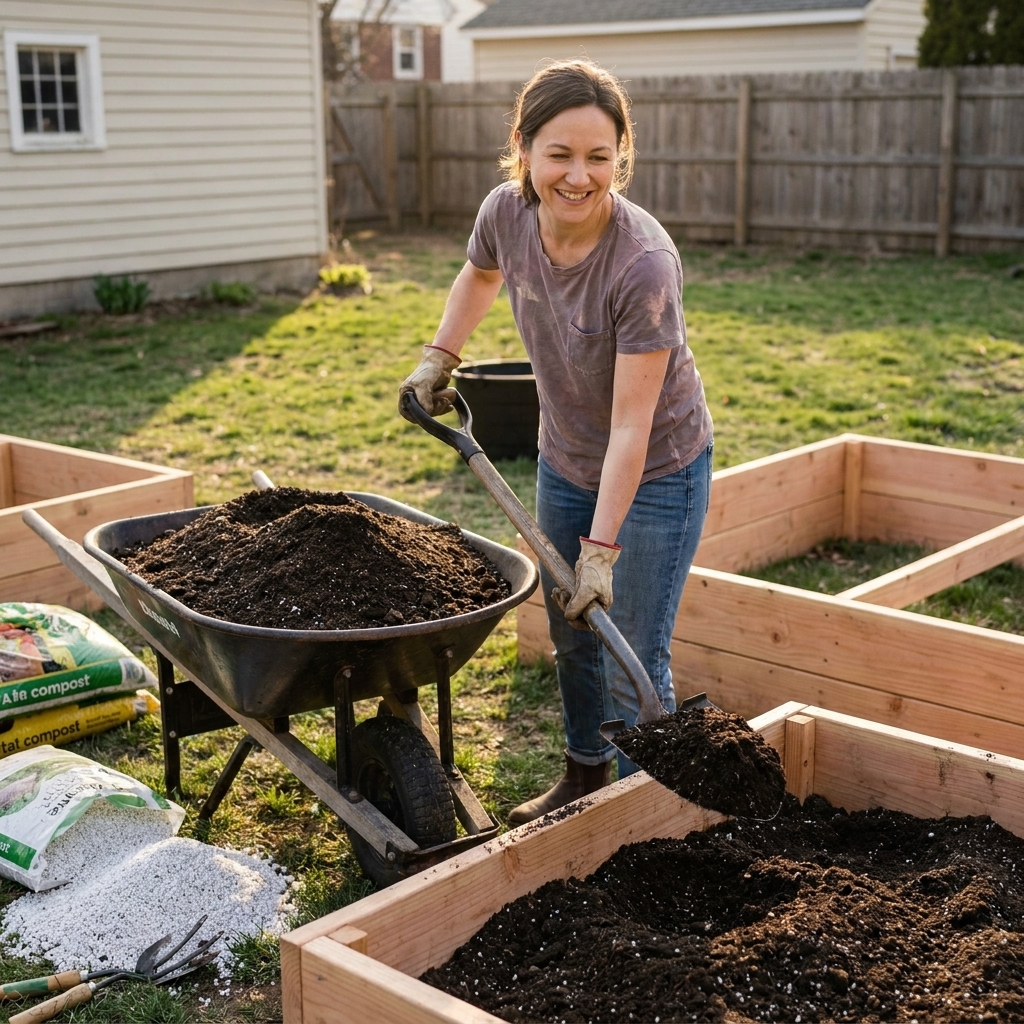
Quick reminder: double-check the label. Some products are listed in quarts or liters, and some bags marketed for gardens are actually soil conditioner or mulch, not a raised-bed mix.
Common bag sizes
- 1 cubic foot bags: easiest math
- 1.5 cubic foot bags: very common for raised bed mixes
- 2 cubic foot bags: great for fewer trips
Bag example: 4×8 bed at 12 inches (32 cu ft)
- Using 1 cu ft bags: 32 bags
- Using 1.5 cu ft bags: 32 ÷ 1.5 = 21.3, so 22 bags
- Using 2 cu ft bags: 32 ÷ 2 = 16 bags
Reality check: bag volumes are measured when the bag is fluffed to its stated volume. Some mixes are denser, and some settle a lot after watering. I typically add 10% extra to bagged-soil math if I want a full bed right away.
Quick reference table
These numbers assume true inside dimensions and are rounded to be practical for ordering. Depths listed here are fill depths, not the height of your bed walls.
| Bed size | 6 in deep (0.5 ft) | 8 in deep (0.67 ft) | 12 in deep (1 ft) |
|---|---|---|---|
| 4×4 | 8 cu ft (0.30 yd) | 10.7 cu ft (0.40 yd) | 16 cu ft (0.59 yd) |
| 4×6 | 12 cu ft (0.44 yd) | 16 cu ft (0.59 yd) | 24 cu ft (0.89 yd) |
| 4×8 | 16 cu ft (0.59 yd) | 21.4 cu ft (0.79 yd) | 32 cu ft (1.19 yd) |
| 3×6 | 9 cu ft (0.33 yd) | 12 cu ft (0.44 yd) | 18 cu ft (0.67 yd) |
| 2×8 | 8 cu ft (0.30 yd) | 10.7 cu ft (0.40 yd) | 16 cu ft (0.59 yd) |
If your bed is an odd size, do not force it into a table. Use the formula. It takes 30 seconds once you have the inside measurements.
When to buy extra
Times you should plan for extra
- New beds filled with fluffy mixes: they settle after watering and after a few rains.
- You are adding compost: compost shrinks as it breaks down.
- Your bed is not perfectly square: bowed boards and irregular corners steal volume in ways that are hard to eyeball.
- You want the soil to hit the top: you will use more than you think. I like to stop 1 to 2 inches below the rim so mulch stays put.
Times you can buy less
- You are doing a layered fill (logs, branches, leaves, old potting soil at the bottom). Expect settling, and make sure the planting layer is deep enough for roots.
- You are topping up an existing bed: for most established beds, you are usually adding compost, not refilling the whole thing.
My personal compromise: for brand-new beds, I calculate the volume, then add about 10%. If I end up with extra, it becomes a top-off pile for midsummer settling or for potting up starts.
Multiple raised beds
If you have several beds, calculate each one’s cubic feet, then add them together. Convert to cubic yards at the end.
Example: three beds
- Bed A (4×8×12 in): 32 cu ft
- Bed B (4×4×12 in): 16 cu ft
- Bed C (3×6×12 in): 18 cu ft
Total = 32 + 16 + 18 = 66 cubic feet
Bulk soil = 66 ÷ 27 = 2.44 cubic yards
In real life ordering, I would likely round that to 2.5 yards if the supplier sells half-yard increments, or 3 yards if I want breathing room and also plan to build up paths or fill containers.
Mistakes to avoid
- Measuring outside dimensions: my “4×8” bed was closer to 3.7×7.7 inside. That is a meaningful difference in soil cost.
- Forgetting depth conversion: 8 inches is not 0.8 feet. It is 0.67.
- Not accounting for settling: I filled to the brim, watered, and woke up to a bed that was suddenly 2 inches low.
- Mixing units mid-formula: feet × feet × inches will betray you every time. Convert first, then multiply.
- Assuming all “raised bed soil” is equal: some bagged mixes are mostly wood fines and collapse a lot. Even with perfect math, texture matters.
FAQ
How deep should soil be in a raised bed?
For most vegetables, 8 to 12 inches of quality soil is plenty. If you are growing carrots, parsnips, or you want extra moisture stability in hot weather, 12 to 18 inches is a nice upgrade if your budget allows. (Potatoes are a little different since they are often grown with hilling over the season.)
How many cubic feet are in a cubic yard?
27 cubic feet. Divide cubic feet by 27 to get cubic yards.
Do I fill my raised bed all the way to the top?
I usually stop 1 to 2 inches below the rim so compost and mulch do not spill over. If you fill to the top, just expect more settling and plan to top off later.
What if my bed is tapered or not a perfect rectangle?
Measure the inside length and width at a few points and use an average. When in doubt, round up slightly so you are not short.
Is it cheaper to buy bulk soil or bags?
Often, bulk is cheaper per cubic foot once you are filling multiple beds. That said, delivery fees, minimum order quantities, and seasonal bag sales can change the math fast, so it is worth pricing both options locally.
What kind of soil should I buy for raised beds?
Look for a blend meant for beds, usually a mix of screened topsoil or loam plus compost (and sometimes aeration material). Straight topsoil can compact on its own, and straight compost can shrink a lot over time, so mixes tend to behave better.
Ordering checklist
- Measure inside length and width.
- Choose your fill depth in inches, then convert to feet.
- Multiply length × width × depth to get cubic feet.
- Convert to cubic yards if ordering bulk (divide by 27).
- Add 10% if this is a new bed or you expect settling.
- Confirm delivery access or count your trips from driveway to bed before the soil arrives.
- Get your wheelbarrow, a sturdy shovel, and a glass of water before the soil arrives. Future you will be grateful.