
Every spring I tell myself, this is the year my lettuce stays sweet into early summer. And every year a hot spell shows up like an uninvited guest, and suddenly my greens taste bitter and my cilantro is launching flower stalks like it has somewhere better to be.
The single easiest “why didn’t I do this sooner?” fix in my garden beds has been shade cloth. Not full shade, not darkness. Just enough filtered light to cool the canopy, take the edge off harsh afternoon sun, and keep cool-season crops from panicking.
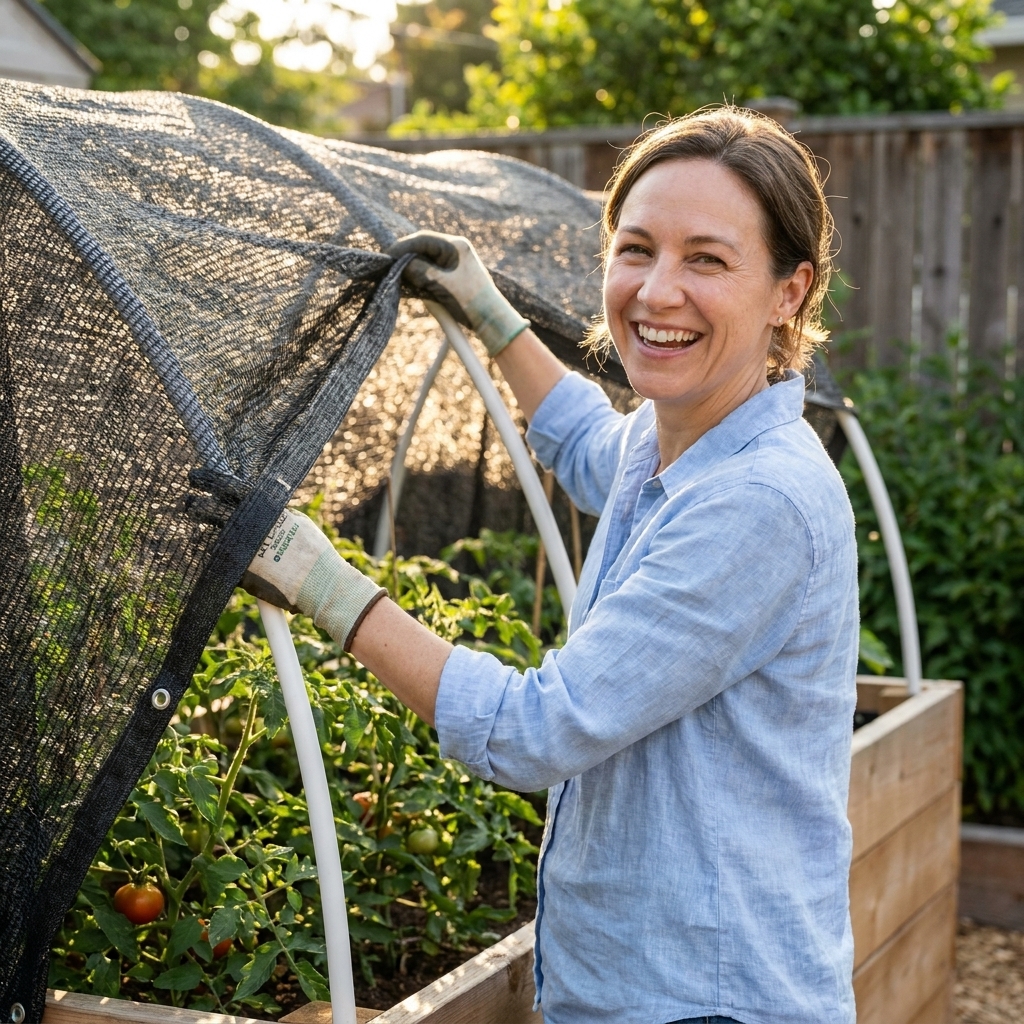
What shade cloth does
Bolting is a survival response. When plants like lettuce, spinach, arugula, cilantro, and bok choy feel stressed by heat, intense sun, or drying winds, they switch from making tasty leaves to making flowers and seeds.
Shade cloth helps because it:
- Lowers leaf temperature by reducing direct solar load during the hottest hours.
- Reduces water stress by slowing evaporation from both soil and leaves.
- Softens wind when used like a loose canopy, which can reduce transpiration stress.
- Prevents sunscald on tender seedlings and fresh transplants.
It will not make July feel like April, but it can often buy you a few extra weeks of better harvests, sometimes more in a mild summer.
Choose a shade percentage
Shade cloth is sold by “percent shade,” which is a practical way of saying roughly how much light it reduces. It is not perfectly standardized across every brand and material, so treat the number as a starting point, then adjust based on how your plants respond.
For beds, I like to think in terms of what you are trying to keep going and how brutal your afternoons get.
Quick guide for cool-season crops
- 30% shade: Light protection. Great for hardening off seedlings, protecting new transplants, and taking the edge off early summer sun in mild climates.
- 40% shade: My go-to starting point for keeping lettuce, spinach, arugula, and Asian greens productive longer.
- 50% shade: A strong choice for full-sun beds, hotter climates, reflective patios, or when you are trying to keep cilantro and salad greens from bolting.
- 60% shade: Useful in extreme heat or for very sensitive greens. In less intense sun, it can slow growth.
If you are only buying one cloth for cool-season crops, 40% to 50% is a smart first bet for most backyards. If your greens stretch and look thin, go down a step. If they still bolt fast, go up a step.
What about tomatoes and peppers?
They generally want more sun. In heat waves, some gardeners use 30% to 40% to reduce sunscald and blossom drop. But for the cool-season goal here, you will typically be happier with 40% to 60%.
Knitted vs woven (and color)
Knitted is best for most beds
Knitted shade cloth is popular in home gardens because it resists tearing, handles wind better, and holds up to being clipped on and off hoops all season. Woven cloth can fray and tear at cut edges unless it is hemmed.
Black, white, or aluminet?
- Black: Common, durable, and easy to find. It absorbs heat, but still cools plants by blocking direct sun. Great all-purpose choice.
- White: Reflects more light and can keep things slightly cooler underneath. It can also look brighter and less like a temporary shade structure in a suburban yard.
- Aluminet (reflective): Excellent cooling, often pricier. If your summers are intense and you baby salad greens like I do, it can be worth it.
For most setups, black 40% to 50% is a reliable first purchase.
When to use it
Shade cloth works best when you treat it like a seasonal tool, not an all-or-nothing blanket for the whole summer.
Use it during heat triggers
- When daytime highs start staying above about 75 to 80°F for cool-season leafy crops.
- During bright, dry spells even if the air temperature is not outrageous.
- Right after transplanting for 3 to 7 days to reduce shock.
Target the hottest hours
If you have time to fuss (no shame, I do), you can clip shade cloth on for afternoon sun and pull it back for morning light. But most of us want a set-it-and-forget-it option, and a fixed canopy still helps a lot.
3 easy ways to hang it
You do not need a permanent structure. My first “shade system” was literally a piece of shade cloth clipped to tomato stakes. It looked a little ridiculous. The lettuce did not care.
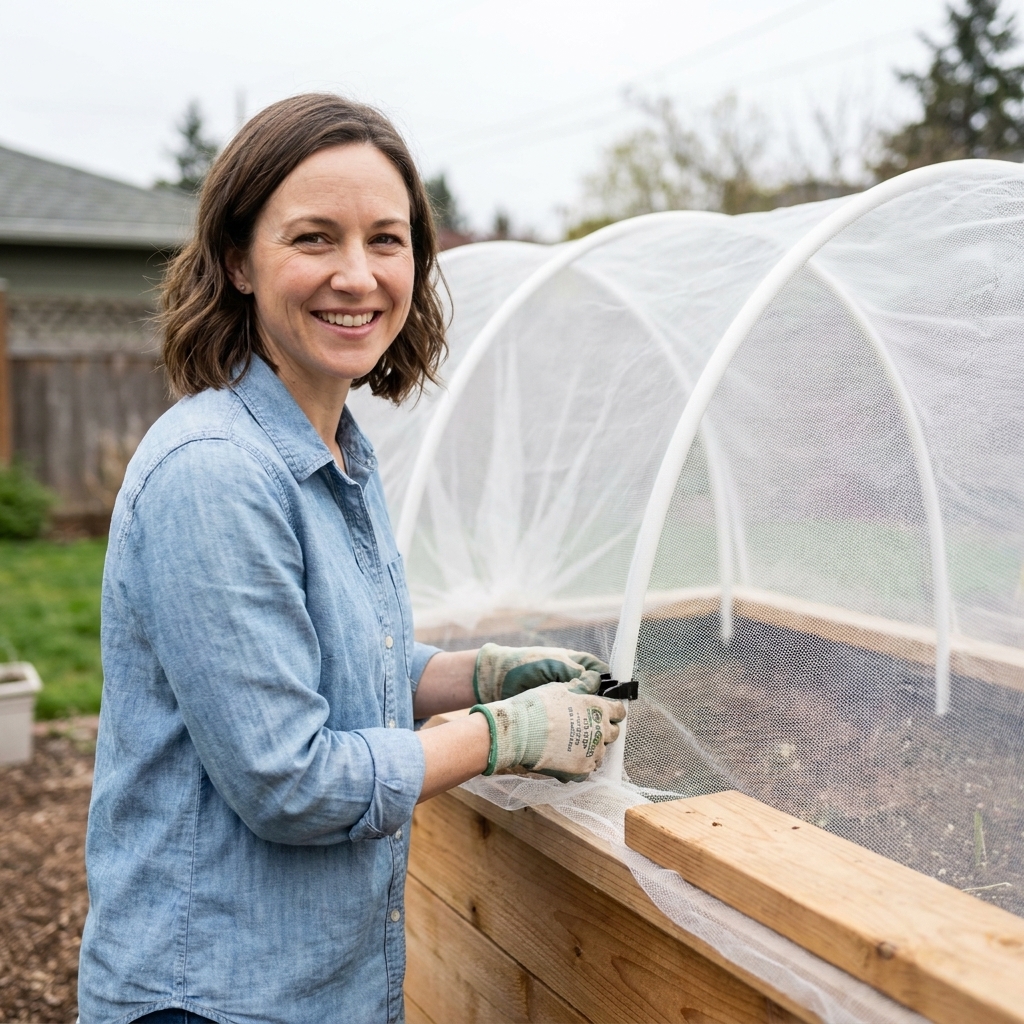
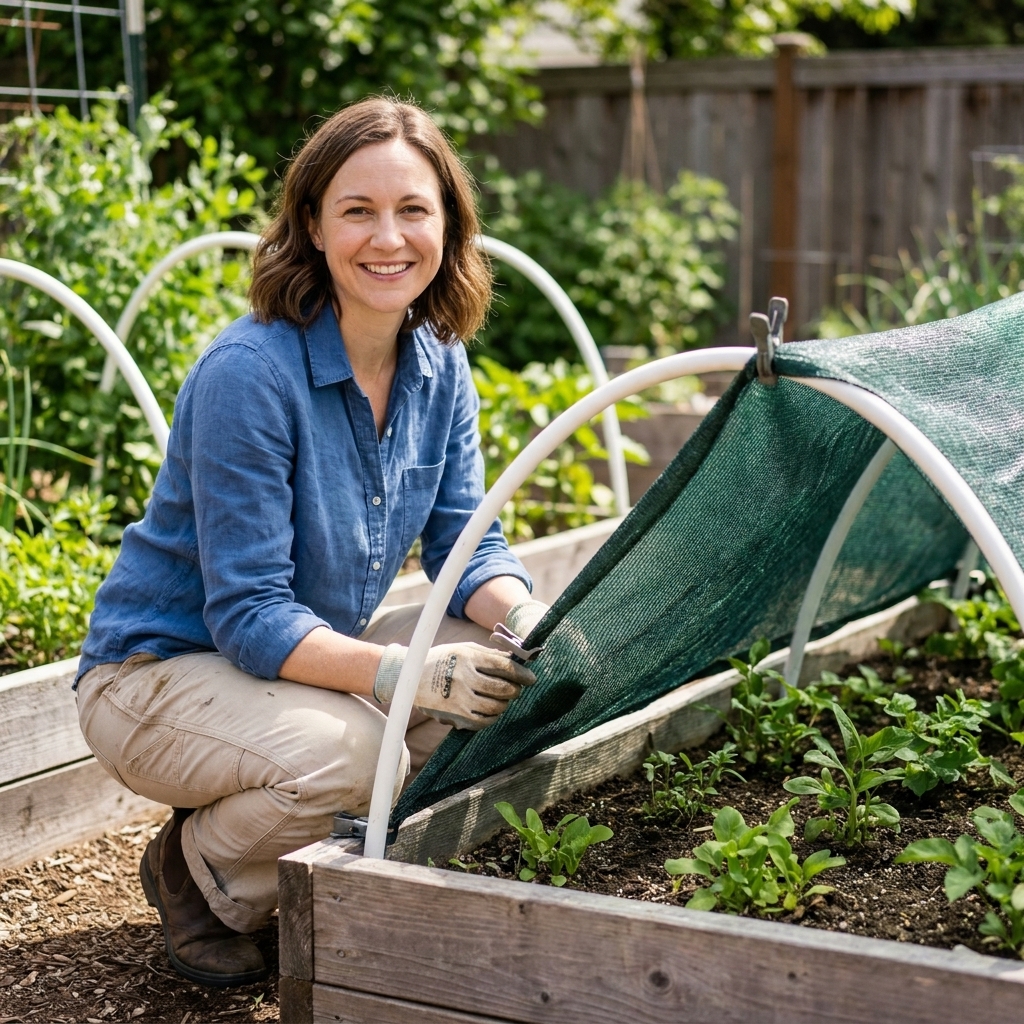
Option 1: PVC hoop tunnel
This is my favorite for beds because it is stable, inexpensive, and easy to vent.
- Bend 1/2-inch PVC into hoops and anchor each end inside the bed (over rebar, stakes, or screwed-in pipe straps).
- Drape shade cloth over the hoops.
- Clip with spring clamps, shade cloth clips, or sturdy clothespins.
Tip: Add one straight PVC “ridge pole” along the top, tied to the hoops, if wind is an issue in your yard.
Note: In extreme heat, PVC can soften a bit. If you get serious wind or want a sturdier long-term setup, EMT conduit hoops are tougher.
Option 2: Corner posts canopy
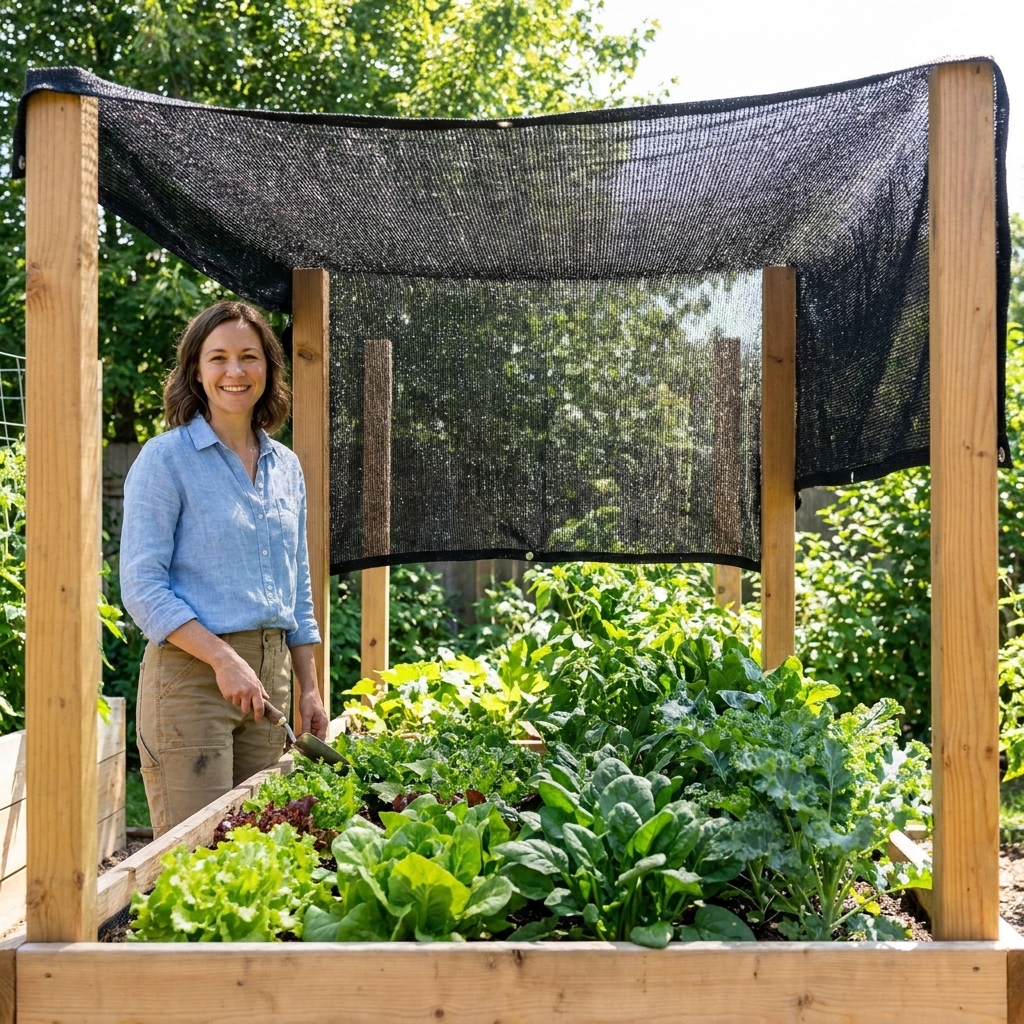
If you want more headroom for peas, taller lettuces, or trellised greens, add four corner posts (wood or metal) and tension the shade cloth like a sail.
- Install posts at the four corners of the bed.
- Add eye hooks or screw-in loops.
- Use bungee cords or rope to tension the cloth so it does not flap.
Tip: A little slack is fine, but constant flapping can shred fabric and stress plants underneath.
Option 3: Afternoon awning
If your bed gets scorched from one direction (usually west), rig shade cloth like a partial wall or angled awning.
- Place two tall stakes on the west side of the bed.
- Clip shade cloth so it blocks late-day sun while leaving the top open.
- Adjust the angle as the sun shifts through the season.
This is surprisingly effective for extending cilantro and keeping lettuce from turning bitter.
Size and fit
Most frustration with shade cloth is not the cloth. It is the edges.
- Buy it bigger than the bed. I like 12 to 24 inches of extra on each side so you can clip it down without leaving gaps that lift in the wind.
- Plan an easy opening. Clipping one long side and using clamps on the other side makes a simple “lid” for harvesting and weeding.
- Secure corners. Corners catch wind first. Extra clips or a short bungee at each corner saves a lot of swearing.
If storms are coming, either tension everything down well or take the shade cloth off. A surprise gust can turn a loose canopy into a sail.
Ventilation matters
Shade cloth is breathable, which is why it is so useful. Still, how you mount it matters.
- Leave airflow gaps along the sides if you are in a humid climate.
- Avoid sealing it to the soil like plastic. Shade cloth should act like a canopy, not a greenhouse.
- Water early so foliage dries quickly, especially if you are shading dense greens.
If you notice more mildew after shading, you usually need more airflow, not less shade.
Shade cloth plus watering
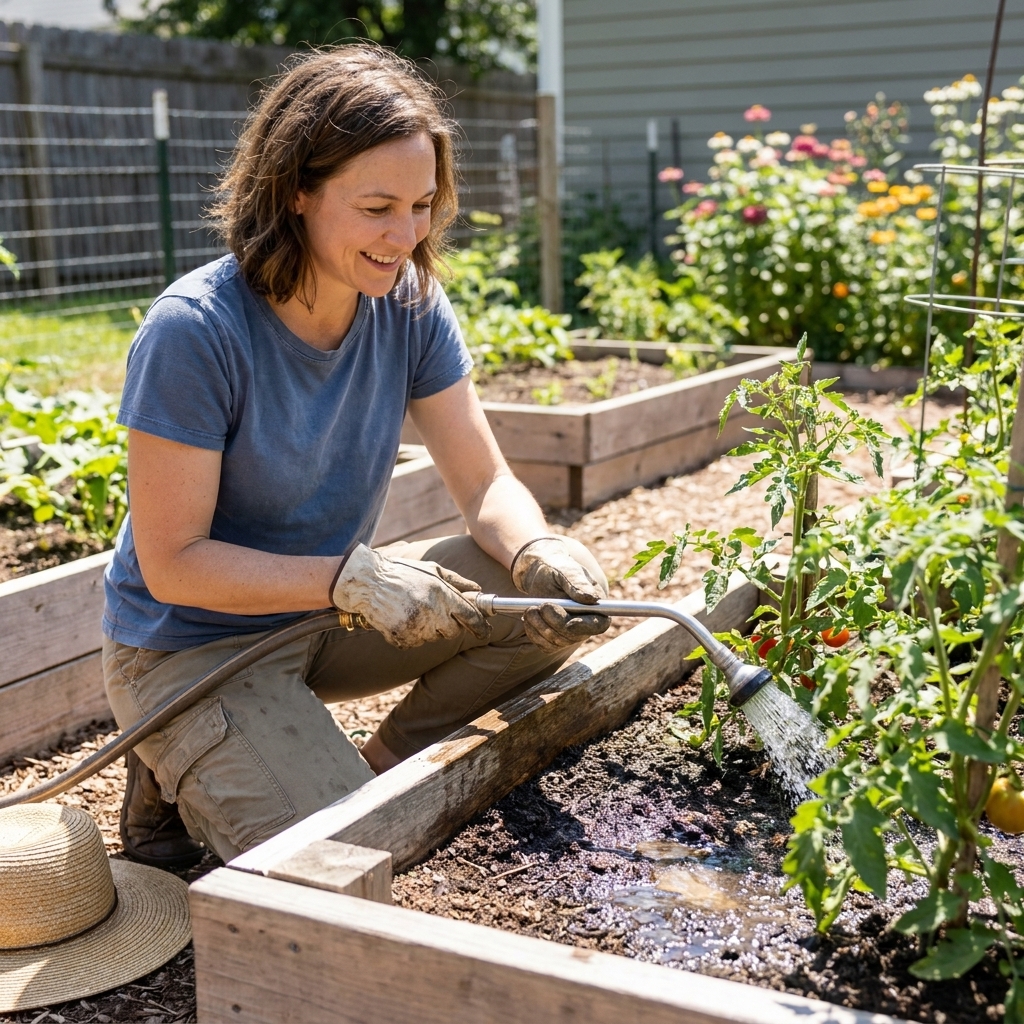
Shade cloth reduces evaporation, but it does not replace steady moisture. Cool-season crops bolt faster when moisture swings from “soaked” to “crispy.”
My routine under shade cloth
- Deep water to keep roots growing downward.
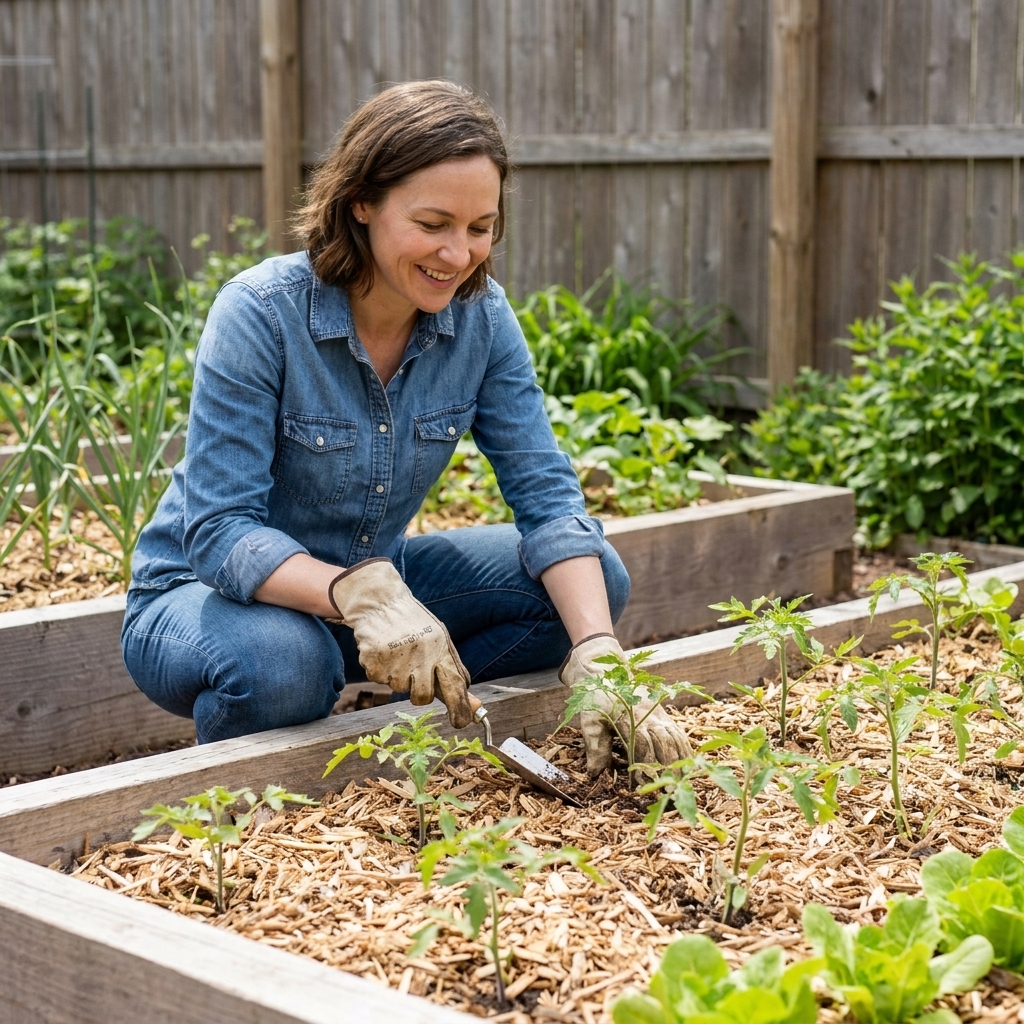
- Mulch with shredded leaves, straw, or fine bark to stabilize soil moisture.
- Check soil, not leaves. Stick a finger 2 inches down. If it is dry there, water.
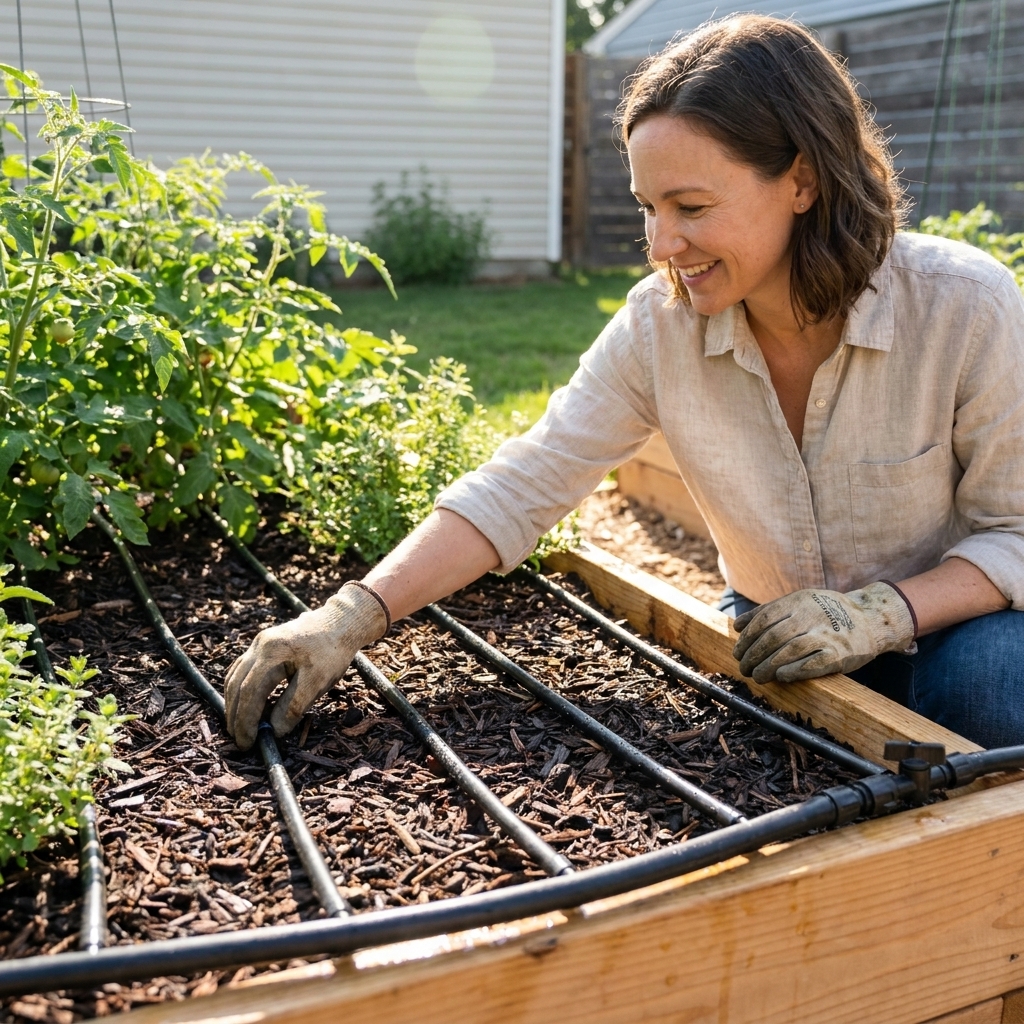
If you use drip irrigation, shade cloth is even better because the bed stays evenly moist without the sun stealing it back by noon.
Best crops for it
Shade cloth is tailor-made for “I want one more month of harvest” situations.
Top candidates
- Lettuce: Slower bolting, less bitterness, better texture.
- Spinach: Still heat sensitive, but shade can extend harvest and improve leaf quality.
- Arugula and mustard greens: Less spicy-bitter jump in hot weather.
- Cilantro: This is the big one. Shade can buy time before it bolts.
- Parsley: Less stress, steadier growth.
- Peas: In some climates, shade can help them limp along longer as temperatures rise.
Real expectations
Shade cloth does not turn summer into spring. But it often means you harvest tender leaves for weeks longer, and when bolting eventually starts, it is slower and less dramatic.
Common mistakes
- Buying too much shade: 70% or higher can often stall growth for leafy crops unless your sun is intense.
- Letting it flap in wind: It can tear at clips and rub plants. Tension it or secure more points.
- Forgetting access: Make sure you can still weed, harvest, and water without a full wrestling match.
- Assuming shade fixes dry soil: It helps, but inconsistent watering still triggers bolting.
- Covering without airflow: If mildew is a recurring issue, prioritize ventilation.
Pests and tradeoffs
Any cover changes the microclimate. Usually that is the point, but keep an eye out for side effects:
- Slugs and snails can love the cooler, damp shade in some regions. Check under mulch and along bed edges.
- Access gets slightly harder if your clips and cloth are annoying to move. A simple “hinge side” solves most of this.
Care and storage
- Shake off debris before storing to prevent mold and mouse nesting.
- Rinse if needed with a hose, then dry fully.
- Store out of sun in a bin or garage. UV exposure is what breaks it down over time.
- Do not crease it sharply if you can avoid it. Loose folds reduce weak points.
A decent knitted cloth can last several seasons with gentle handling.
FAQ
Will shade cloth stop bolting?
No, especially during long hot days. But it often delays bolting and improves leaf quality by reducing stress. Pair it with consistent moisture for the biggest impact.
Can I use row cover instead?
Floating row cover (frost cloth) is great for insects and cold snaps, but in summer it can trap heat. Insect netting is usually more breathable than frost cloth, but it still does not cool the way shade cloth does. For heat stress, shade cloth is the better tool.
Should I shade seedlings and transplants?
Yes. Even warm-season plants appreciate temporary 30% shade for a few days after transplanting, especially in raised beds where soil warms quickly.
How high should it be?
Higher is generally better for airflow. Even 12 to 18 inches above the crop helps. If you can give 2 to 3 feet of clearance on a canopy setup, that is lovely for ventilation and easy harvesting.
Do I shade the whole bed?
If you are growing mixed crops, shade the section with cool-season plants. Or shade the whole bed and move sun-lovers to a different space. In my garden, salad greens get the VIP treatment and the peppers can fend for themselves.
A simple starter setup
If you want a no-drama first attempt, here is what I would do for one standard bed in full sun:
- 40% to 50% knitted shade cloth sized with 12 to 24 inches extra on each side
- PVC hoops (or EMT conduit hoops if wind is a regular character in your story)
- Spring clamps to secure edges and make it easy to open for harvesting
Put it up when the first real heat arrives, keep your watering steady, and watch how much longer your greens stay tender. The first time you harvest lettuce in weather that normally would have turned it bitter, you will feel like you hacked summer.