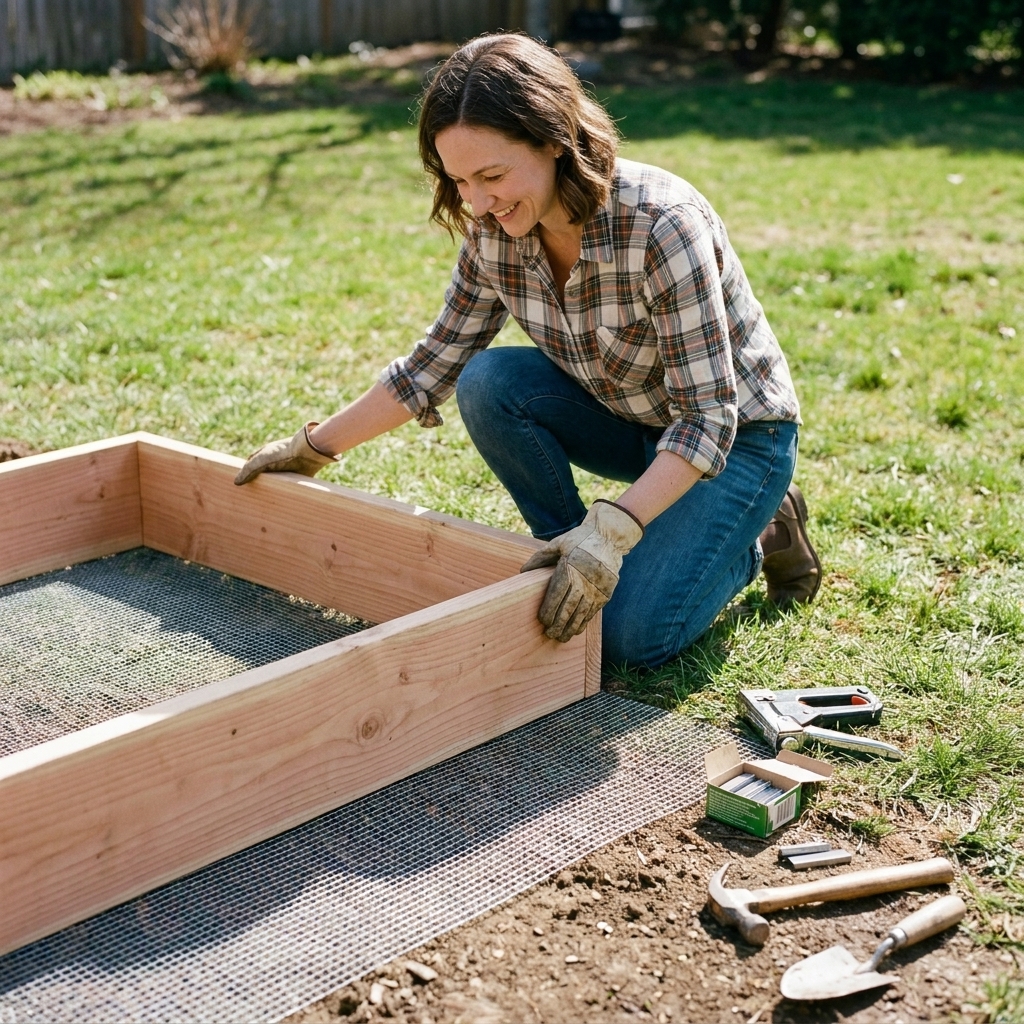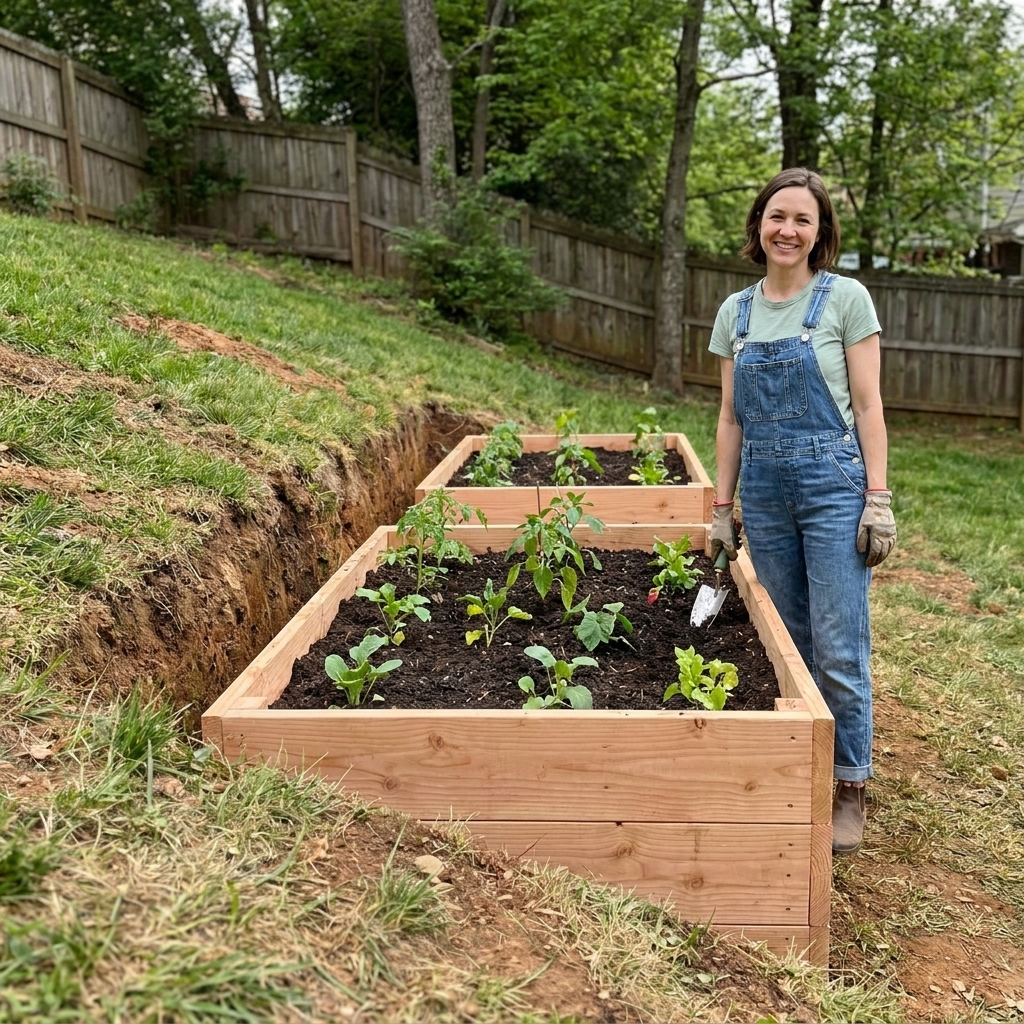

If you have ever pulled back mulch in a raised bed and found a sneaky white runner threading through your carrots, welcome to the club. Creeping grasses (especially Bermuda) do not politely stay in the lawn. They travel. They tunnel. They show up where you swear you just weeded last weekend.
The good news is you can stop them, but it takes a two-part approach: (1) a physical barrier that is actually deep and continuous, and (2) a maintenance habit that catches the few blades that will always try their luck. Below is the exact system I use around my raised beds to keep turf grass out without losing my mind.
Stolons vs rhizomes
Creeping lawn grasses invade raised beds in two main ways:
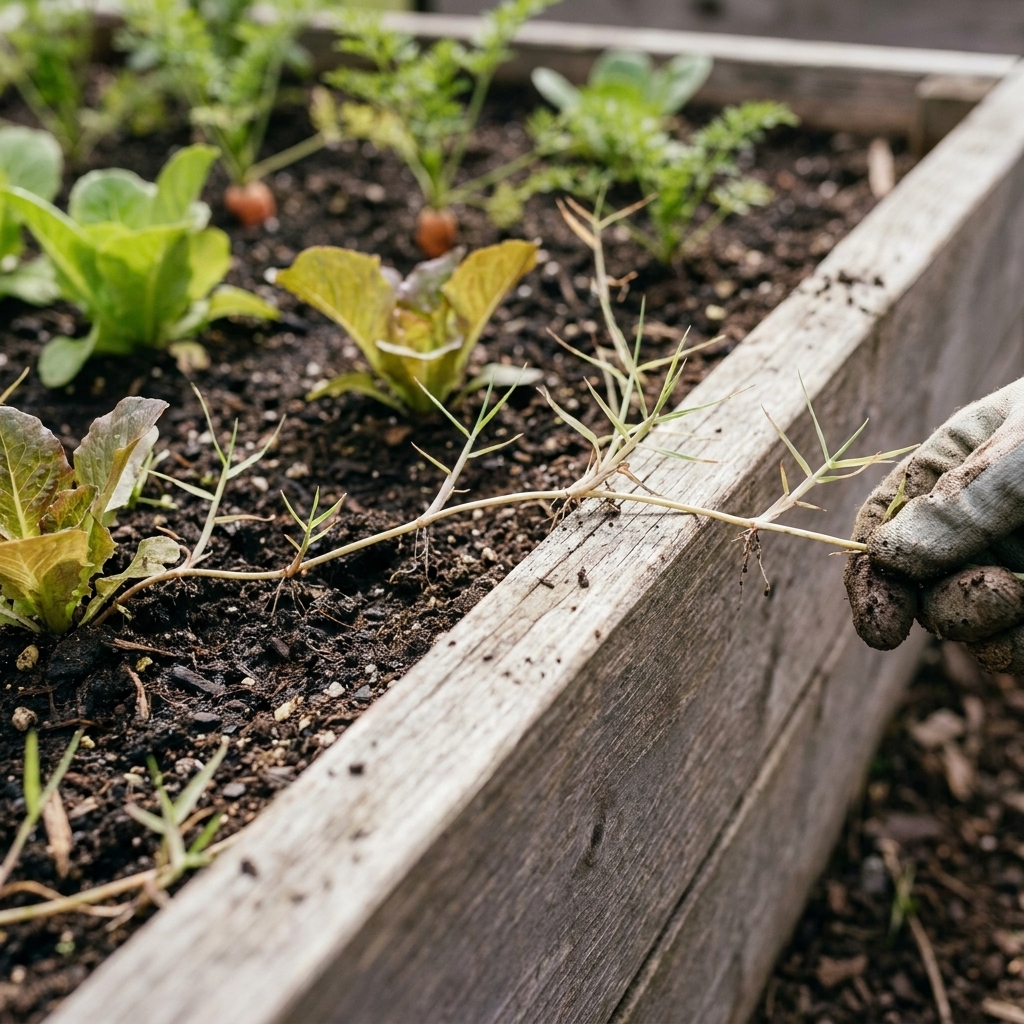
- Stolons creep across the surface like spaghetti. They root wherever a node touches soil or mulch.
- Rhizomes travel underground. Bermuda is notorious for this and can pop up inside a bed even if the edge looks clean.
That is why a quick surface edging job helps for a month, then suddenly you are finding grass in the middle of the bed. For aggressive turf, you need depth, not just neat lines.
Before you dig
If you are trenching 12 to 18 inches around beds, call your local utility locate service first (in the U.S., that is 811). It is a quick step that can prevent a very expensive surprise.
Step 1: Pick a buffer width
Before you install anything, choose the buffer zone around your beds. This is the single easiest way to reduce pressure from creeping grass.
- Best: 12 to 18 inches of grass-free space around the bed perimeter.
- Good: 6 to 12 inches if you are tight on space.
- Hard mode: Bed walls touching lawn. You can still win, but you will be doing more edging and repairs.
That buffer can be mulch, pavers, gravel, or a simple soil trench. The goal is to remove the grass highway right next to your bed.

Step 2: Install a real barrier
If Bermuda (or similar) is the problem, I recommend a vertical barrier at least 12 inches deep. In many yards that is enough to make a big difference. In hot climates with rampant Bermuda, 18 inches is often more effective if you can manage it. Depth needs can vary with soil type, irrigation, and how aggressively the grass is growing, so think of these numbers as a practical starting point, not a magic guarantee.
Option A: HDPE root barrier
This is the flexible plastic sold as bamboo or root barrier. It works because it creates a continuous wall that rhizomes have a hard time crossing, but only if it is thick, vertical, and sealed at seams.
- Choose a thick barrier. I look for commercial-grade HDPE in the 60 to 80 mil range (or similar “heavy duty” thickness). Thin plastic sheeting tends to buckle, tear, or get punctured during install.
- Dig a narrow trench around the bed perimeter where the barrier will go, 12 to 18 inches deep.
- Place the barrier so 1 to 2 inches stick up above the soil. That little lip matters because it stops stolons from simply crawling over the top.
- Overlap and seal seams by at least 6 inches and fasten them with manufacturer clips or stainless screws and washers if needed. A loose seam is basically an open door.
- Backfill and tamp firmly. Soil settling later can create gaps, so pack it well and top off after the first good rain if it sinks.
Tip from my mistakes: If you bury the barrier flush with the soil surface, Bermuda will hop right over it. Leave that small edge showing and hide it with mulch if you do not like the look.

Option B: Hard edging plus trench
If you want a crisp border, combine a hard edging material with a deep cut underneath it.
- Materials: steel edging, aluminum edging, or sturdy composite edging.
- Install depth: aim for 6 inches down for the edging itself, then create an additional 6 to 12 inch trench beneath or just outside it.
This can work well, but I want to be very clear about the catch: trenches collapse and fill with mulch and soil. If you do not re-cut and clean that trench regularly, runners will bridge it.
Option C: Pavers or concrete border
Pavers can create a helpful buffer strip, but remember: Bermuda can travel under and through tiny joints. If you choose pavers, pair them with a barrier underneath or be prepared for occasional breakthroughs at seams.
Step 3: Stop under-wall entry
This surprises people: grass often sneaks in under the bed frame if the bed is set directly on soil and the lawn is nearby. Rhizomes travel beneath the wall and pop up inside the bed where it is moist and fertilized.
If your bed is already built
- Check the inside perimeter: pull mulch back 2 to 3 inches and look for pale runners hugging the wall.
- Excavate a narrow inside trench along the wall where you see activity and remove runners completely.
- Install an internal liner strip of HDPE barrier against the inside wall if invasion is chronic on one side (like the lawn-facing side). Set it tight to the wall, keep it vertical, and let it extend from near the soil surface down into the bed. It slightly reduces bed width, but it does not meaningfully affect drainage in most raised-bed setups.
If you are building a new bed
Consider a perimeter “skirt” barrier around the outside of the bed footprint before filling, especially if the bed will sit close to turf. A little prevention at build time saves seasons of weeding later.
Step 4: Mulch that helps
Mulch is helpful, but some types make it easier for stolons to hide and root.
- Best for spotting runners: shredded leaves or fine compost mulch in the bed, plus a separate mulch border outside the bed.
- Fine, but monitor: wood chips. Stolons can thread through chips and root in the moist layer underneath.
- Avoid as a “fix” by itself: landscape fabric. Bermuda loves finding seams and edges, and fabric makes it harder to pull runners cleanly.
If you use compost mulch inside the bed, plan to top it up as it breaks down, and avoid piling it directly against plant stems.
If you love wood chips (I do), the key is to treat the chip layer like a welcome mat you lift and check, not a permanent “set it and forget it” shield.
Step 5: The 5-minute patrol
Even with perfect edging, a few blades will still appear. The difference between “annoying” and “taken over” is how quickly you respond.
Weekly quick check
- Walk the bed perimeter and look for runners climbing the barrier lip.
- Lift mulch near edges and pull any stolons you see back to where they came from. If they snap, keep digging until you find the end.
- Check corners and seams first. That is where breakthroughs love to start.
Monthly deeper check
- Inspect for rhizome sprouts inside the bed, especially within 6 inches of the walls.
- Use a hand fork to loosen soil and remove the whole rhizome section, not just the green top.
My personal rule: if I see Bermuda once, I act that day. Waiting a week is how it earns squatter rights.
If grass is already in the bed
If you already have an invasion, do not panic. You can fix it without dumping all your soil, but you do need to be thorough.
For a light invasion
- Water the bed lightly first. Moist soil releases rhizomes more cleanly.
- Use a hand fork to loosen around the grass clump.
- Pull slowly and follow the runner. Remove as much length as you can.
- Top up mulch and keep that edge area under extra scrutiny for 2 to 3 weeks.
For a heavy invasion
- Harvest and temporarily relocate any plants you can (potted herbs, small seedlings) while you clean up.
- Work in sections. Loosen soil and sift through by hand, removing every runner fragment you can find.
- Rebuild the perimeter defense outside the bed. If you only weed the inside, it will be back.
- Re-mulch and commit to weekly patrols for at least a month.
If you miss a few pieces, do not beat yourself up. Bermuda is legendary because it regenerates. The goal is to reduce it to a manageable level and keep starving it with consistent removal.
Disposal tip: Do not toss Bermuda runners and rhizomes into a casual compost pile. They can re-root. Bag them for trash pickup, dry them fully in the sun until brittle, or hot-compost only if you know your pile reliably heats through.

Herbicide near raised beds?
I focus on barriers and hand removal because raised beds are where I grow food. But I know some yards are truly overrun, and you might be considering a chemical option outside the bed.
- Avoid spraying inside beds with edible crops. If a product is labeled for use near edibles, follow the label exactly for where it can be applied and any timing restrictions.
- If you use a non-selective herbicide outside the bed, keep it well away from bed soil and avoid drift on windy days.
- Physical barriers still matter. Herbicide may knock back top growth, but barriers reduce reinvasion.
If you go this route, follow the product label exactly and consider spot-applying rather than blanket spraying. The label is the law, and it is also your safety net.
Tough spots: hardscape edges
If a bed sits next to a driveway, patio, or sidewalk, you may not be able to trench a full perimeter. In that case, I focus on the routes the grass actually uses:
- Run a barrier where soil meets soil (the lawn side). Even a partial barrier can dramatically reduce pressure.
- Seal cracks and joints in adjacent hardscape and keep them weeded. Bermuda loves a seam.
- Add a wider buffer on the lawn side (mulch or gravel) to reduce direct contact.
Barrier options compared
| Method | Best for | What it struggles with | My notes |
|---|---|---|---|
| HDPE root barrier (12 to 18 in deep) | Bermuda and other rhizome spreaders | Poorly secured seams, punctures, soil settling | Most reliable when thick, vertical, deep, and left with a small lip above soil |
| Steel or aluminum edging | Clean look, light to moderate pressure | Deep rhizomes | Works best when paired with a maintained trench and regular checks |
| Mulch border only | Low-pressure lawns | Aggressive grasses | Helpful as a buffer, not a standalone fix |
| Landscape fabric | Temporary suppression | Seams, runners rooting in debris | Often creates a hidden mess over time |
FAQ
How deep should a Bermuda barrier be?
For raised beds, I aim for 12 inches minimum, and 18 inches is often more effective in Bermuda-heavy yards. Soil conditions matter, and Bermuda can sometimes run deeper, so pair depth with good seam sealing and regular checks. Also leave 1 to 2 inches above the soil so stolons cannot creep over the top.
Why is grass popping up in the middle of my bed?
That is usually underground rhizomes that traveled under the bed wall, or runner pieces that were mixed into compost or topsoil during filling. Remove the rhizomes you find, then focus on tightening the perimeter barrier so new ones cannot enter.
Will cardboard at the bottom stop creeping grass?
Cardboard can suppress grass below a new bed for a while, but it breaks down. Bermuda can eventually punch through or creep around edges. Think of cardboard as a short-term starter layer, not a long-term barrier.
What is the easiest low-maintenance setup?
A 12 to 18 inch grass-free mulch border plus a thick HDPE root barrier installed 12 to 18 inches deep around the bed is the lowest-maintenance combo I have used. After that, it is mostly quick runner patrols rather than constant digging.
My simple plan
If you want the shortest path to peace, here it is:
- Create a 12 to 18 inch grass-free zone around each raised bed.
- Install a continuous, thick HDPE root barrier 12 to 18 inches deep with a 1 to 2 inch lip above soil.
- Mulch the buffer zone thickly and check edges weekly during the growing season.
Creeping grass is persistent, but it is not smarter than you. Once you cut off its routes into your raised bed, your soil becomes your space again, and your carrots can finally grow without a surprise lawn roommate.