

If you have ever watered a raised bed and watched a little ant highway appear like you just opened a tiny subway station, you are not alone. Ants are not always “bad” in the garden, but when they set up a colony inside raised bed soil, they can contribute to faster drying in very loose, sandy, or hydrophobic mixes, undermine seedlings, and make aphid problems feel impossible because ants often protect aphids for their sweet honeydew.
The good news is you can usually solve this without harsh pesticides and without wrecking your soil life. The goal is simple: make your raised bed an unattractive place to nest, break the ant and aphid partnership, and encourage the colony to relocate.
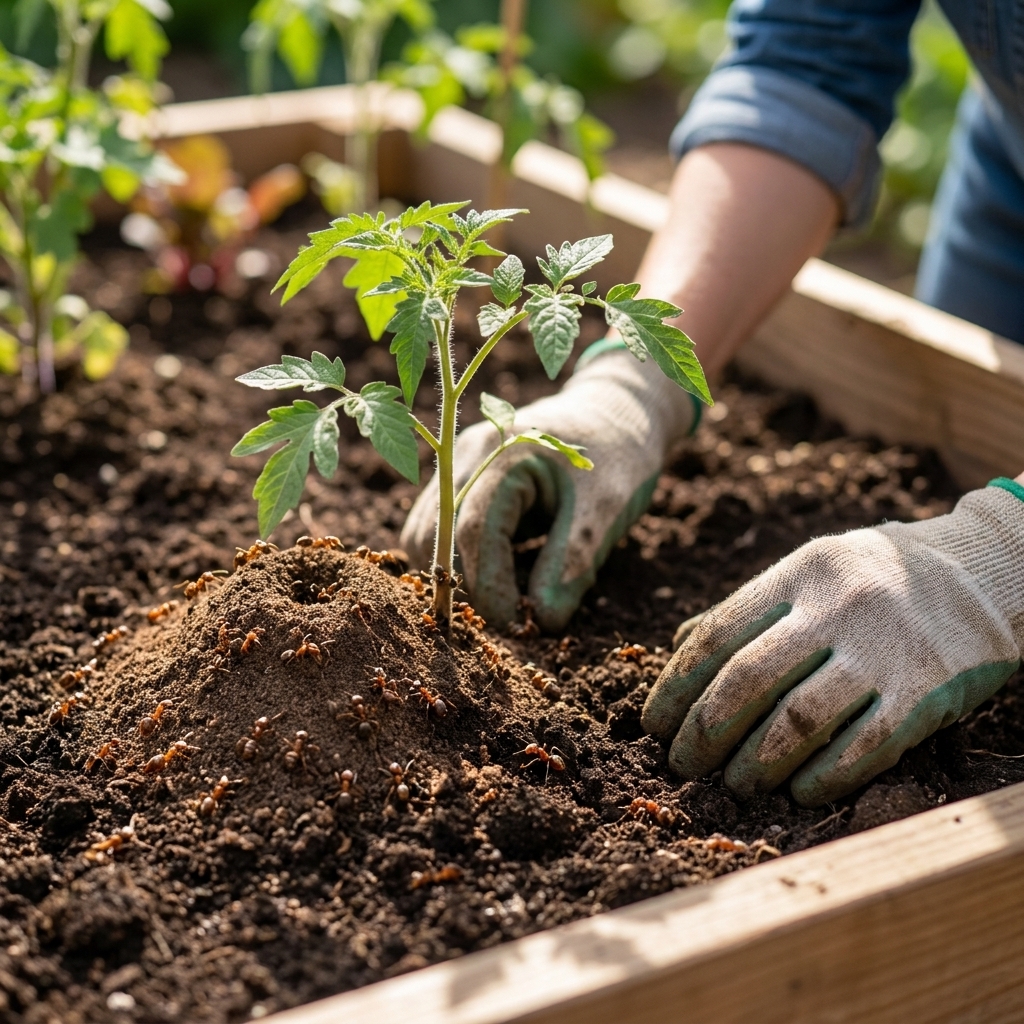
Are ants harming your raised bed?
Before you go to war, it helps to know what you are seeing. I have had seasons where ants were just passing through and seasons where they absolutely took over one corner of a bed.
When ants are mostly neutral (or helpful)
- Small numbers of ants roaming and no visible nest openings.
- They are feeding on crumbs, dead insects, or nectar, not farming pests.
- They are aerating soil lightly without drying out roots.
When ants are a real problem in raised beds
- Noticeable mounds, multiple entrance holes, or soil that collapses into tunnels.
- Seedlings wilting even though you are watering, especially on hot days (tunneling can increase airflow through very loose soil and speed drying in some mixes).
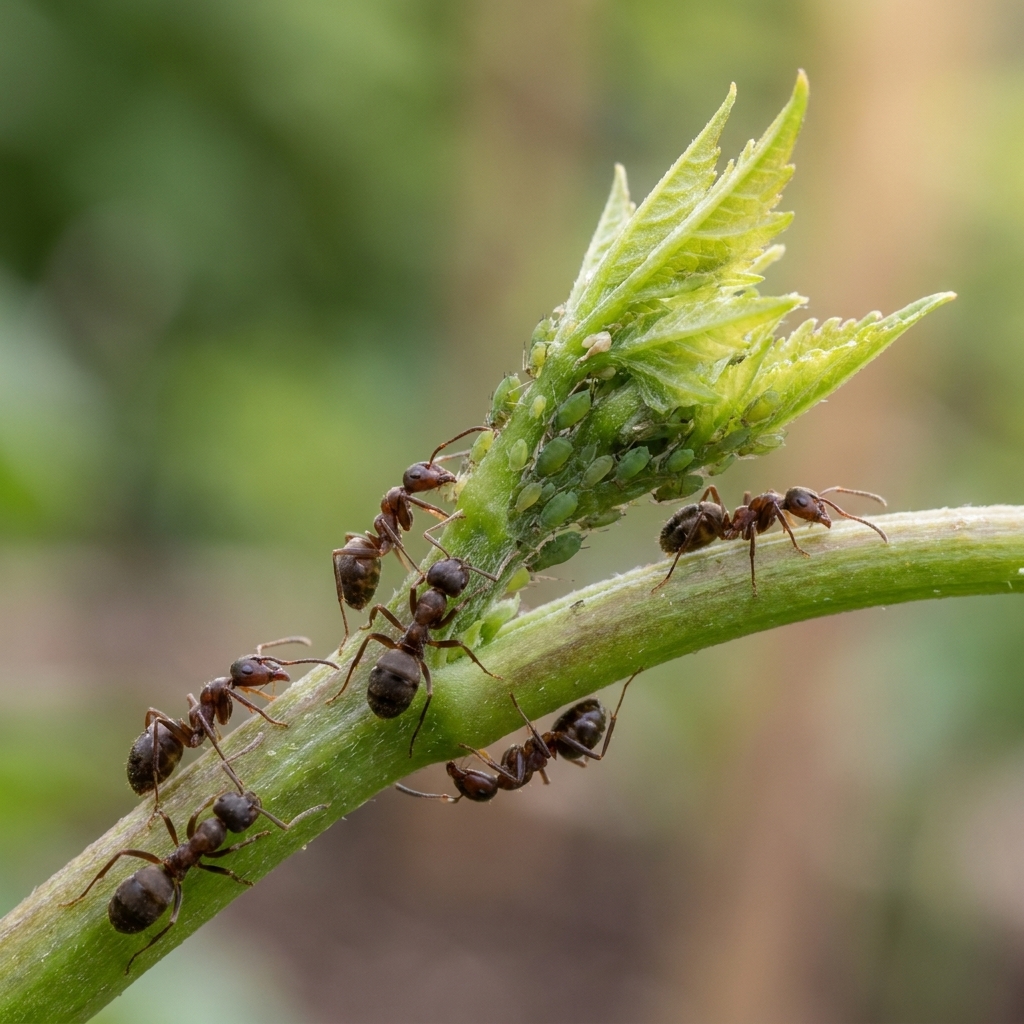
- Aphids on tender growth and ants actively “guarding” them, chasing away ladybugs and other helpers.
- Dry, fluffy pockets in potting-mix-like soil. Ants often prefer dry, loose media.
First: check for aphids
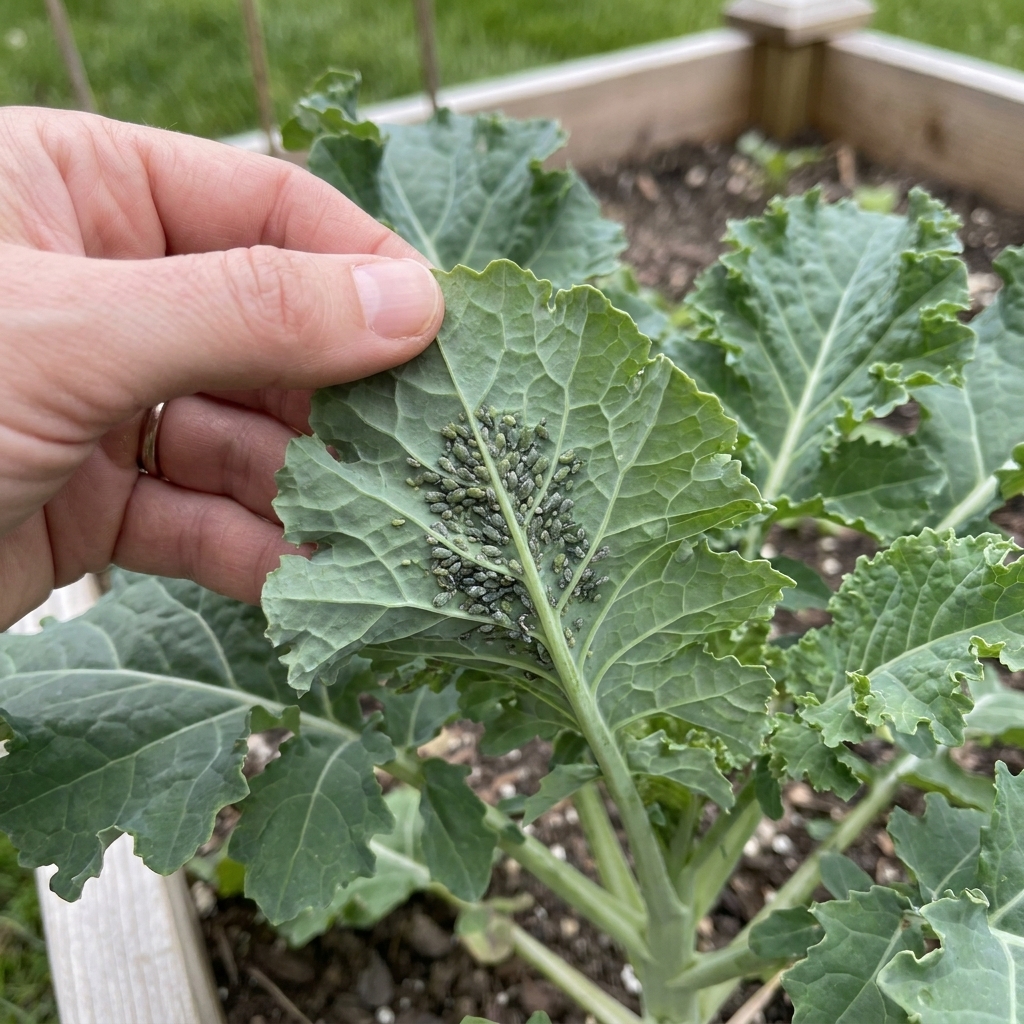
If ants are clustering on stems or leaf joints, flip a few leaves and look closely. Aphids are usually the real plant stressor, and the ants are the bouncers at the door.
Quick signs ants are farming aphids
- Ants repeatedly climb the same plant, especially peas, kale, chard, tomatoes, peppers, cucumbers, and young fruit trees nearby.
- Sticky residue on leaves (honeydew) and sometimes sooty mold.
- Aphids tucked on new growth and undersides of leaves, with ants hovering.
Organic ways to evict an ant colony
I like to start with the least disruptive methods and only escalate if the colony is persistent. In raised beds, the quickest wins usually come from moisture and targeted nest disruption. Some species tolerate moisture better than others, and some colonies will simply relocate within the bed at first, so think of this as making the whole bed less appealing over time.
1) Deep soak the nesting area
Most ant colonies in raised beds choose spots that stay dry. A deep soak often convinces them to move, especially when repeated.
- Apply water slowly until the soil is wet at least 6 inches deep. Check by poking in a trowel, your finger, or a moisture probe near (not on) plant roots.
- Repeat daily for 3 to 5 days, then every other day for a week if needed.
- After soaking, top with 1 to 2 inches of compost or leaf mold to help the bed hold moisture more evenly.
Tip from my own mistakes: A quick splash watering can actually make ants worse because it keeps the surface damp but leaves deeper pockets dry. You want deep, boring moisture.
2) Collapse and disturb tunnels
After a soak (when soil is not bone dry), use a hand fork or trowel to gently break up the top few inches of the nest area.
- Do this in the evening when the bed is cooler and you are less likely to stress plants.
- Avoid ripping roots. Work a few inches away from stems and loosen soil outward from the entrances.
- Water again to settle soil and reduce airy pockets.
3) Use food-grade diatomaceous earth (DE) carefully
Food-grade diatomaceous earth works by abrading insects. It is not a poison, but it can also harm beneficial insects if you dust broadly, so keep it targeted.
- Choose food-grade DE only.
- Apply a light ring directly around nest entrances and along trails, not across the whole bed.
- Keep it off flowers and bloom surfaces where pollinators land.
- Avoid breathing the dust. Apply on a calm day and consider a simple dust mask.
- Reapply after rain or irrigation, because it stops working when wet.
Important: DE is best as a short, targeted intervention while you fix the underlying issue (dry pockets and aphids). Do not treat it like a season-long “soil amendment.”
4) Boiling water (only in limited cases)
Boiling water can kill ants on contact, but it can also injure plant roots and sterilize soil life in that spot. It also may not reach the queen if the nest runs deep. In a vegetable raised bed, I only consider it if:
- The nest is in an empty corner of the bed, away from crops.
- You are between plantings and can rebuild the area with compost afterward.
Rule of thumb: If crops are growing within about a foot of the nest, I skip this method and use moisture and disturbance instead.
5) Boric acid bait outside the bed (optional)
If you have a massive colony and gentle methods are not working, a bait can reduce the colony without spraying anything on your vegetables. I prefer placing baits outside the raised bed so I am not introducing anything into food soil.
- Use a sealed outdoor ant bait station.
- Place it along trails near the bed, not inside it.
- Baits work best when foragers are actively feeding, so give them time and avoid disturbing trails for a few days.
- Keep away from kids and pets, and remember that some wildlife can still mess with stations if they are not secured.
Even though boric acid is commonly used in low concentrations, it is still something I treat with respect. Targeted placement beats mixing powders into garden soil every time.
What I avoid putting in raised bed soil
A few “natural” ideas float around that can backfire in a vegetable bed. Here is what I skip, and why.
- Vinegar soaks: Vinegar can harm plant roots and soil microbes, and it can shift soil chemistry in ways you do not want in a productive bed.
- Essential oil drenches: Oils like peppermint and clove can burn foliage, repel beneficials, and do not solve the nest long-term.
- Broad-spectrum insecticides (even organic ones): Many will also hurt pollinators and predatory insects that help you with aphids, caterpillars, and mites.
- Flooding the entire bed: Overwatering can invite fungal issues and still might not reach the deepest tunnels if the soil is hydrophobic in spots.
Fix aphids or ants return
If ants are farming aphids, you will feel like you are losing twice. The colony stays because the food source stays. I treat aphids and ants as one combined project.
Step 1: Knock aphids off with water
Use a firm spray from a hose to blast aphids off leaves and stems. Aim especially at new growth and leaf undersides. Repeat every 2 to 3 days for a week.
Step 2: Spot-treat with insecticidal soap
Insecticidal soap can be very effective on aphids with minimal residual impact when used correctly. It can still harm soft-bodied beneficial insects on contact, so I keep it targeted.
- Spray in early morning or evening.
- Avoid spraying during hot, sunny conditions to reduce plant stress.
- Cover aphids directly, including undersides.
- Test on a small section first if plants are stressed or temperatures are high.
Step 3: Block ants from climbing the plant
If you stop ants from reaching aphids, predators have a chance to do their job.
- For staked plants or bed frames, use a sticky barrier product on the support, not on plant stems.
- Prune leaves that touch the soil or bridge to other plants, which gives ants alternative routes.
Long-term prevention
Once the colony relocates, keep your bed from becoming the “perfect” ant condo again.
Keep moisture even
- Mulch with straw, shredded leaves, or finished compost (1 to 3 inches).
- Water deeply, less often, instead of frequent light watering.
- Consider drip irrigation if your bed dries quickly.
Build better soil
Ants often prefer very dry, low-organic soil. A richer, crumbly soil tends to hold moisture better and supports more predators.
- Top-dress with compost 1 to 2 times per season.
- Add worm castings or well-finished compost around heavy-feeding crops.
- Avoid leaving bare soil exposed in heat.
Remove nesting invitations
- Lift boards, stones, or plastic sheeting that sits right beside the bed.
- Keep bed edges weeded and avoid thick mats of dry debris against the frame.
- Fix leaky spigots or chronically dry corners. Both extremes can attract pests.
Quick troubleshooting
“I soaked the bed and the ants moved two feet over.”
That usually means the bed has a consistent dry zone. Adjust your watering pattern, add mulch, and soak a wider area for a few days. Ants will keep leapfrogging until the whole bed is less appealing.
“The ants are gone but aphids are still here.”
Good progress, because now beneficial insects can work. Keep up water sprays and spot soap treatments. Also check nitrogen: overly lush, fast growth from heavy feeding can attract aphids.
“DE worked, then the ants came back.”
That is common. Use DE as a short-term tool, then focus on keeping the bed from developing dry pockets and on controlling aphids so you do not have to keep dusting.
ID and when to escalate
Common garden ants vs. bigger red flags
- Fire ants: often build a dome-shaped mound with loose soil and can swarm aggressively when disturbed. If ants sting quickly and repeatedly, treat this as a safety issue first.
- Carpenter ants: are often larger and may show up if there is damp or damaged wood nearby (bed frames, landscape timbers, a fence line). If you keep seeing them, check wood for moisture problems.
When I would call a pro
- You suspect a stinging species and you have kids, pets, or allergies in the mix.
- You have repeat reinfestations tied to structural wood or moisture issues you cannot easily fix.
- You used sealed baits correctly and see no real improvement after about 2 to 3 weeks.
FAQ
Will ants damage vegetable roots?
Most garden ants do not eat healthy roots, but their tunneling can dry the root zone in some soils and destabilize small seedlings. The bigger issue is often the aphids they protect and the way the nest changes moisture patterns in raised bed soil.
Are fire ants handled differently?
Yes. Fire ants are more aggressive and can be dangerous. If you suspect fire ants, prioritize safety, avoid putting your hands near the mound, and use region-appropriate control methods or professional help. For typical backyard raised bed ants, the approaches in this article usually work well.
Can I just leave ants alone?
If they are not nesting in the bed and not guarding aphids, I often do. But if you are seeing wilting seedlings, repeated aphid flare-ups, or large colonies tunneling through the bed, it is worth intervening.
How long does it take to get rid of a colony naturally?
For small to moderate colonies, consistent deep watering and tunnel disruption often show improvement in 3 to 7 days. Stubborn colonies can take a couple of weeks, especially if aphids are feeding them or if the bed keeps developing dry pockets.
My raised bed action plan
If you want the short version, here is what I would do this week:
- Deep soak the nest zone daily for 3 to 5 days, aiming for 6 inches of moisture.
- Break up tunnels gently after watering, then water again to settle.
- Address aphids with a strong water spray and spot insecticidal soap as needed.
- Mulch to keep moisture even and discourage dry, fluffy pockets.
- If needed, use DE in a tight ring around entrances and trails, and avoid breathing the dust.
And if you try one thing and it does not work right away, do not take it personally. Ants are persistent little engineers. The trick is being just a bit more persistent, with methods that keep your vegetables and soil life safe.