
Fall is my favorite “sneaky productive” season in raised beds. The weeds slow down, the nights cool off, and suddenly lettuce tastes like lettuce again. The trick is timing: most fall veggies are planted in late summer, not when the leaves start turning.
This schedule will walk you from mid-summer planning through your first real cold snaps so you know exactly when and what to plant for an autumn garden that can handle chilly nights.
Start with your frost dates
Everything in a fall planting plan revolves around one thing: your local frost pattern. If you already know your average first frost and when you typically get a hard freeze, you are set. If you do not, a local extension resource or weather database will get you close enough.
Two dates to know
- First frost (often around 32°F / 0°C): can nip basil, beans, summer squash, and other tender plants.
- Hard freeze (often defined around 25 to 28°F / -4 to -2°C for several hours): a bigger event that stops most unprotected growth.
Raised beds can buy you extra time, especially when they drain well and the soil stays a touch warmer, but fall days get shorter fast. That is why I plan with a buffer instead of trusting the seed packet like it is July.
- Add 10 to 21 days to the crop’s days-to-maturity as a starting estimate for fall conditions.
- Then sanity-check it against a local fall planting chart if you can find one. Latitude and day length matter a lot.
The countback method
If you remember one thing from this article, make it this: pick the right “anchor date,” then count backward.
Choose your anchor date
- Tender crops (basil, beans, summer squash): count back from your first frost.
- Hardy crops (most greens, brassicas, many roots): count back from your first hard freeze, or plan to protect them with row cover.
Planting date = Anchor date − (days to maturity + 10 to 21 days)
Example: if your hard freeze is November 1 and your lettuce says 45 days to maturity, count back about 55 to 66 days. That lands you in late August to early September.
Use the packet days for the harvest you actually want. Baby leaf lettuce might be 25 to 30 days, while full heads could be 45 to 60. Fall also adds a twist: late-summer heat can slow germination even if the weather turns perfect later.
Fall planting schedule
This timeline is written for raised beds and assumes you are transitioning out of summer crops. If your frost arrives earlier or later, shift the whole schedule using the countback method.
8 to 10 weeks before first frost
This is the big one. These plantings set you up for full-sized fall harvests.
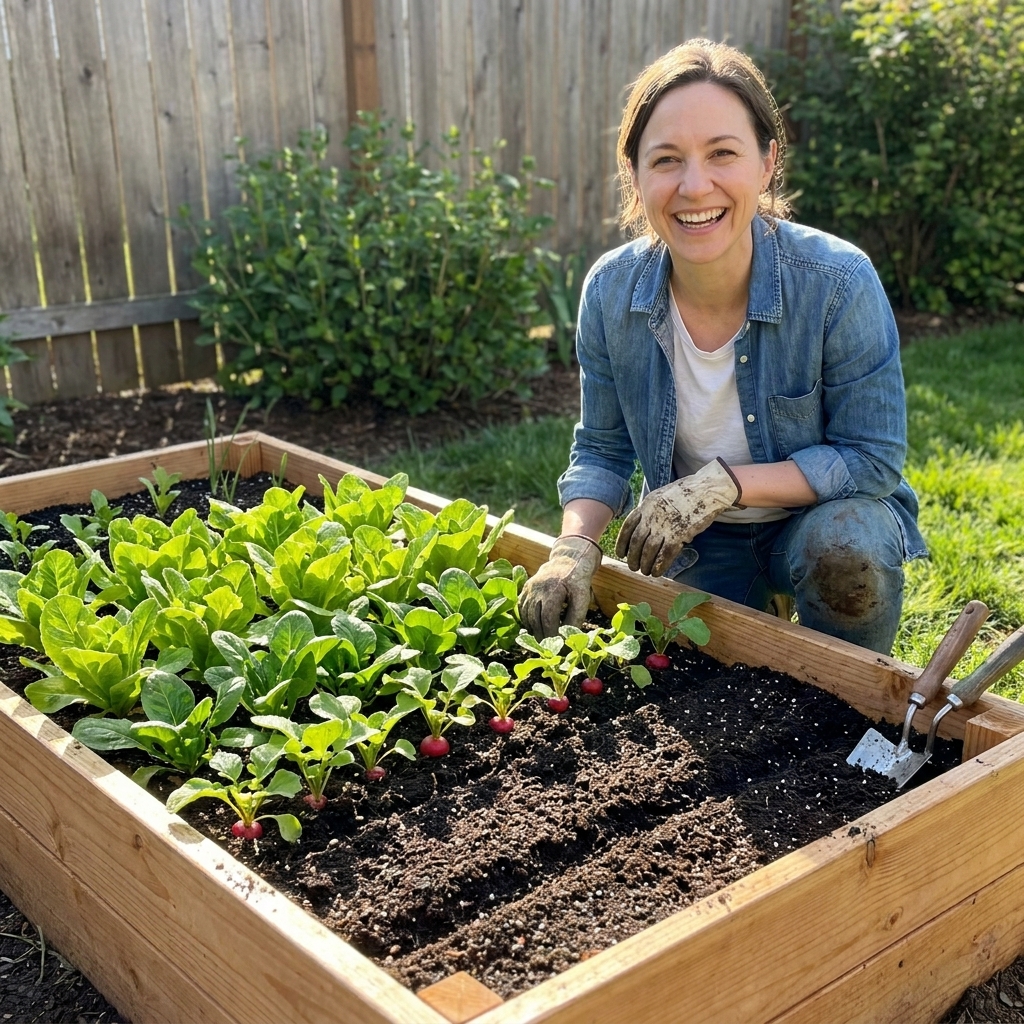
- Sow directly: carrots, beets, turnips, radishes (for bigger roots), cilantro, dill.
- Sow directly or transplant: lettuce, arugula, Asian greens (bok choy, tatsoi, mizuna). Spinach can go here in milder climates, but in hot areas it often does better a little later when nights cool.
- Transplant (best results): broccoli, cabbage, cauliflower, kale, collards. Brussels sprouts are usually started earlier in summer for fall or winter harvest, and only pay off where fall stays long and cool.
- Rutabaga: aim earlier if you can. Many varieties want 10 to 12+ weeks for good-sized roots, so treat this window as “maybe” unless you are growing a faster variety.
Raised bed tip: I top-dress with 1 to 2 inches of finished compost and water it in a day before sowing. Late summer soil can get hydrophobic on the surface, and compost helps seedlings get an even start.
6 to 8 weeks before first frost
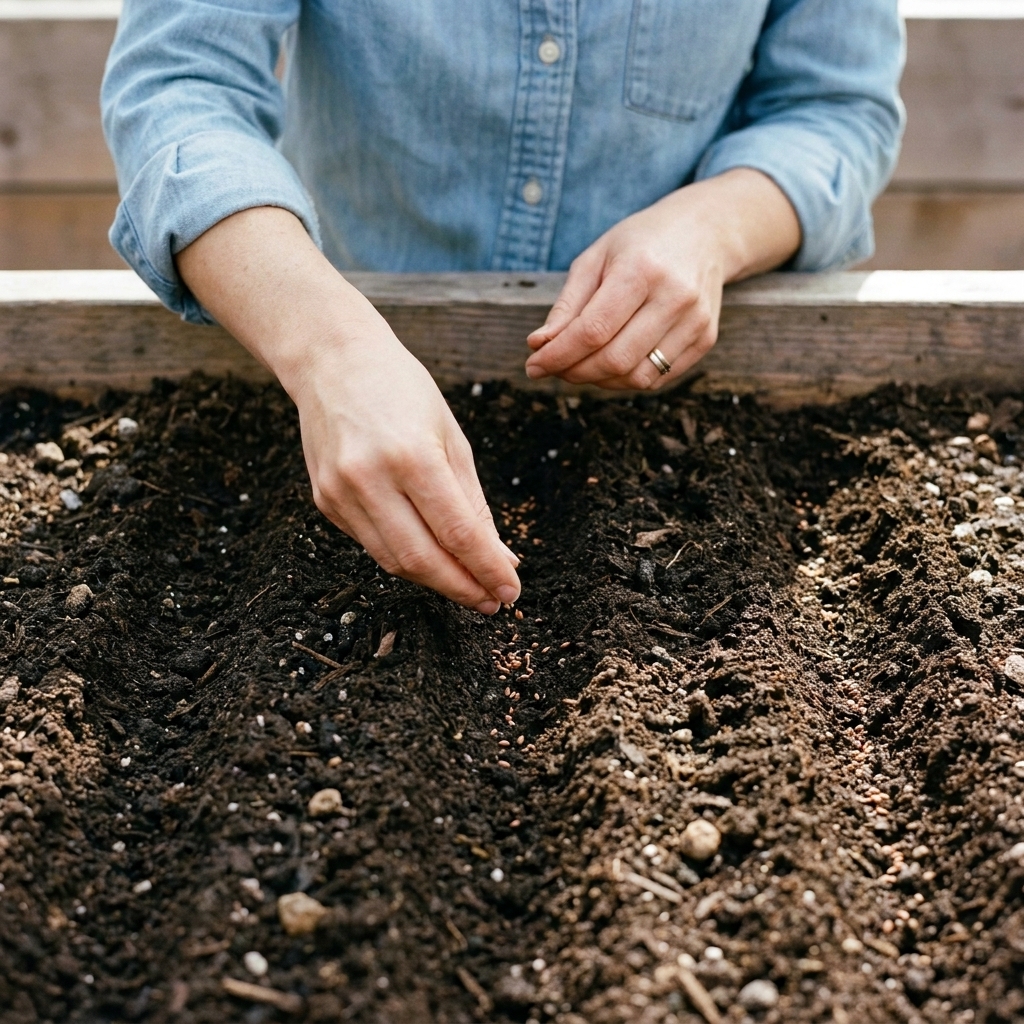
- Sow: more lettuce, arugula, mustard greens, mizuna, tatsoi.
- Sow: bunching onions (scallions), carrots (last round for baby carrots), beets (last round in many climates).
- Transplant: last call for many brassica starts if you want decent heads.
My failure-to-success note: This is where I used to lose seedlings to heat. Now I shade new sowings for 3 to 5 days with a scrap of shade cloth or a lightweight row cover draped over hoops. Germination goes from spotty to reliable.
4 to 6 weeks before first frost
- Sow: radishes (all types), baby leaf mixes, arugula, quick lettuces, turnips (for greens), cilantro (if temps are easing).
- Sow (only if you have a long, mild fall or protection): peas. Fall peas can be fantastic, but they are often a stretch unless your autumn stays warm enough and you can cover them.
Raised bed tip: Keep seeds consistently moist. In a raised bed, the top inch dries quickly. I water lightly 1 to 2 times a day until sprouts show, then switch to deeper waterings.
2 to 4 weeks before first frost
- Sow: spinach (great for overwintering in many regions), mâche (corn salad), claytonia (miner’s lettuce), arugula, baby kale. Baby bok choy can work in mild climates, but stress can make it finicky.
- Sow: radishes for quick harvests.
- Transplant: lettuce starts if you have them, but expect slower growth.
At this point, think “small and steady.” You can still get lots of salads, but full heads take longer as daylight drops.
At first frost and beyond
Many fall crops do not mind a frost. Some get sweeter. What changes is how you manage the bed.
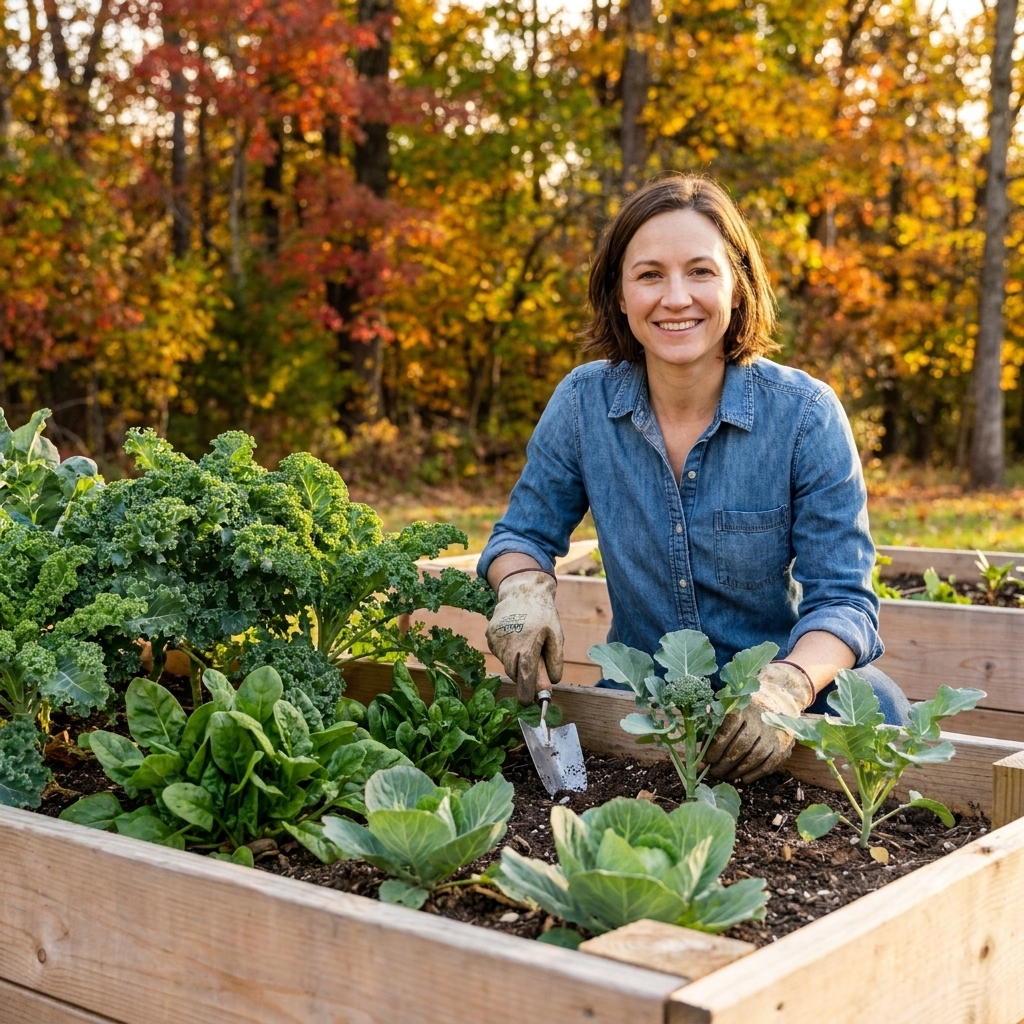
- Harvest regularly: kale, spinach, lettuce, arugula, Asian greens, scallions.
- Leave in the ground: carrots, beets, turnips, rutabaga. Mulch heavily so the soil does not freeze solid.
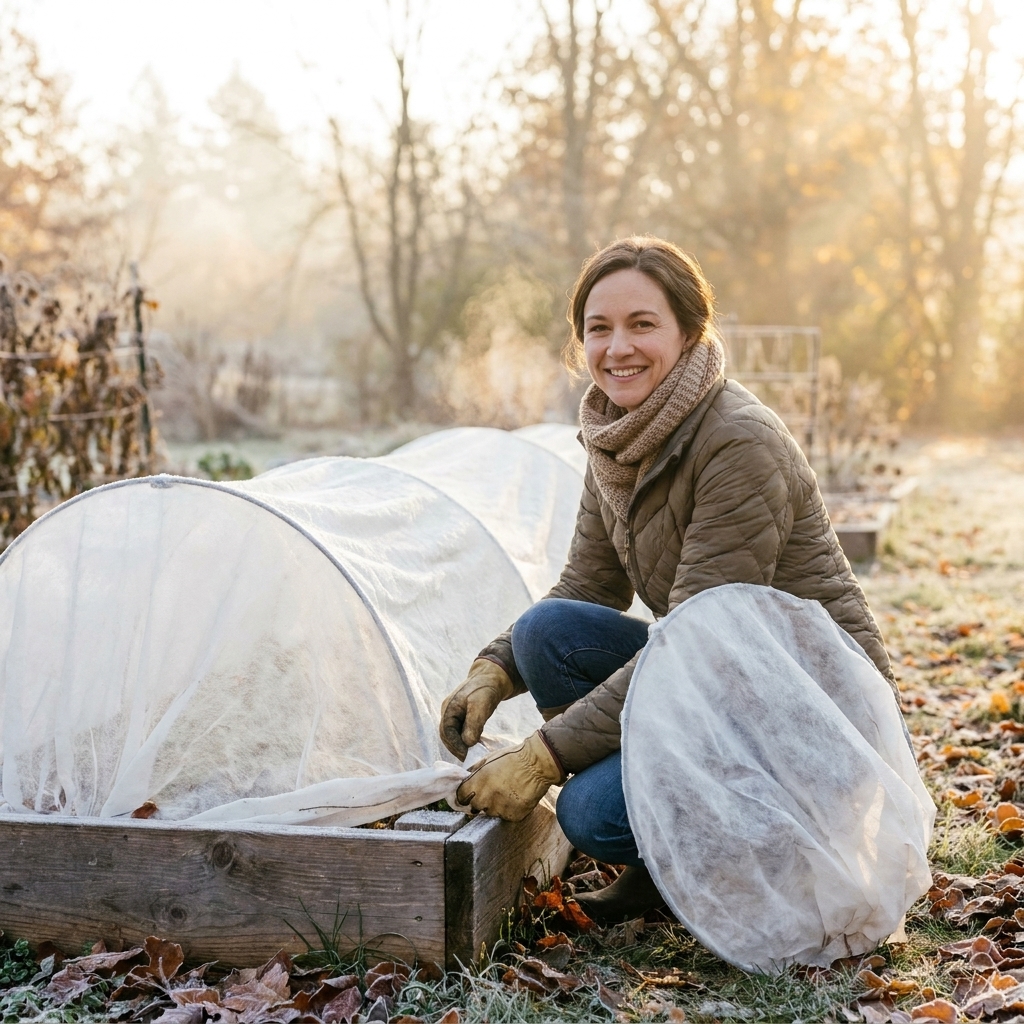
- Cover on cold nights: use frost cloth or a low tunnel to keep growth going.
What to plant for fall
If you want a fall garden with the least fuss, these are my go-to crops. They germinate well in beds, tolerate cool weather, and give a lot of food for the space.
Leafy greens
- Lettuce: looseleaf is fastest; romaine works if planted early enough.
- Spinach: slow at first, but tough and worth it.
- Arugula: quick, spicy, and cold-hardy.
- Asian greens: tatsoi and mizuna are especially forgiving.
- Kale: sweeter after frost, and keeps producing.
Roots for cool soil
- Carrots: my favorite fall payoff crop. Mulch and harvest as needed.
- Beets: roots plus edible greens.
- Radishes: perfect for late gaps and quick wins.
- Turnips: great for greens and roots.
Brassicas
Broccoli, cabbage, and cauliflower can be fantastic in fall, but they need time. If you are within 6 to 8 weeks of frost and you do not already have starts, I usually steer beginners toward kale and Asian greens instead for a more reliable return.
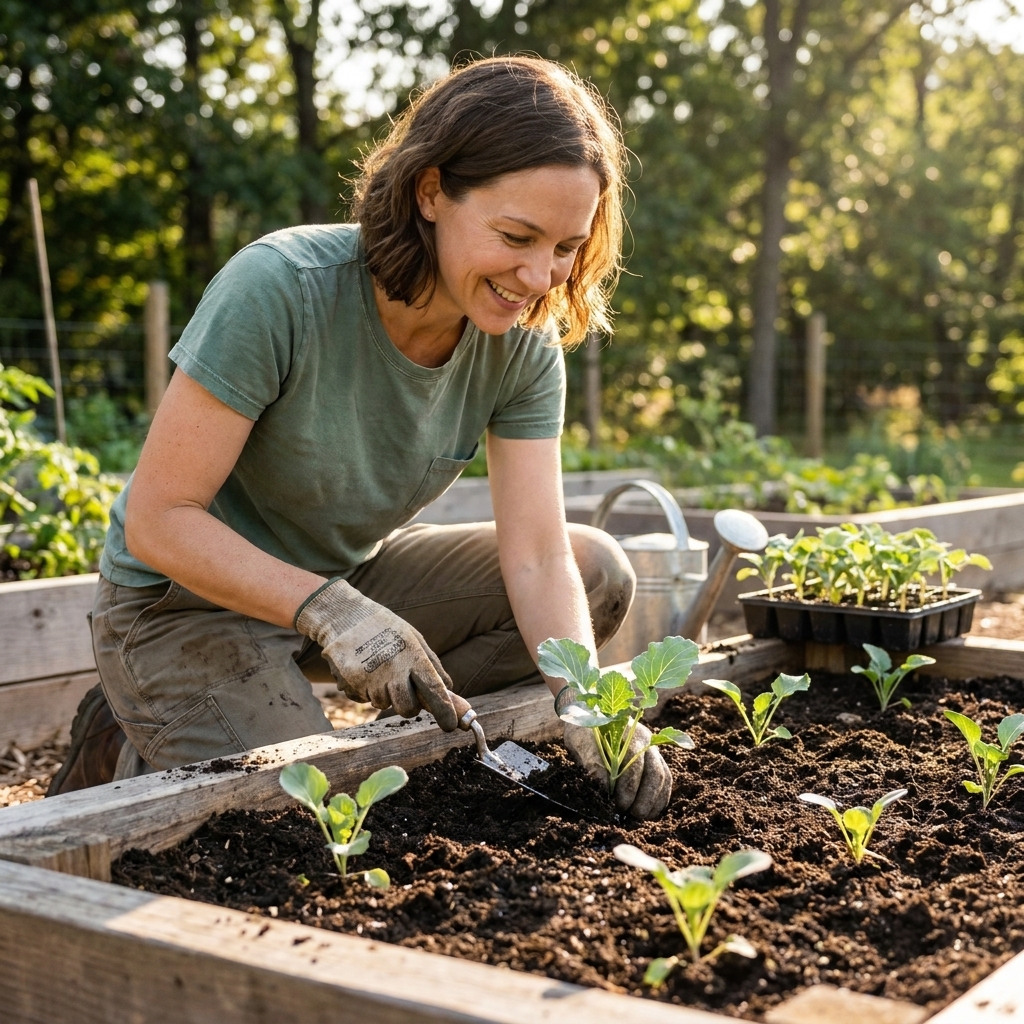
Transition beds from summer to fall
This is the part that makes fall gardening feel easy instead of chaotic.
Step 1: Pull only what you must
If a summer plant is still producing (like peppers), I often leave it and convert the rest of the bed around it. Greens can handle partial shade as days cool.
Step 2: Refresh the top layer
I do not dump and refill beds each season. I simply:
- Remove spent plants and as many old roots as is practical.
- Add 1 to 2 inches of compost.
- Mix it into the top few inches and water deeply.
Step 3: Feed lightly
Fall crops generally do better with steady, modest fertility. Too much nitrogen can make leafy growth lush but weak. Compost plus a gentle organic fertilizer (if you use one) is usually plenty.
Step 4: Plant tighter, then thin
Late-summer germination can be uneven. I sow a little thicker than spring, then thin once seedlings are established. Baby thinnings go straight into salads.
Late-summer germination tricks
Fall planting is often really “August planting,” which can be brutal on tiny seeds. Here is what has saved me the most grief in raised beds:
- Pre-moisten the seed zone: water the bed, wait 30 minutes, then sow. Dry soil steals moisture from seeds.
- Shade for 3 to 5 days: a row cover, lattice scrap, or shade cloth helps keep the surface cool.
- Use the board trick for carrots: sow carrot seed, water, then lay a board over the row. Check daily and remove the moment you see sprouts.
- Water lightly but often at first: once or twice daily until germination, then switch to deeper watering.
- Plant in the evening: it gives seeds a cooler, longer first night to drink up moisture.
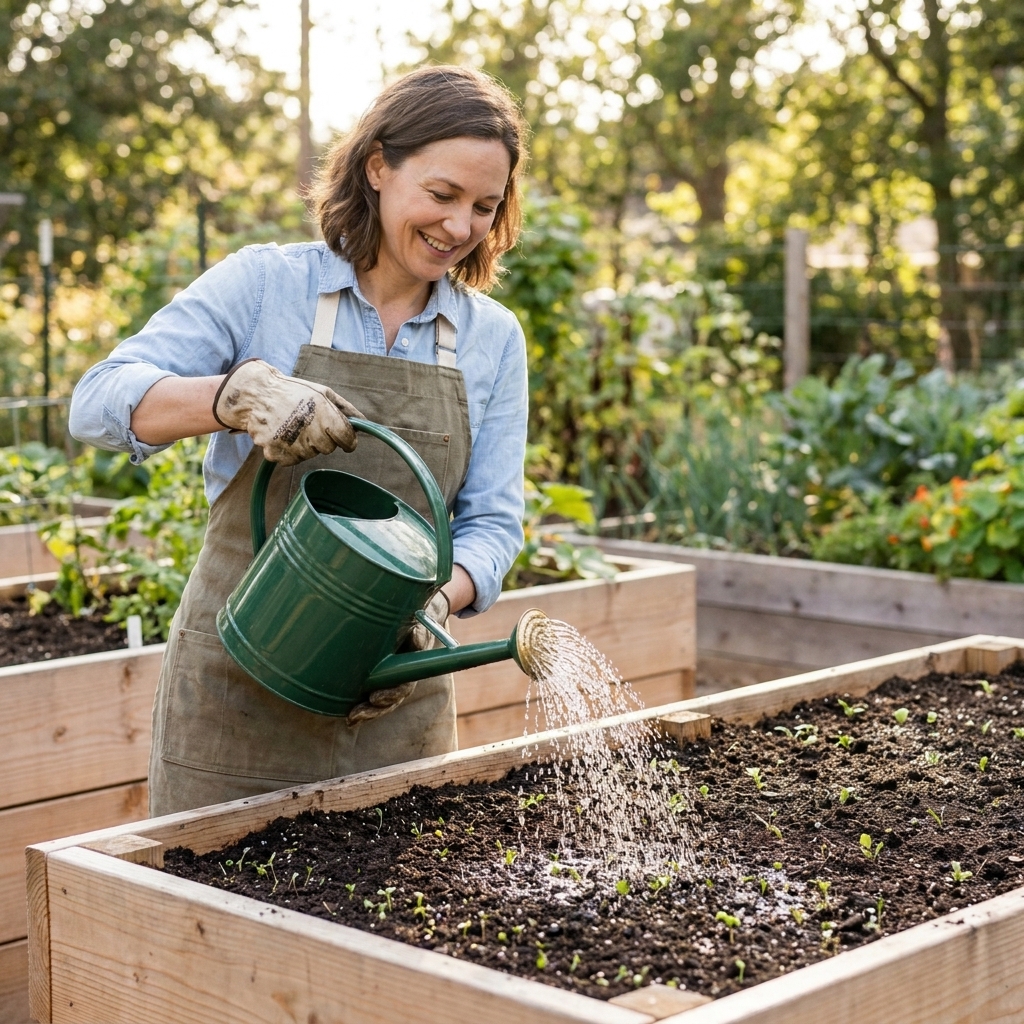
Watering in fall
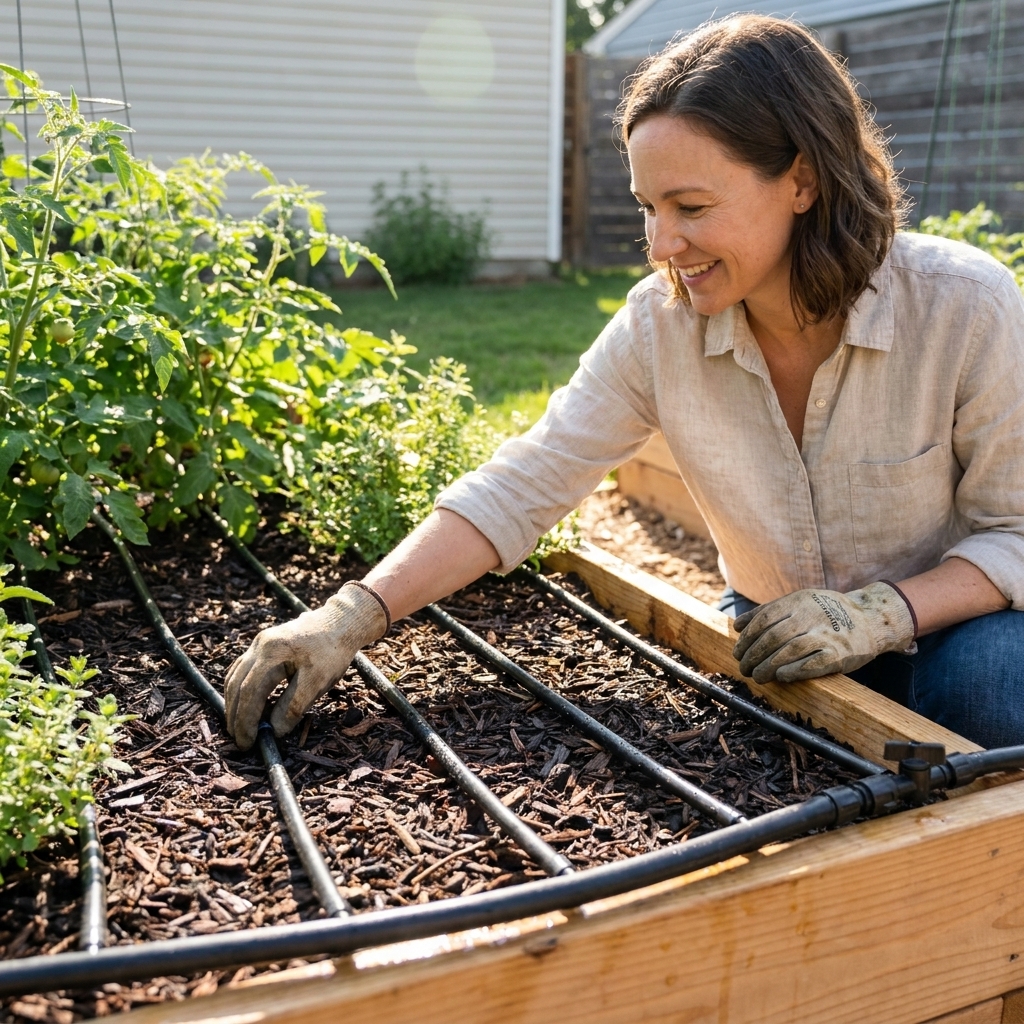
September can be deceptively drying, especially in raised beds. If you can, set up a soaker hose or drip line so the bed gets consistent moisture while you are busy harvesting summer crops. The goal is simple: steady moisture for germination, then deeper soakings that encourage strong roots.
Pests still show up
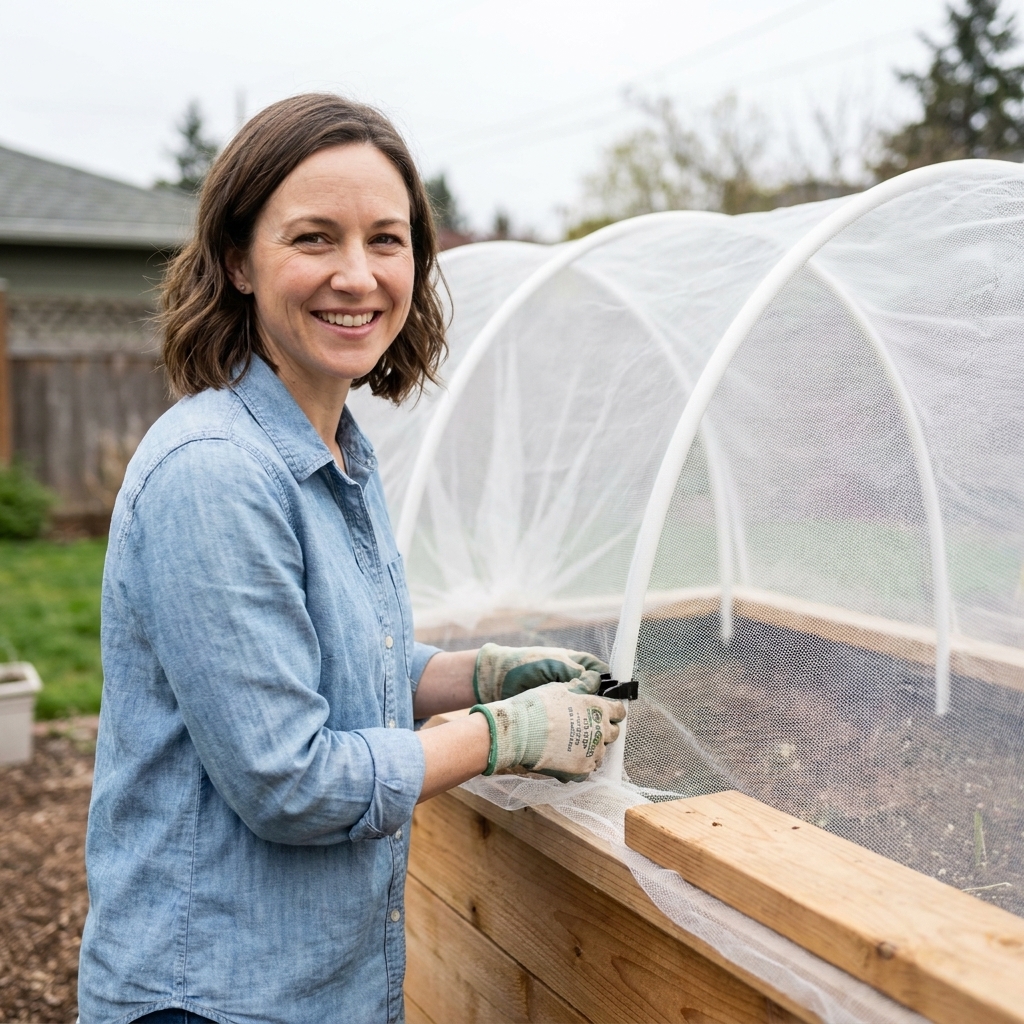
Fall feels calmer, but pests do not always get the memo. Cabbage worms, flea beetles, and aphids can be active well into autumn. A lightweight row cover is one of my favorite two-for-one tools because it blocks insects early and doubles as frost protection later.
Frost protection
You do not need a greenhouse to stretch fall harvests. A few basic tools make a big difference.
Frost cloth over hoops
This is my most-used setup. Hoops keep fabric off leaves, and the trapped air adds a few degrees of protection. It also blocks drying wind.
Low tunnels with plastic
Clear plastic over hoops can keep beds significantly warmer, but it needs venting on sunny days to prevent overheating.
Mulch for roots
For carrots and beets, mulch is everything. I use clean straw or shredded leaves in a thick layer so the soil stays workable longer.
What handles frost?
- Usually fine with frost: kale, collards, spinach, arugula, many mustards, carrots, beets, turnips.
- More sensitive: lettuce (depends on variety and size), bok choy (stress can trigger bolting), cilantro (light frost only).
A quick note on deep winter
If you garden where days get very short, growth can slow to a crawl in late fall even under cover. That is normal. The win is that many greens will hold nicely, and you can keep harvesting what is already grown.
Quick schedule table
| Time before first frost | What to plant | Notes for raised beds |
|---|---|---|
| 8 to 10 weeks | Carrots, beets, turnips, lettuce, arugula, brassica transplants | Top-dress compost; shade germinating seeds |
| 6 to 8 weeks | More salad greens, scallions, last beets, last brassica transplants | Keep seed zone moist; thin for airflow |
| 4 to 6 weeks | Radishes, baby greens, quick lettuces, turnip greens | Succession sow every 7 to 14 days |
| 2 to 4 weeks | Spinach, mâche, claytonia, last radishes | Think baby harvests and overwintering potential |
| At frost and after | Harvest greens; mulch roots; cover beds | Use frost cloth and heavy mulch to extend harvest |
Common mistakes
- Waiting until it feels like fall: if you wait for sweater weather, many crops will not size up in time.
- Forgetting shorter days: build in extra time. Start with 10 to 21 days and adjust to your region.
- Under-watering seeds: the top of raised beds dries fast. Germination needs steady moisture.
- Not thinning: crowded fall greens invite mildew once nights get damp.
- Skipping protection: a simple frost cloth can add weeks of harvest time, sometimes much more in mild autumns.
FAQ
How late can I plant lettuce in a raised bed?
You can sow lettuce surprisingly late for baby leaves, often 4 to 6 weeks before first frost, especially if you plan to cover it. For full heads, aim earlier, closer to 8 to 10 weeks before frost.
What is the easiest fall crop for beginners?
Radishes for instant success, then looseleaf lettuce and arugula for steady harvests. If you want a “set it and forget it” hardy crop, kale is hard to beat.
Can I plant carrots for fall harvest?
Yes, and fall carrots are often the sweetest. Plant them 8 to 10 weeks before frost for decent roots, and earlier if you are growing a slower variety. Mulch heavily as nights get colder and harvest as needed.
Do I need to fertilize fall crops?
In raised beds, a compost top-dress is usually enough. If your bed is older or heavily used, a gentle organic fertilizer at planting can help, but avoid overdoing nitrogen late in the season.
What should I do with empty raised beds after fall?
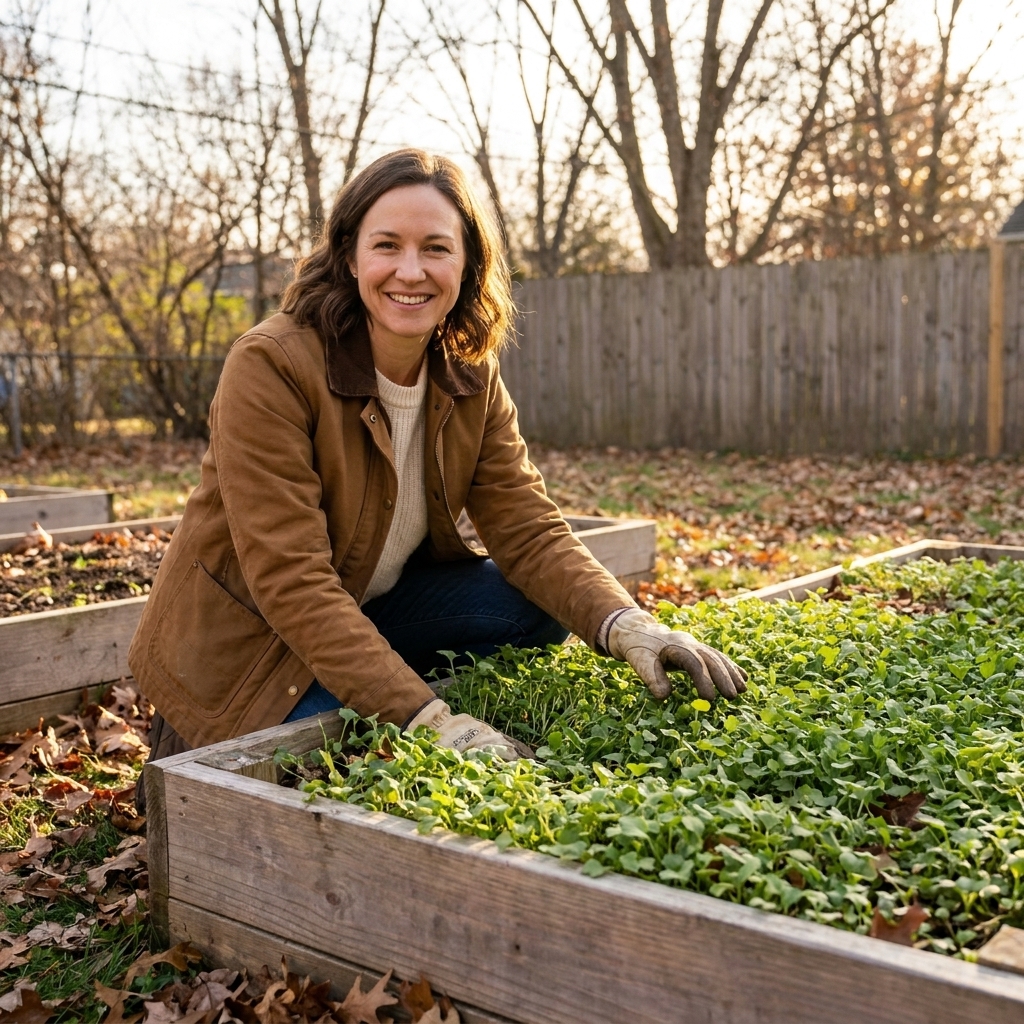
If you are done planting, cover the soil. A thick layer of shredded leaves, straw, or a winter cover crop protects soil structure and feeds your bed life for spring.
A simple plan to start now
If you want a no-overwhelm fall bed that works in most climates, do this:
- Top-dress with 1 to 2 inches of compost.
- Sow a block of lettuce and arugula.
- Sow a row of radishes every 10 days for a month.
- Sow carrots if you have at least 8 to 10 weeks before frost (or more for slower varieties).
- Set up hoops now so you can throw frost cloth on quickly later.
Your future self, standing outside on a crisp October afternoon with a bowl of homegrown salad, will be very grateful you started in late summer.