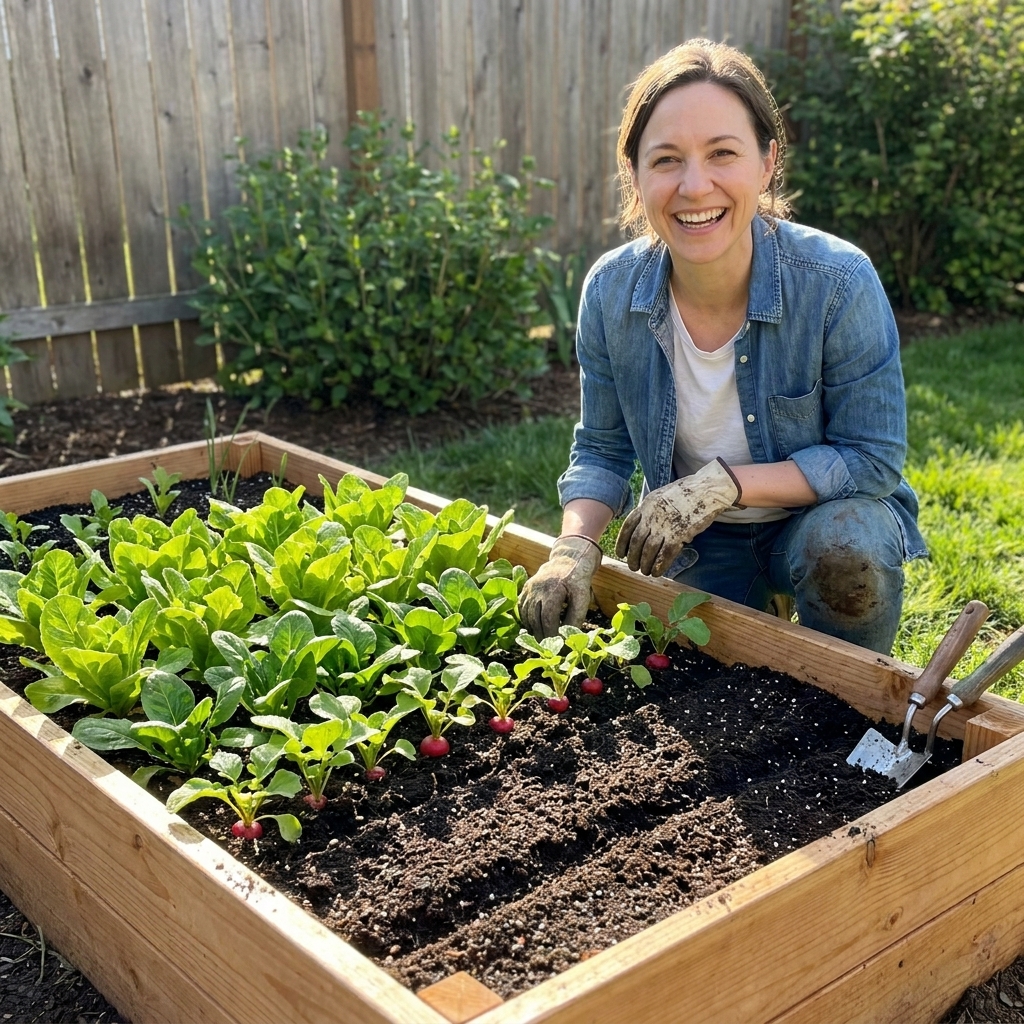

If you have ever yanked up a whole lettuce plant just to make two salads, welcome to the method that changed my raised bed life. Cut-and-come-again harvesting is exactly what it sounds like: you snip leaves in a way that lets the plant keep growing, so you can return again and again for fresh greens.
I use it for lettuce, kale, spinach, chard, arugula, and a bunch of Asian greens. Done right, it turns one sowing into weeks or even months of harvests, which is especially satisfying when your growing space is limited and your salad habit is not.
What it means
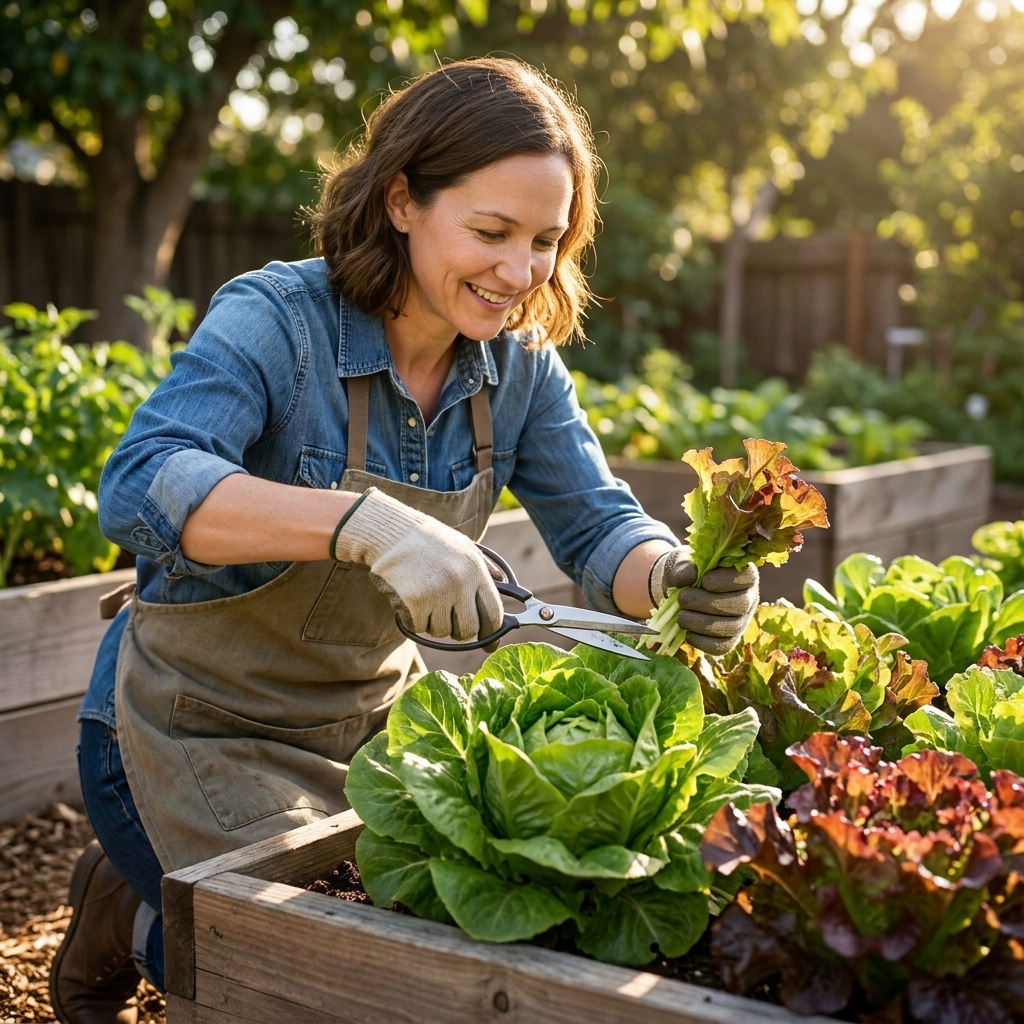
Cut-and-come-again is a selective harvest technique. Instead of removing the whole plant, you remove some leaves while protecting the plant’s growing point so it can regenerate.
The key: protect the growing point
Most salad greens grow from a central crown or a cluster of growing points. If you leave that engine intact, the plant replaces what you took. If you remove the growing point, you get a one-time harvest and a sad, stubby plant.
Two versions you can use
- Leaf-by-leaf harvest: Best for lettuces, romaine types, spinach, and anything with a clear center. You take the outer leaves and leave the inner ones.
- Shear-and-regrow harvest: Best for dense sowings of baby greens, mesclun mixes, arugula, and mustard greens. You cut across the top like giving a haircut, leaving enough leaf and stems to bounce back.
Why raised beds help
Raised beds can be greens factories if you lean into them. The soil warms earlier, drains well, and is easy to amend. Cut-and-come-again fits perfectly because:
- You maximize space: One patch keeps producing instead of being replanted constantly.
- You get consistent harvests: Small, frequent cuts keep plants tender and sweet.
- You can sometimes delay bolting a bit: Regular, gentle harvesting can keep plants in “leaf mode” longer in mild weather, but bolting is still mostly driven by heat, long days, and variety. Rough or overly aggressive harvesting can stress plants and do the opposite.
- You can succession plant around it: As one section slows down, you can have another coming up nearby.
Tools and setup
You do not need fancy gear. You do need clean cuts.
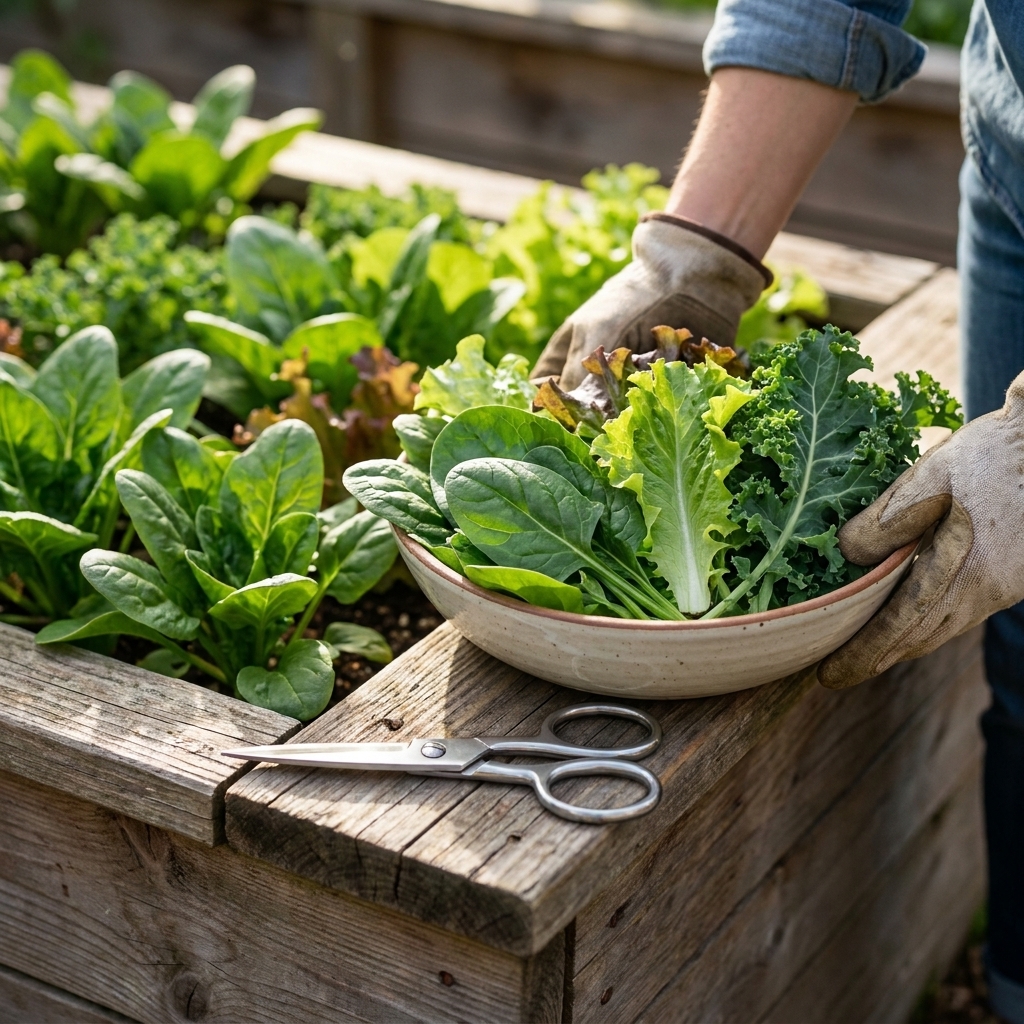
- Sharp scissors or herb snips: My favorite for quick, gentle harvesting.
- A small harvest knife: Great for shear-and-regrow baby greens.
- A bowl or basket: So you are not juggling handfuls and crushing leaves.
- Optional: A salad spinner. Not glamorous, but it makes homegrown salads feel restaurant-level.
Clean your blades if you are hopping between beds, especially if you spot mildew, leaf spot, or any suspicious yellowing. A quick wipe with rubbing alcohol is enough.
When to start harvesting
The most common mistake I see is harvesting too early or too aggressively. You want the plant to have enough leaf surface to keep powering growth.
Easy timing rules
- Loose-leaf lettuce: Start when leaves are about 4 to 6 inches tall and the plant has at least 6 to 8 true leaves.
- Romaine and butterhead types: Start once outer leaves are big enough to use, but do not take more than about one-third of the plant at once.
- Spinach: Start around 3 to 5 inches tall in cool weather. Harvest outer leaves first and let the center keep pushing.
- Kale: Wait until plants are at least 8 to 10 inches tall so the stem can support repeat picking.
- Baby green mixes (dense sowings): Shear when greens are about 3 to 4 inches tall.
If you are unsure, harvest lightly the first time. Plants forgive a timid snip much more than an overconfident buzz cut.
Harvest lettuce safely
Lettuce is the poster child for cut-and-come-again. Here are two reliable ways to do it in raised beds.
Method 1: outer leaves
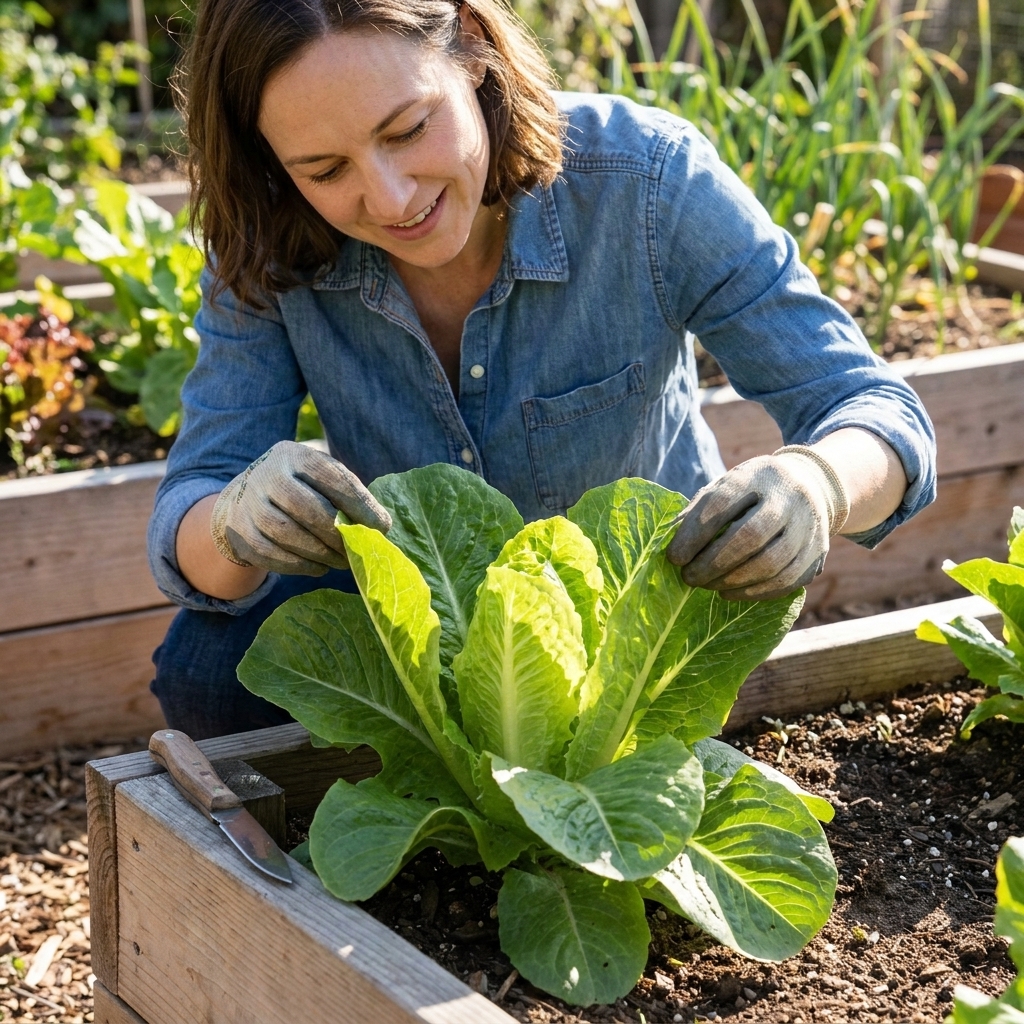
- Find the center: The smallest, newest leaves in the middle are the engine. Leave them.
- Choose the biggest outer leaves: These are usually slightly darker and more mature.
- Cut or snap near the base: Snip the leaf stem close to the plant, but avoid nicking the crown.
- Stop at one-third: Take up to about one-third of the leaves, then let it recover.
This keeps the plant looking a little messy in the best way. It is still alive, still growing, and still yours for next week’s salads.
Method 2: above the crown cut
If you want a faster harvest, you can cut the whole plant back about 1 to 2 inches above the crown, leaving the growing point intact. This works best for loose-leaf types and younger plants. Regrowth success varies by cultivar and weather, so I recommend testing this on one plant first before you do a whole row.
One more lettuce note: cut-and-come-again works best on leaf types and looser heads. Once a butterhead or romaine starts forming a tight, dense head, I switch to outer-leaf picking, or I harvest the whole head and replant.
Harvest kale for repeats
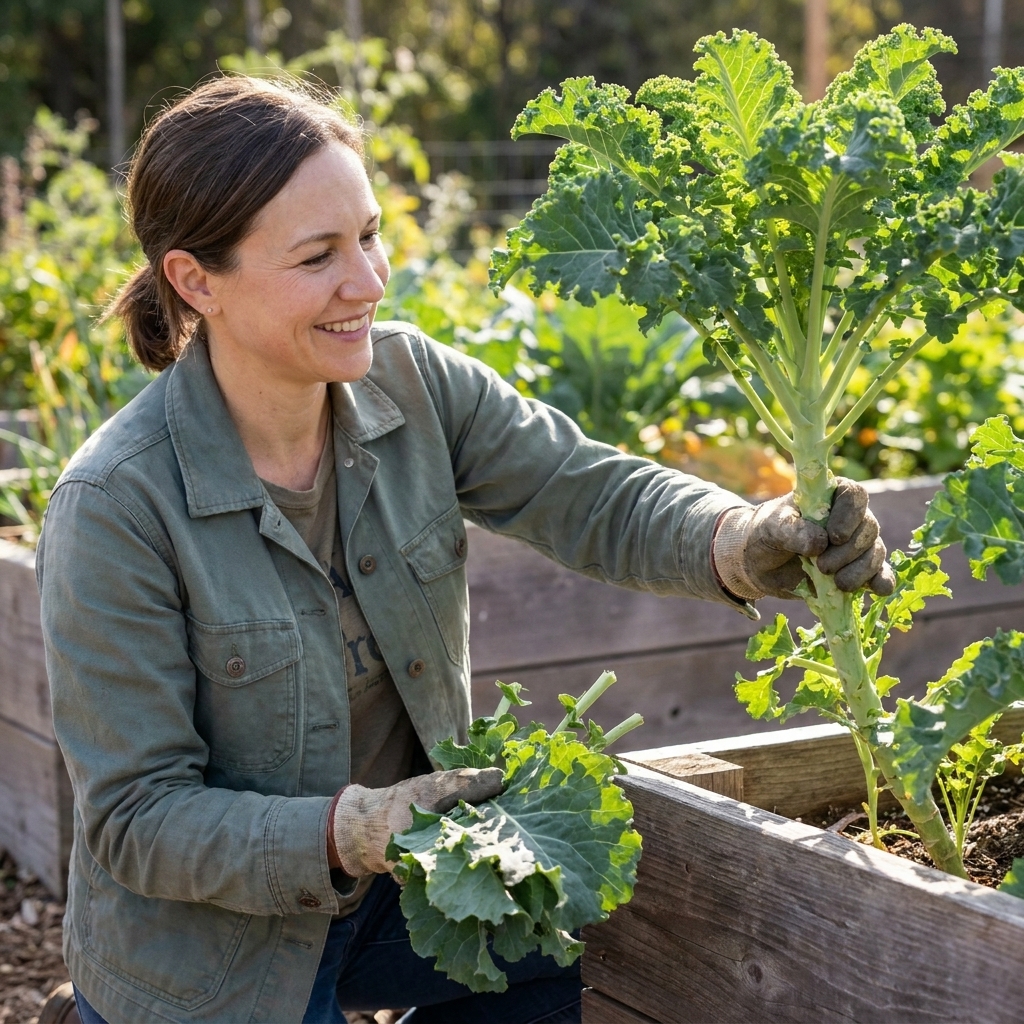
Kale is wonderfully cooperative. It wants to grow taller and keep making leaves, which is perfect for repeat picking.
The rule: bottom-up
- Start with the lowest, largest leaves.
- Snip or twist them off at the stem.
- Leave the top cluster of young leaves alone so the plant keeps elongating.
Do not top your kale if you want continued production. Once you remove the growing tip, the plant slows down and gets weirdly branchy. Not the end of the world, but it is not the smooth, steady harvest most of us want.
For best texture, pick kale while leaves are still flexible. Giant leathery leaves are technically edible, but they are better suited for chips or long sautés than salads.
Harvest spinach carefully
Spinach can be tricky because it grows from a central crown and it is quick to bolt in warming weather. The harvesting method matters, but so does timing.
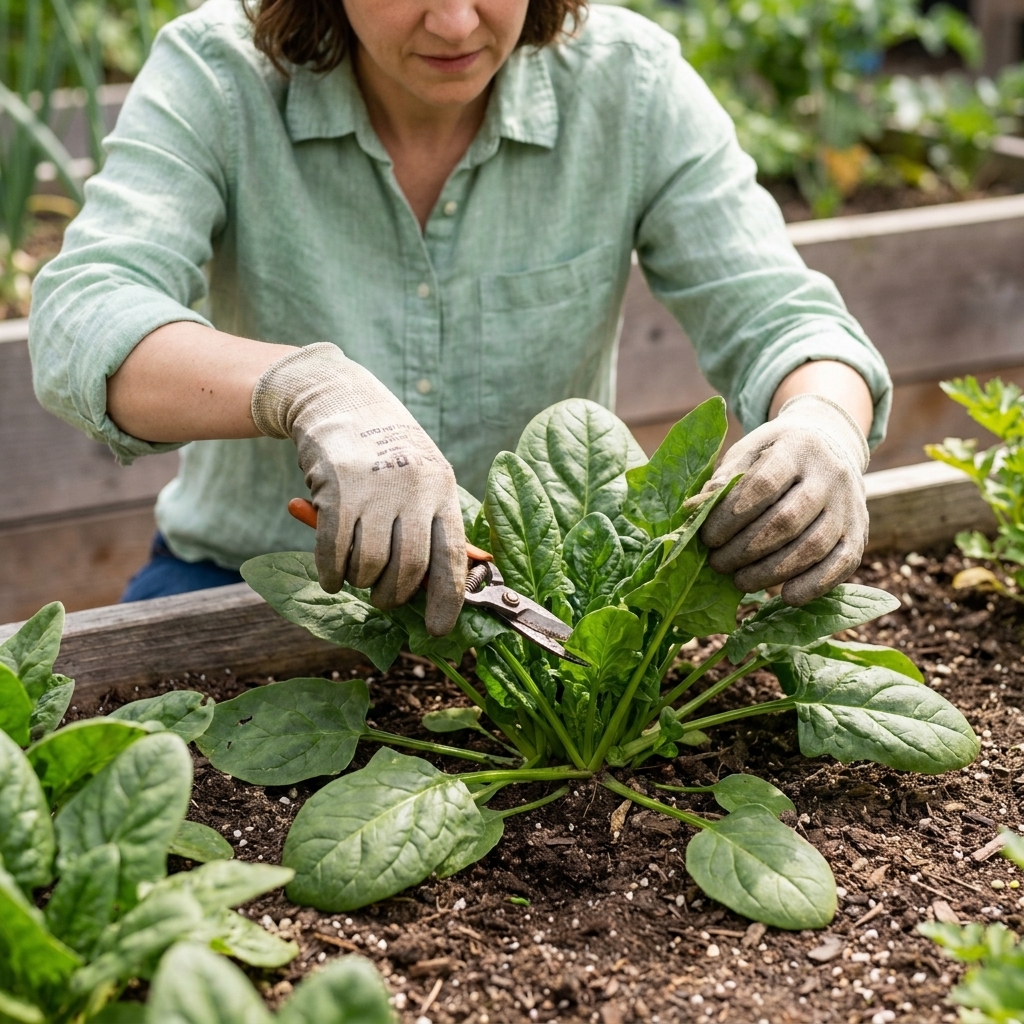
Best approach: outer leaves
- Harvest the largest outer leaves first.
- Cut each leaf stem close to the base, without cutting into the crown.
- Leave at least 4 to 6 inner leaves so the plant can keep photosynthesizing.
A raised bed tip for longer harvests
Spinach lasts dramatically longer in partial shade once temperatures climb. If your bed gets intense afternoon sun, consider a simple shade cloth or plant spinach on the east side of taller crops. I have stretched spinach harvests by weeks just by protecting it from that late-day heat.
How low to cut baby greens
If you sow salad mixes thickly for baby greens, the shear-and-regrow method is incredibly efficient.
The sweet spot height
Cut baby greens when they are about 3 to 5 inches tall, and leave 1 to 2 inches of growth above the soil line. Cutting too low can remove the regrowth points. Most mixes bounce back well, but regrowth tends to decline after a few cuts, and some very young brassicas can be less reliable if sheared repeatedly.
My quick technique
- Hold a loose bunch of greens upright with one hand.
- Use scissors or a harvest knife to cut across the patch evenly.
- Shake out any stowaway soil bits before bringing leaves inside.
You usually get about 2 to 4 solid cuts from a baby greens patch in cool, mild weather, sometimes more if conditions stay gentle and you feed the bed.
How often to harvest
Frequency depends on weather, variety, and how hard you cut. These are good starting points for raised beds with decent soil fertility:
- Lettuce (outer-leaf): About every 5 to 10 days in mild weather.
- Baby greens (sheared): About every 10 to 20 days, once regrowth reaches 3 to 4 inches again.
- Kale: Weekly to every 2 weeks, depending on growth rate.
- Spinach: About every 7 to 14 days in cool weather, but expect it to slow or bolt as heat increases.
One of my favorite rhythms is a light midweek harvest for sandwiches and a bigger weekend harvest for salads and sautés.
Aftercare for steady greens
Cut-and-come-again works because the plant keeps regrowing. That regrowth takes nutrients, moisture, and a little kindness.
Water consistently
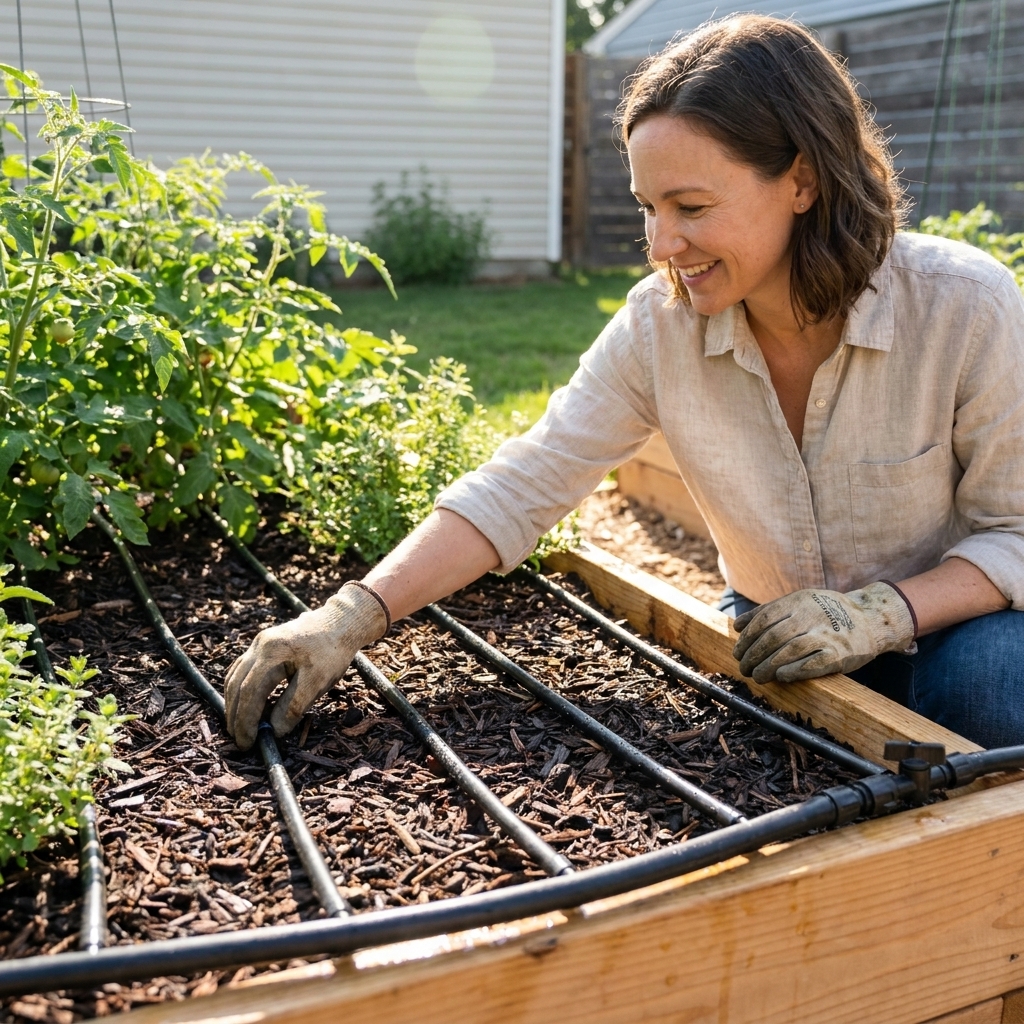
In raised beds, greens grow fastest when the top few inches of soil stay consistently moist. Not soggy, just evenly damp. If your greens taste bitter or get tough, inconsistent watering is often the culprit.
Feed lightly
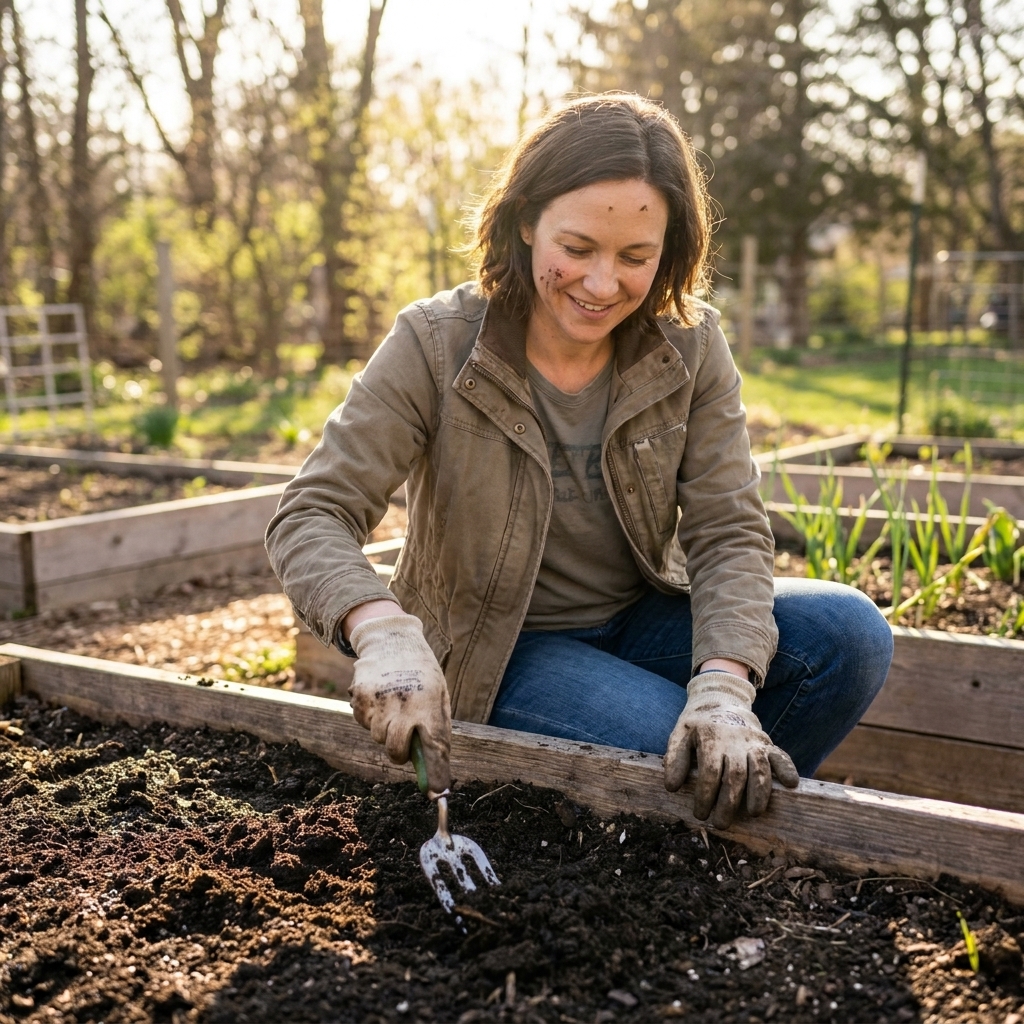
Every couple of weeks during heavy harvesting, I top-dress with a thin layer of compost or worm castings, then water it in. If you prefer liquid feeding, a gentle fish emulsion or seaweed blend can be helpful, especially after a big cut.
Mulch when it makes sense
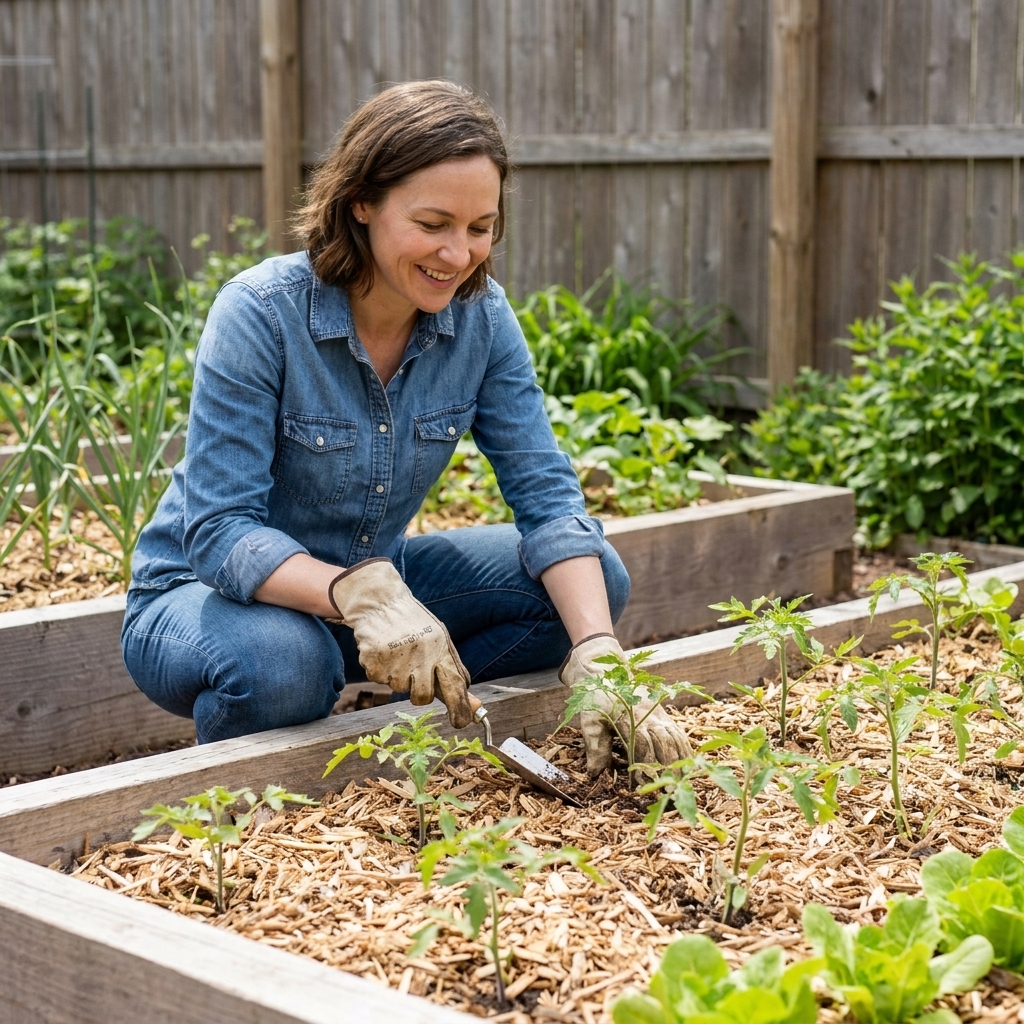
A light mulch like shredded leaves or clean straw around larger plants (kale, chard, mature lettuces) helps stabilize moisture. For dense baby greens patches, I skip mulch and rely on close spacing to shade the soil.
Keep it tidy
Remove yellowing leaves and any that touch the soil. This small habit reduces slug damage and helps prevent fungal issues from taking hold.
Wash and store your harvest
Homegrown greens taste best when they are clean, dry, and chilled.
- Rinse well: Swish leaves in a bowl of cool water, then lift them out so grit stays behind.
- Dry thoroughly: A salad spinner earns its keep here, or pat dry with a clean towel.
- Store cold: Refrigerate in a container or bag with a paper towel to catch excess moisture. Most greens stay happiest when they are dry, not sealed up with condensation.
Hygiene and disease basics
If mildew or leaf spot shows up, I get a little stricter about harvesting habits.
- Avoid harvesting wet foliage: Especially if you are seeing fungal issues. Wet leaves spread problems faster.
- Remove the worst leaves: Do not leave heavily diseased leaves in the bed.
- Clean tools between beds: A quick alcohol wipe helps reduce spread.
Common mistakes
Cutting too low
If you remove the growing point, the plant cannot regrow. For spinach, that usually means cutting into the crown. For lettuce, it means cutting low enough to take out the center growth. For baby greens, shearing down to the soil line often leads to slow regrowth or none at all.
Taking too much
I aim for the one-third rule on individual plants. Overharvesting slows recovery and can stress lettuce, which can make bolting more likely when weather is already pushing it.
Harvesting in midday heat
Greens are crispest in the morning. If you harvest at 3 pm on a hot day, they will wilt faster, even if you dunk them in water.
Letting plants get crowded
Cut-and-come-again is not a substitute for spacing forever. Thin lettuce and spinach seedlings so you have strong plants. Dense patches are fine for baby greens, but full-size plants need breathing room.
Varieties that do well
Nearly all leafy greens can be harvested this way, but these tend to be especially forgiving for beginners.
- Loose-leaf lettuces: Oakleaf, lollo types, salad bowl styles.
- Romaine mini types: Great for outer-leaf harvests.
- Kale: Lacinato (dinosaur), Red Russian, curly types.
- Spinach: Savoy and semi-savoy types handle repeated picking nicely in cool weather.
- Arugula and mustards: Fast regrowth, peppery flavor, best in cooler temps.
- Swiss chard: Almost unstoppable once established, and it loves outer-leaf harvesting.
- Bok choy harvested young: Great as baby greens, especially in mixes.
A simple salad plan
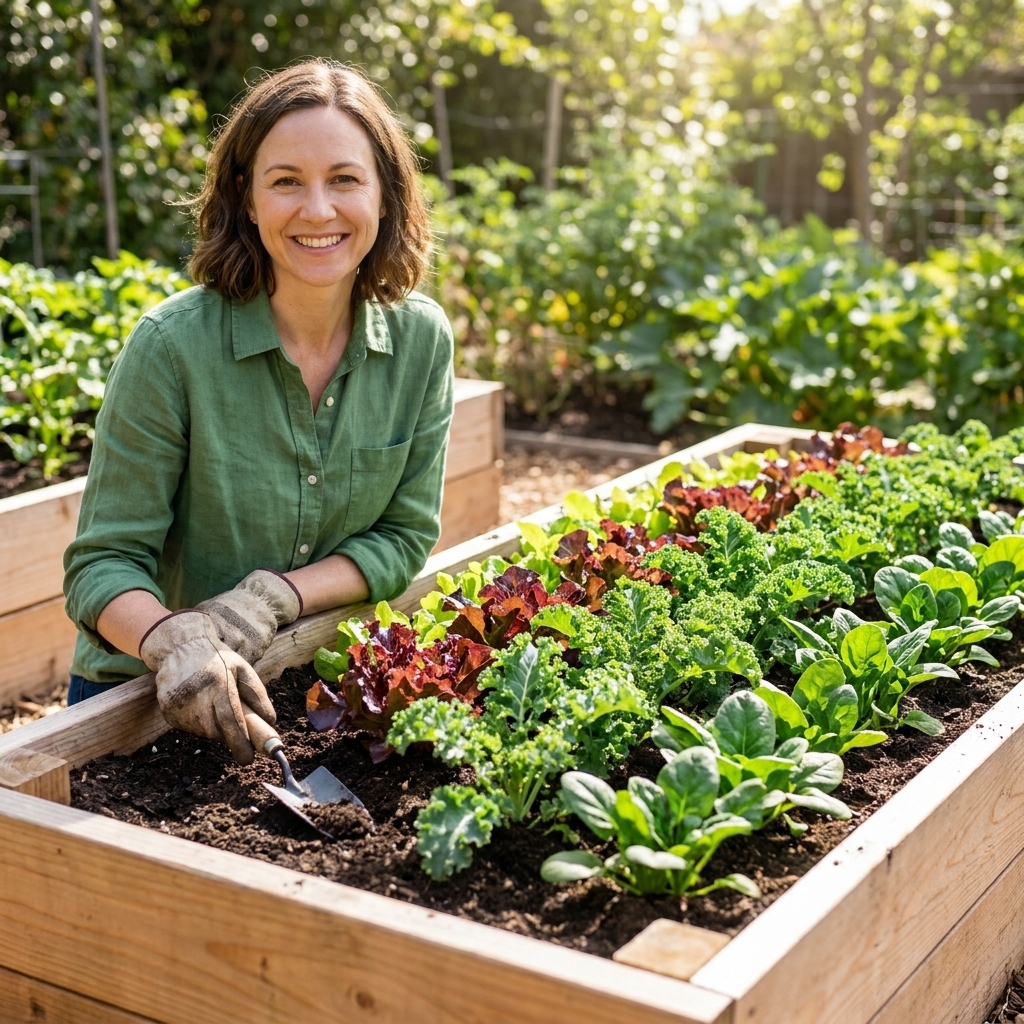
If you want that “endless salad” feeling, the trick is not one magical sowing. It is overlapping plantings so there is always something at peak.
My low-stress approach
- Every 2 to 3 weeks: Sow a short row or a small patch of lettuce and spinach (or swap spinach for heat-tolerant greens when it warms).
- Once per season: Plant a small block of kale and chard for long-term picking.
- Weekly habit: Harvest lightly and consistently instead of waiting for a huge one-time haul.
This is how a single raised bed can feed salads for a surprisingly long stretch, even in an average backyard.
FAQ
How many times can you cut and come again?
It varies by crop and conditions. Baby greens often give about 2 to 4 good cuts. Loose-leaf lettuce can be harvested many times over several weeks. Kale and chard can produce for months with regular picking.
Will lettuce regrow after cutting?
Yes, as long as you leave the inner growing point intact. Outer-leaf harvesting is the safest method. If you cut across the plant, cut above the crown and test on one plant first, since regrowth depends on variety and plant age.
Why are my regrown greens bitter or tough?
Heat, inconsistent watering, and letting leaves get overmature are the big three. Harvest more often, water evenly, and consider a bit of afternoon shade for cool-season greens as temperatures rise.
Can I use this method on bagged mesclun mix seed blends?
Absolutely. Those mixes are basically designed for shear-and-regrow harvesting. Just cut high enough to leave 1 to 2 inches of growth for regrowth.
You will get good fast
Cut-and-come-again harvesting sounds a little technical until you do it twice. Then it becomes a relaxing garden habit: step into the raised bed area with your scissors, take what you need, leave the plant happy, and come back next week for more.
If you want one takeaway, let it be this: harvest the outside, protect the center, and feed the regrowth. Your salad bowl will thank you.