
There is a very specific moment in summer when raised beds go from “look at me, I am a gardening genius” to “why are my tomatoes suddenly pouting?” If you built a nice spring soil mix, you did the right thing. But raised beds are small, fast-draining, and packed with hungry plants. By mid-season, many beds are running on fumes.
The good news is that you do not need to tear everything out or dump in a mystery cocktail of fertilizers. You just need a mid-season strategy: refresh the slow, steady nutrition with a side-dressing, then use targeted liquids to support heavy producers and fix issues fast.
Why raised beds run out of nutrients mid-season
Raised beds are productivity machines, which also means they burn through fertility quickly. A few common reasons:
- High plant density: We pack beds tightly for better yields, which increases nutrient demand.
- Frequent watering: Especially in heat, water can move nutrients down through the soil profile.
- Fast decomposition: Warm, moist soil breaks down organic matter quickly, releasing nutrients early, then tapering off.
- Heavy feeders take the lead: Tomatoes, peppers, squash, cucumbers, corn, and brassicas can drain nitrogen and potassium in particular.
If growth slows, leaves pale, flowering stalls, or fruits stay small, it is often not “the plant being dramatic.” It is your bed asking for a refill.
Three mid-season tools (and when each one shines)
1) Side-dressing (the backbone)
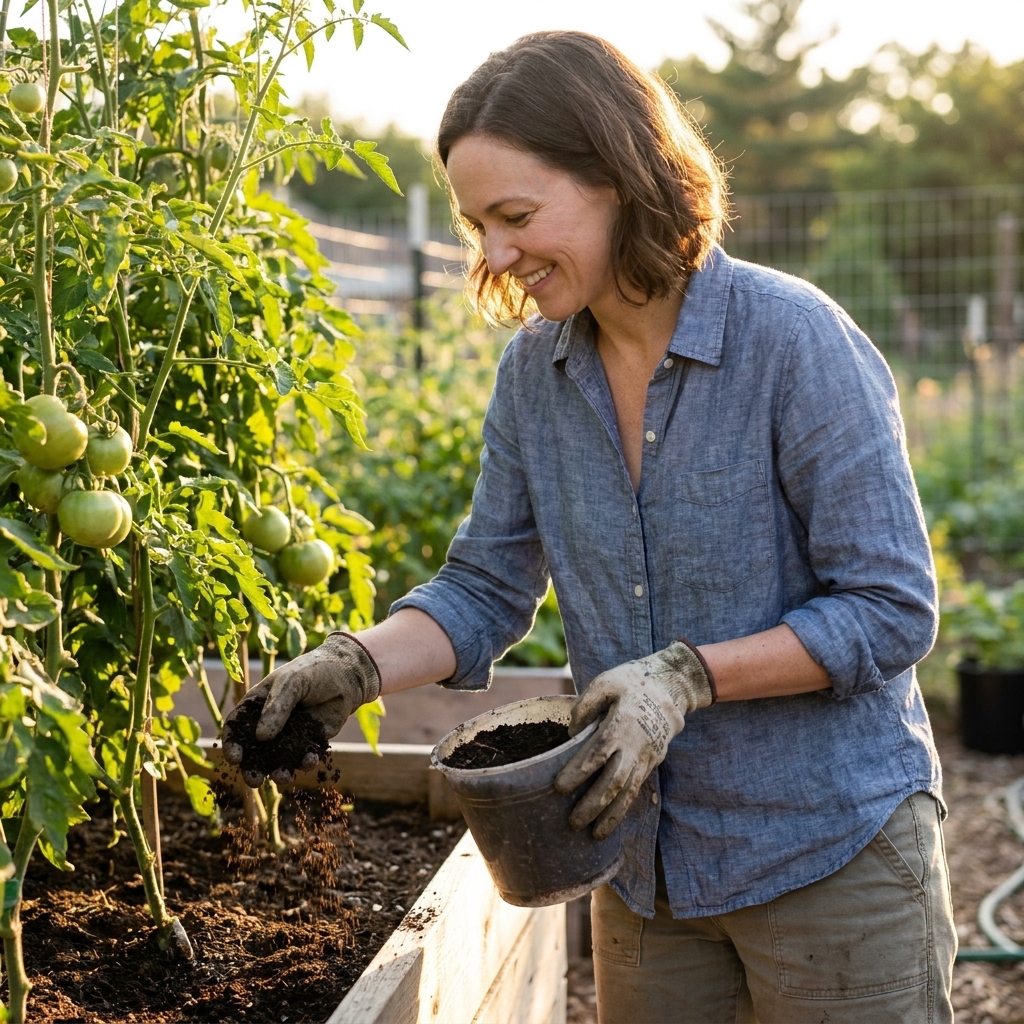
Side-dressing is adding nutrients to the soil surface around plants, then watering it in. It is my favorite mid-season move because it feeds steadily and improves soil structure at the same time.
- Best for: Keeping beds productive long-term, topping up nitrogen, and supporting fruiting.
- Timing: Every 3 to 6 weeks for heavy feeders, or once mid-season for lighter feeders.
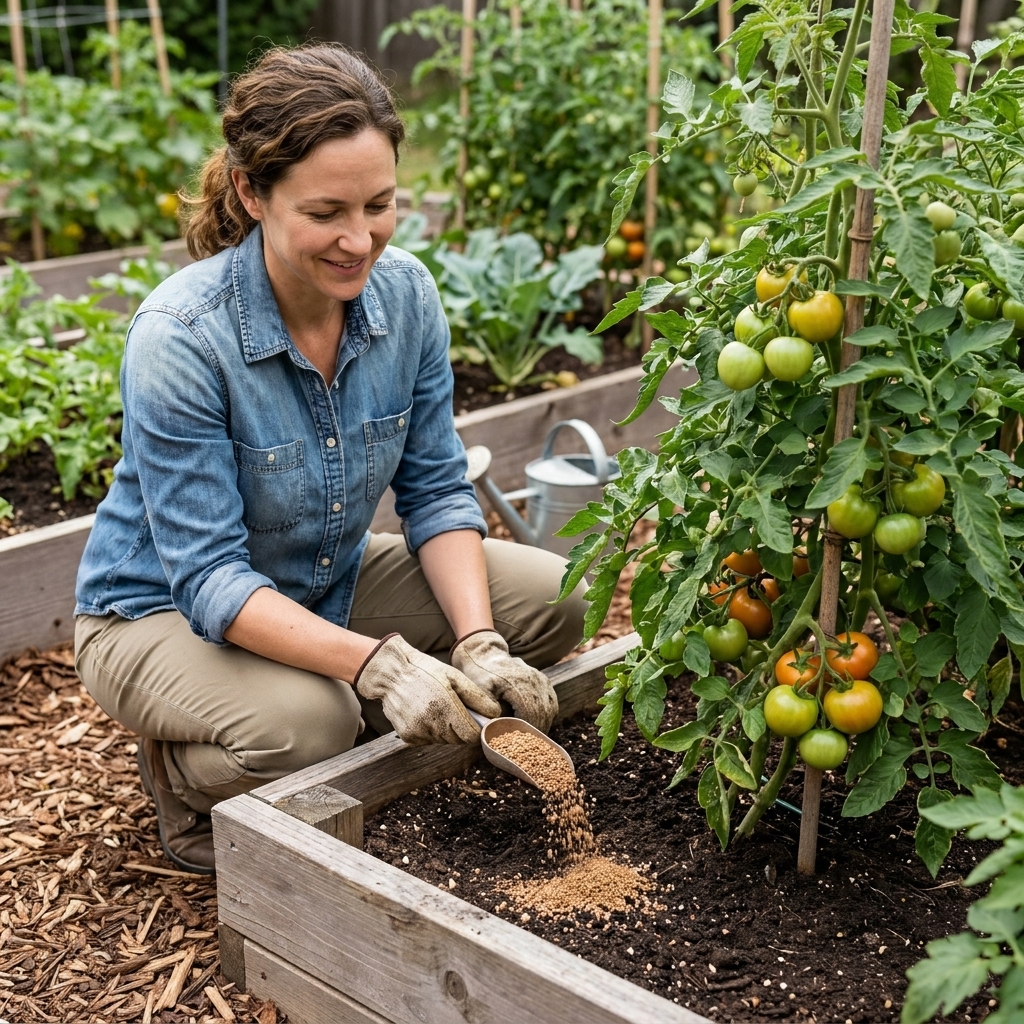
- Go-to materials: Finished compost, worm castings, composted manure, or a slow-release organic granular fertilizer.
2) Liquid feeds (the fast nudge)
Liquids often work quickly because nutrients are already dissolved and easier for plants to access. That said, results still depend on temperature, moisture, root health, and soil pH. Think of liquid feed as a “course correction,” not your entire meal plan.
- Best for: Fruiting crops that need a boost, raised beds with very fast-draining mixes, and plants showing mild deficiency.
- Timing: Weekly to every two weeks during heavy production, depending on product strength and weather.
- Common options: Fish emulsion, seaweed extract, blended organic liquid fertilizers, or water-soluble synthetic fertilizers if that is your preference.
3) Compost tea (the soil life helper)
Compost tea is more about biology and gentle nutrition than it is about dumping in a big NPK dose. A well-made tea may support microbial activity and nutrient cycling, but results are mixed and depend heavily on compost quality, brew method, and how it is applied.
- Best for: Beds that need a gentle lift, plants under stress, and gardeners focused on soil health.
- Timing: Every 2 to 4 weeks, especially after a side-dressing or during heat stress.
- Important note: Keep it clean and handle it like something you do not want to accidentally spray on salad. Apply to soil, not leaves you plan to eat soon, and discard any batch that smells foul.
A simple mid-season schedule that actually works
If you like a clear plan, here is a rhythm I have used in my own raised beds when spring fertility starts fading. Adjust based on what you grow and how intense your summer is.
At first big harvest or first fruit set
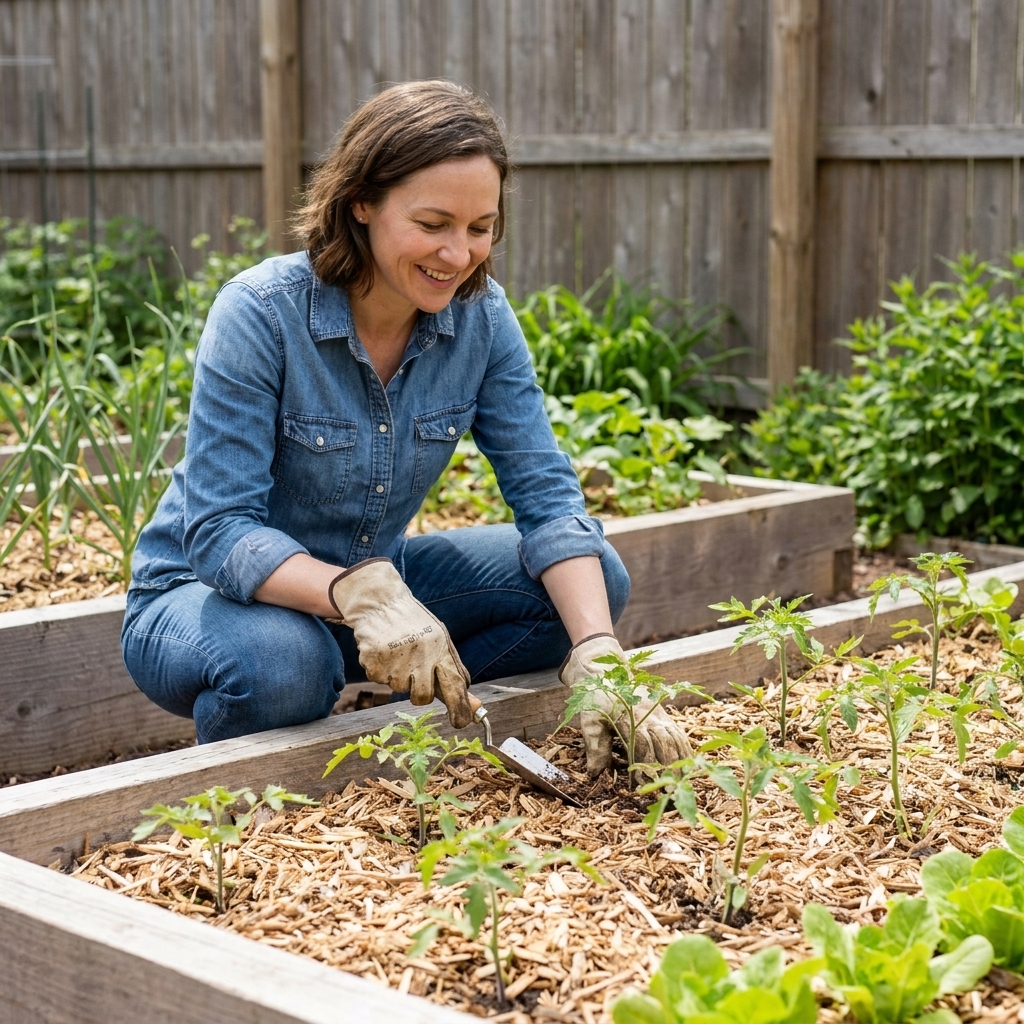
- Side-dress with 1 to 2 inches of finished compost around heavy feeders (tomatoes, peppers, cucumbers, squash).
- If you use granular organic fertilizer, scratch in per label directions, then water deeply.
Two weeks later
- Liquid feed heavy producers (especially tomatoes and cucurbits) with a balanced or fruiting-focused formula.
- Seaweed extract is great here as a gentle stress buffer during heat waves.
Monthly through peak production
- Repeat side-dressing for the hungriest beds or beds with lots of succession plantings.
- Compost tea every 2 to 4 weeks if you enjoy making it and have good compost.
For lighter feeders like beans (they make some of their own nitrogen), herbs, and many root crops, I keep it simpler: one compost top-up mid-season and only liquid feed if they look sluggish.
How to side-dress raised bed veggies
Side-dressing sounds fancy, but it is basically: feed the soil, not the stems.
Compost side-dress (my default)
- Pull mulch back if you use straw or leaf mulch.
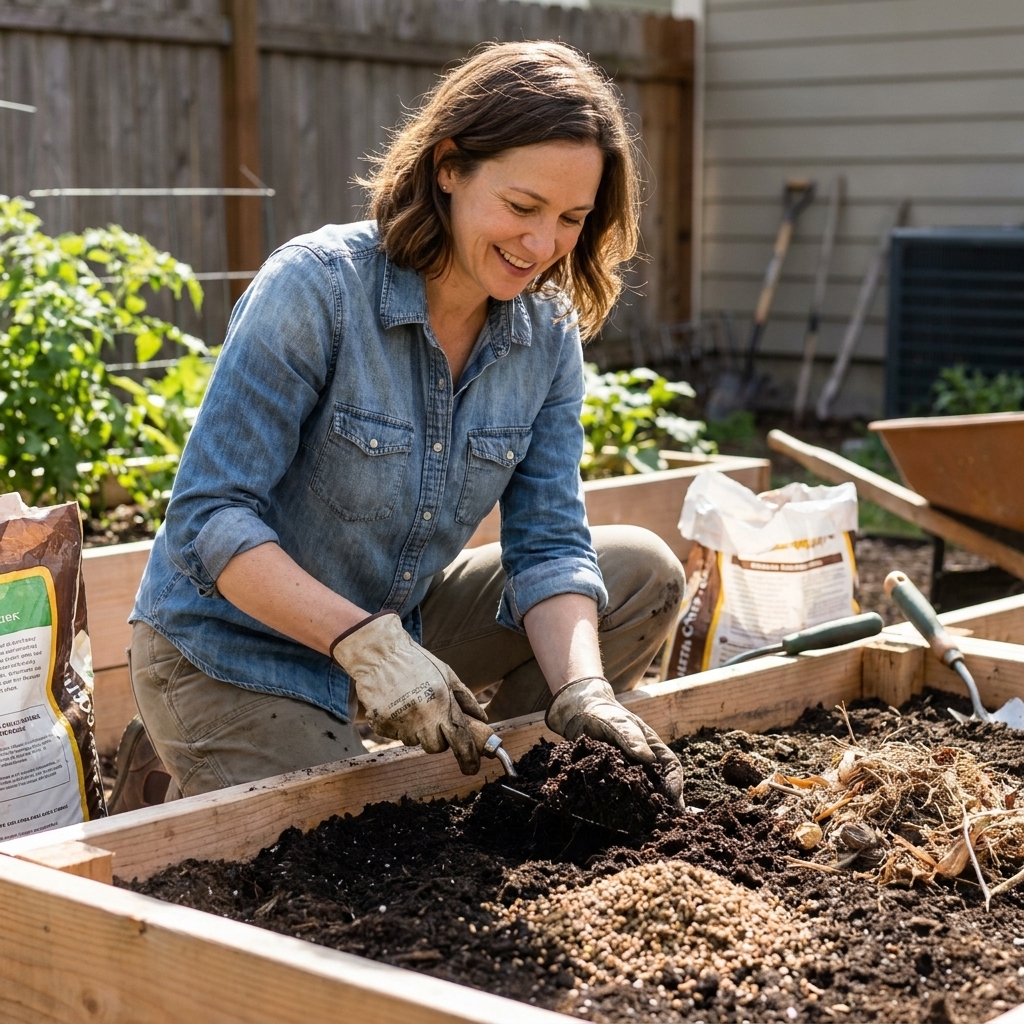
- Add compost in a ring around the plant root zone, keeping it a few inches away from the stem.
- Keep it shallow in tight beds. You do not want to slice roots with a deep hoe.
- Water it in thoroughly.
- Replace mulch to reduce evaporation and prevent nutrient splash.
How much? In raised beds, 1 inch across the active root zone is often plenty. Two inches is great for big, mature tomatoes or squash in a bed that is producing hard.
Granular fertilizer side-dress
Granular organic fertilizers are convenient, but they still need moisture and time to break down. Sprinkle per label, scratch lightly into the top inch of soil, and water well. If the forecast is bone-dry, plan to irrigate for a few days so it activates.
Liquid feed basics
Liquids are where many gardeners accidentally go too hard. The goal is steady production, not a leafy jungle that forgets to fruit.
My raised bed rules for liquids
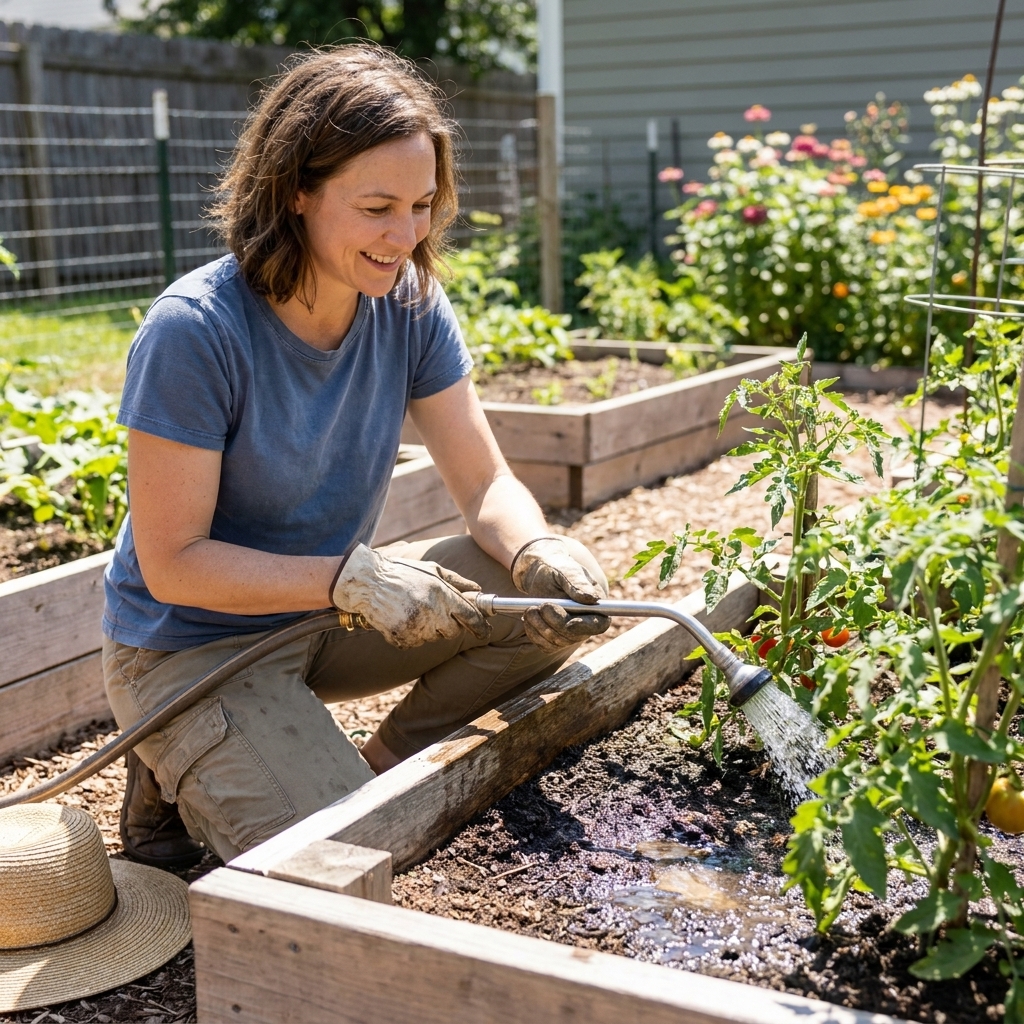
- Feed on moist soil. If the bed is dry, water first, then feed. This protects roots and improves uptake.
- Morning is easiest. Plants are actively pulling water, and you are not inviting fungal issues by soaking things at night.
- Stay consistent, not intense. A half-strength weekly feeding often beats a full-strength “once in a while” blast.
- Avoid splashing edible leaves. Apply to the soil at the base when possible.
What to use for common raised bed crops
- Tomatoes and peppers: Balanced early, then slightly lower nitrogen once fruiting ramps up. Too much nitrogen can mean gorgeous foliage and fewer tomatoes.
- Cucumbers and squash: They respond well to regular feeding because they grow fast and produce continuously.
- Leafy greens: If you are still harvesting lettuce, kale, or chard, they like nitrogen, but heavy feeding during hot weather can push soft growth and, combined with heat and water stress, lead to lower-quality leaves. Keep watering steady and feed lightly.
- Root crops: Go easy. Too much nitrogen can push leaves at the expense of roots.
Compost tea: keep it simple and safe
I will be honest: I have made every version of compost tea over the years, including a few buckets that smelled like something crawled in and gave up. These days, I keep it clean and straightforward.
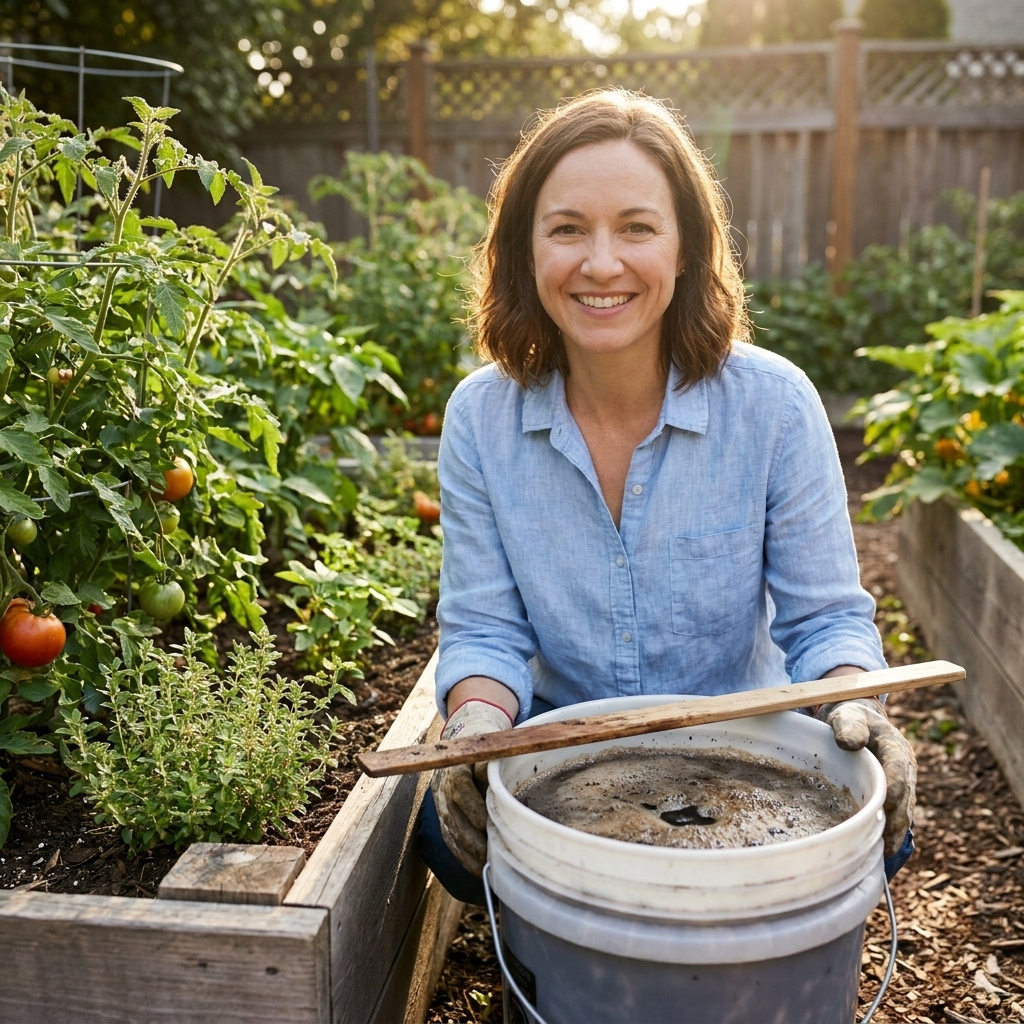
A practical “backyard” compost tea method
- Fill a bucket with water and let it sit overnight if your water is heavily chlorinated.
- Add a generous scoop of finished compost (the dark, crumbly stuff that smells earthy).
- Stir well once or twice a day for 24 to 48 hours.
- Strain if needed, then apply to soil around plants.
Food safety note: Compost tea is not sterile. If you use manure-based compost or you are not confident in your materials, apply to soil only, avoid splashing leaves, and skip using it as a foliar spray on crops you will harvest soon. When in doubt, stick to plant-based compost and soil application only.
Spotting what your plants are asking for
You do not need a lab test to make good mid-season decisions. Your plants drop hints constantly.
Common signs and what to try
- Pale older leaves, slow growth: Often nitrogen. Try compost side-dress plus a gentle liquid feed.
- Lots of flowers, poor fruit set: Sometimes stress or heat, but also can be imbalanced feeding. Ease up on high nitrogen and consider a balanced feed plus consistent watering.
- Leaf edges browning, weak fruiting: Potassium can be low. A fertilizer that includes potassium (the “K” in NPK) helps during heavy production.
- Blossom end rot on tomatoes or peppers: Most often inconsistent watering that prevents steady calcium uptake as fruit grows. Soil calcium can also be low, and very high or very low pH can make calcium harder to access, but watering swings are the usual culprit in raised beds. Mulch, water deeply and regularly, and avoid big wet-dry cycles.
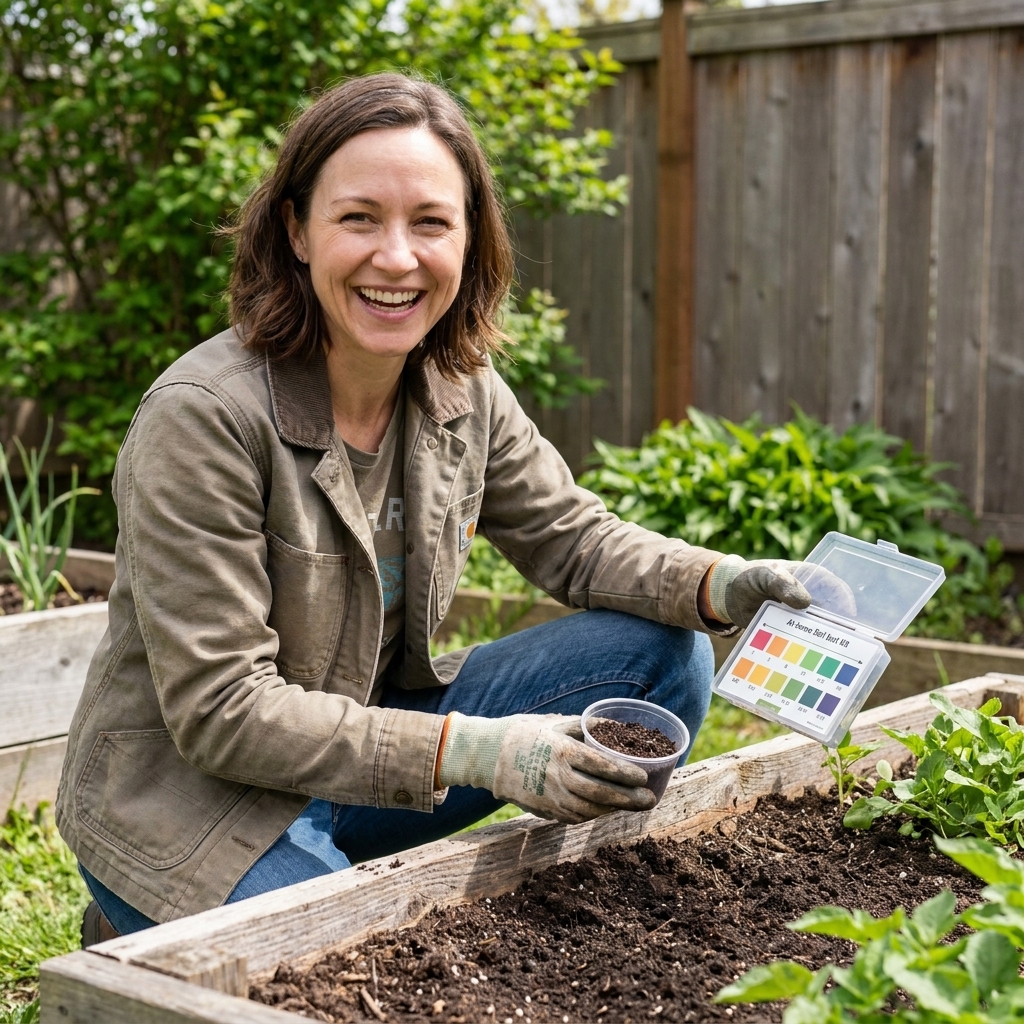
- Yellowing between leaf veins: If it shows up on newer leaves first, think iron (and sometimes manganese), often tied to pH or root stress. If it shows up on older leaves first, magnesium is more likely. Before you add supplements, tighten watering, avoid over-fertilizing, and consider a basic soil test if it keeps happening.
If your plants are dark green, growing steadily, and setting fruit, mid-season feeding should be gentle. It is easier to add more later than to undo a nutrient overload.
Crop-by-crop mid-season feeding cheatsheet
| Crop | Mid-season goal | Best approach | How often |
|---|---|---|---|
| Tomatoes | Steady growth and fruit fill | Compost side-dress + light liquid feed | Compost every 4 to 6 weeks, liquid every 1 to 2 weeks in peak |
| Peppers | More blooms and consistent fruiting | Compost + balanced liquid | Compost mid-season, liquid every 1 to 2 weeks in peak |
| Cucumbers | Continuous flowering and new vines | Regular liquid feed + compost top-up | Liquid every 1 to 2 weeks |
| Squash/Zucchini | Prevent mid-summer stall | Heavier compost side-dress + liquid support | Compost every 3 to 5 weeks, liquid every 1 to 2 weeks in peak |
| Brassicas (kale, broccoli) | Leafy growth | Nitrogen-forward side-dress | Every 3 to 4 weeks if harvesting leaves |
| Beans/peas | Flowers and pods | Light compost only | Once mid-season if needed |
| Carrots/beets | Root development | Very light compost, avoid heavy nitrogen | Only if soil is poor |
Two common mid-season mistakes (I have done both)
1) Feeding when the real issue is water
In raised beds, watering inconsistency can look exactly like nutrient problems. If your bed is drying out hard between waterings, plants cannot take up what is already there. Before you increase fertilizer, tighten up watering and add mulch. If you can, drip lines or a soaker hose on a timer take a lot of drama out of midsummer.
2) Chasing problems with stronger and stronger fertilizers
More is not better. Overfeeding can cause:
- Leafy growth with fewer flowers and fruits
- Salt buildup, especially with frequent soluble feeds
- Root stress and wilting even when soil is damp
- Increased pest pressure on lush new growth
If you suspect overfeeding, pause liquids for a week or two, water deeply, and top-dress with plain compost instead of adding more concentrated nutrients.
Salt buildup and leaching
Raised beds can slowly collect salts from frequent liquid feeding, especially if you use water-soluble fertilizers and your bed dries hard between waterings. A few clues are a white crust on the soil surface, leaf tip burn that does not match drought stress, and plants that look “stuck” even though you keep feeding.
If that sounds familiar, do a simple reset: water deeply to flush the root zone, let the bed drain, then return to lighter feeding. In very fast-draining beds, two deep waterings a day apart does the job better than one quick blast. If the problem keeps returning, a basic soil test can save you a lot of guesswork.
My “keep it producing” mid-season routine
If you want a no-drama routine that works across most raised bed gardens, here is mine:
- Every 4 weeks: 1 inch compost side-dress for heavy feeders.
- Every 1 to 2 weeks during peak harvest: gentle liquid feeding for tomatoes, peppers, cucumbers, and squash.
- All season: mulch and consistent deep watering, because nutrients only matter if plants can actually use them.
Once you get this rhythm down, the mid-season slump becomes a quick pit stop instead of a full-on garden crisis. And yes, you will still have a few plants that act offended no matter what you do. That is gardening. Feed the soil, observe, adjust, and keep harvesting.
FAQ
Can I just add more compost instead of fertilizer?
Often, yes. Compost is a fantastic mid-season tool in raised beds. If your plants are heavy producers and you want maximum yields, pairing compost with occasional liquid feed is usually more effective than compost alone.
Is it okay to fertilize when it is really hot?
Yes, but be gentle. Feed on moist soil, avoid the hottest part of the day, and consider half-strength liquid fertilizer. In extreme heat, focus on water and mulch first, then feed once plants are less stressed.
Do I need a different fertilizer for fruiting vs leafy growth?
You do not need a shelf full of products. A balanced fertilizer works for most beds. If you notice lots of leaves and not much fruit, reduce nitrogen-heavy feeding and prioritize steady watering and a moderate, balanced feed.
How do I know if my bed is depleted?
Common clues are slower growth, paler foliage, smaller fruit, and reduced flowering despite good sun and consistent watering. When in doubt, a compost side-dress is a safe first step.